

Choosing a way to preserve your family legacy is a monumental task that requires the right digital and physical tools. If you are starting your journey, you are likely asking: What is the best genealogy platform? In 2026, the answer depends on whether you value deep historical records, DNA matching, or a private space to organize your findings. This comprehensive guide breaks down the top contenders to help you build a bridge to your past and ensure your family history is never lost to time.
1. Top Contenders: What is the Best Genealogy Platform for Records?
When it comes to sheer volume, the industry is led by a few giants. To determine what is the best genealogy platform for your specific tree, you must consider the geographical origin of your ancestors and your monthly budget.
- Ancestry: With over 60 billion records, it is the undisputed leader for North American and Western European research. Its “Hints” system—the famous shaking leaf—is perfect for beginners who need a guided experience to navigate census records, military drafts, and immigration logs.
- FamilySearch: Operated by the LDS Church, this is the best free platform globally. It is ideal for those who want to collaborate on a single, shared world tree. Because it is free, it is an essential starting point for every hobbyist.
- MyHeritage: If your roots are in Continental Europe, Scandinavia, or Israel, this platform offers superior AI tools. Their photo restoration and colorization features are world-class, and they offer localized records in 42 languages, making it easier to break through international barriers.
- Findmypast: The gold standard for British and Irish ancestry. They offer exclusive access to UK Parish records and the 1821–1921 Census collections, which are often unavailable on other platforms.
2. The Power of DNA: Best Platforms for Genetic Genealogy
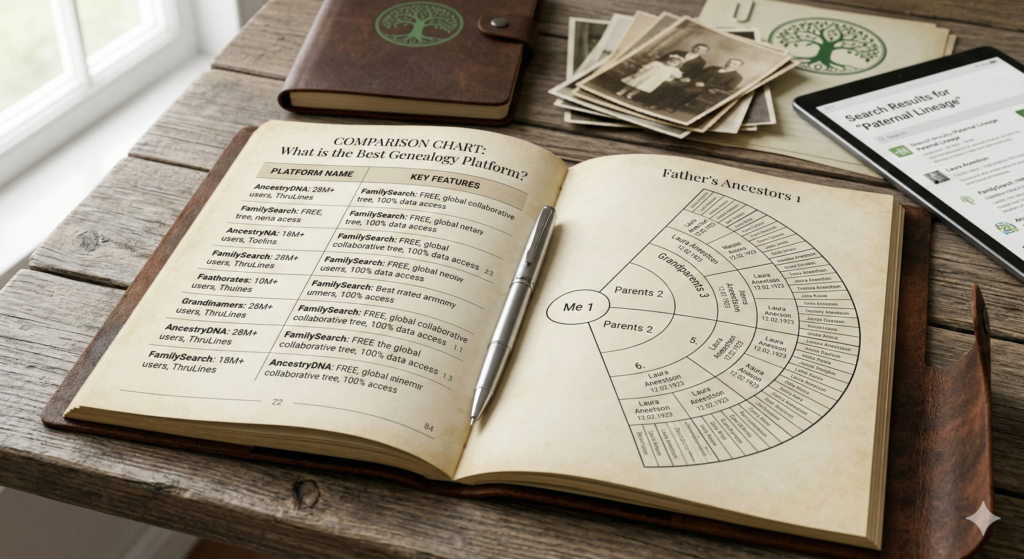
DNA testing has revolutionized how we find “brick wall” ancestors. When asking what is the best genealogy platform for DNA, AncestryDNA leads the pack with a massive database of 28 million users. This large pool makes it much more likely that you will find a 2nd or 3rd cousin who has already done the heavy lifting on a specific branch of your tree.
However, for those seeking specialized results, FamilyTreeDNA remains the top choice for dedicated Y-DNA (paternal) and mtDNA (maternal) testing. These tests don’t just find cousins; they trace your ancient migratory paths from tens of thousands of years ago.
For many, the “best” platform is actually a combination of several. You can test at Ancestry, then upload your raw data to GEDmatch or MyHeritage to find even more cousins across the globe. This cross-platform strategy ensures you aren’t missing a single branch of your family tree due to platform exclusivity.
3. Organizing Your Findings: The Essential Physical Companion
Digital trees are impressive, but seasoned researchers know that a physical backup is vital for true organization. While searching for what is the best genealogy platform, don’t overlook how you will store your research offline. We live in an era of digital volatility; websites change, subscriptions lapse, and accounts can be hacked.
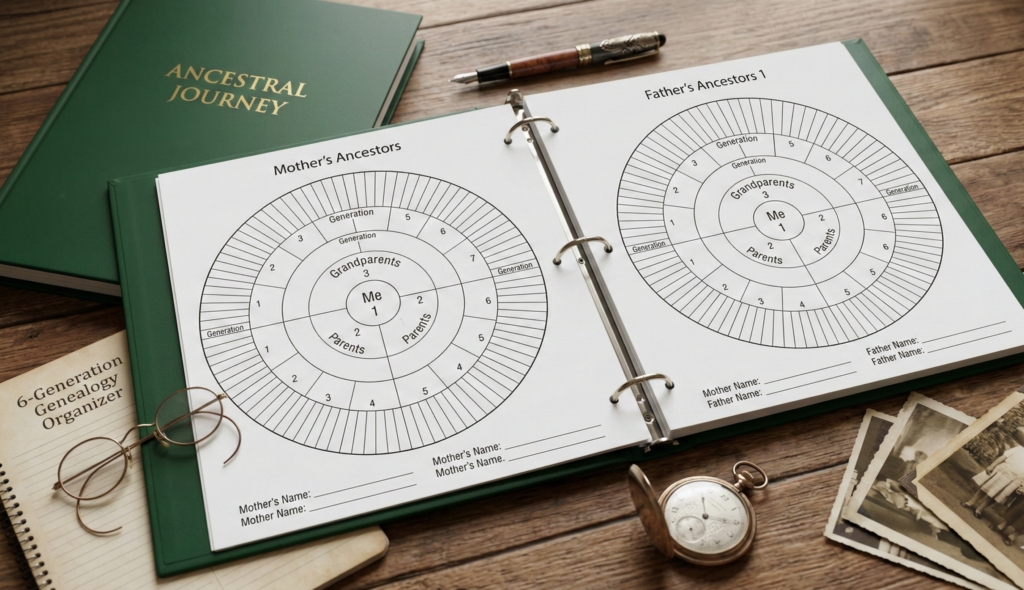
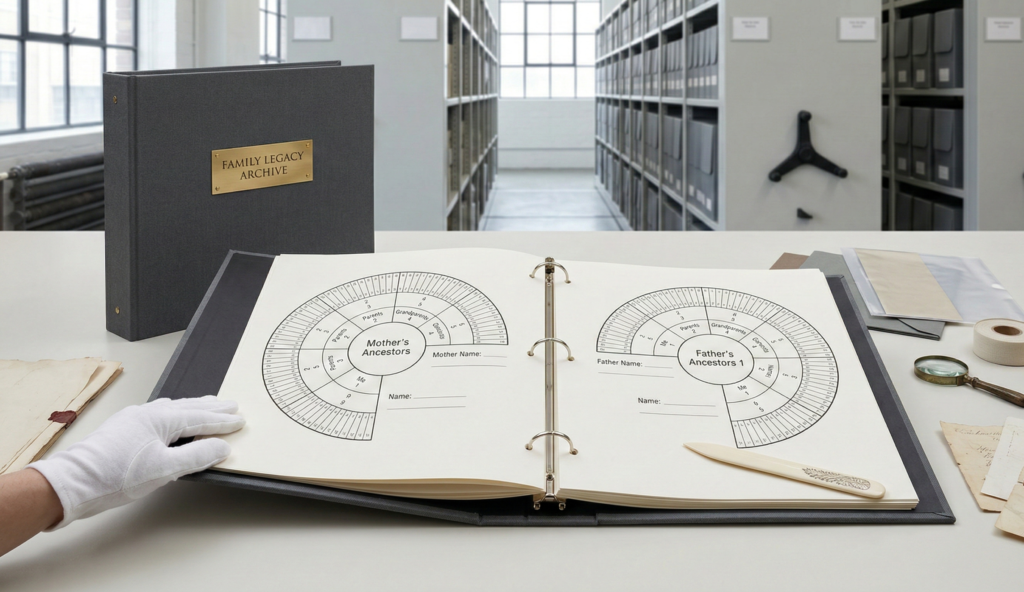
We highly recommend using a professional-grade workbook like the 6-Generation Genealogy Organizer. This organizer allows you to map out paternal and maternal lines clearly, ensuring your digital discoveries are safely documented in a beautiful, tactile format. It features specific sections for 6-generation fan charts, research logs, and ancestor profiles. It is the perfect bridge between high-tech research and old-world record-keeping.
4. Step-by-Step: How to Move Your Data Between Platforms
To truly answer what is the best genealogy platform, you should use the “Download and Upload” strategy to get the most value for your money. This allows you to leverage multiple databases with the cost of only one DNA kit.
- Download from Ancestry: Go to your DNA Settings and request your “Raw DNA Data.” You will receive a zip file via email.
- Download from 23andMe: Navigate to the “Browse Raw Data” tab and submit a request for your data download.
- Upload to FamilyTreeDNA: Use their free Autosomal Transfer tool to see new matches for free.
- Upload to Living DNA: This provides excellent regional breakdowns for British Isles ancestry, often identifying specific counties in England or Scotland.
By utilizing these transfers, you effectively turn several platforms into one massive, interconnected research hub.
5. Privacy and Security in 2026
As we move further into the digital age, security has become a primary concern for researchers. When deciding what is the best genealogy platform, check their privacy settings. Platforms like FamilySearch keep living people’s information strictly private, while others allow you to opt-out of law enforcement matching.
Always ensure you use two-factor authentication (2FA) on any site where you store your DNA data or family tree. Your family’s genetic and personal history is precious; protecting it is just as important as discovering it.
6. Conclusion: Defining the “Best” for Your Legacy
Ultimately, what is the best genealogy platform is the one that fits your specific workflow and keeps you excited about your history. For some, the free collaborative nature of FamilySearch is unbeatable. For others, the high-tech AI tools and massive records of Ancestry or MyHeritage justify the subscription cost.
Regardless of the digital platform you choose, remember to keep your research organized and accessible. Using a physical 6-Generation Genealogy Organizer ensures that your hard work survives for the next six generations to come. Digital trends change, but a well-documented book is a family heirloom that lasts forever.