
In today’s fast-paced world, the weight of the “what-ifs” can often feel overwhelming. If you have ever felt your heart race at the thought of a deadline or found yourself trapped in a loop of worry about the future, you are not alone. Anxiety is a common human experience, but it doesn’t have to define your life. By incorporating mindfulness techniques for anxiety into your daily routine, you can begin to anchor yourself in the present moment, finding a sense of calm amidst the storm. At Medeea Publishing, we believe that creativity and presence are the cornerstones of mental well-being, and we are dedicated to providing tools that help you navigate your emotional landscape with grace.
Mindfulness is more than just a buzzword; it is a scientifically backed practice that involves paying attention to the present moment without judgment. When we struggle with anxiety, our minds are usually sprinting toward a future we cannot control or dwelling on a past we cannot change. These mindfulness techniques for anxiety serve as a bridge, bringing your awareness back to the “now,” where safety and peace actually reside. In this comprehensive guide, we will explore seven life-changing methods to reduce stress, including the therapeutic power of creative expression through our specialized coloring books.
1. The Power of Breath: Deep Diaphragmatic Breathing
One of the most immediate mindfulness techniques for anxiety is the practice of deep breathing. When we are anxious, our breathing becomes shallow and rapid, signaling to our nervous system that we are in danger. By consciously slowing down our breath, we can manually flip the switch from the “fight or flight” response to the “rest and digest” state.
The Box Breathing Method
Box breathing is a favorite among elite athletes and even Navy SEALs for its ability to provide instant composure. Here is how you can do it:
- Inhale slowly through your nose for a count of four.
- Hold your breath gently for a count of four.
- Exhale completely through your mouth for a count of four.
- Wait at the empty point for a count of four before the next inhale.
This rhythmic pattern helps regulate the autonomic nervous system, making it one of the most effective mindfulness techniques for anxiety when you are in the middle of a panic attack or a high-stress situation.
2. Mindful Coloring: Creative Expression as Therapy
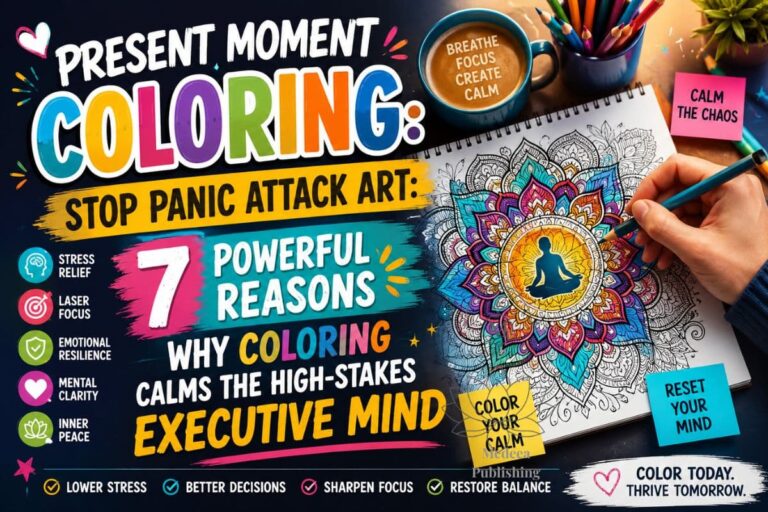
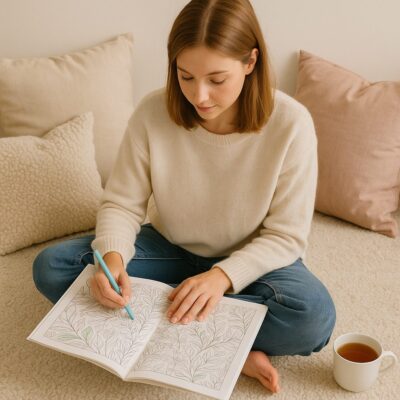
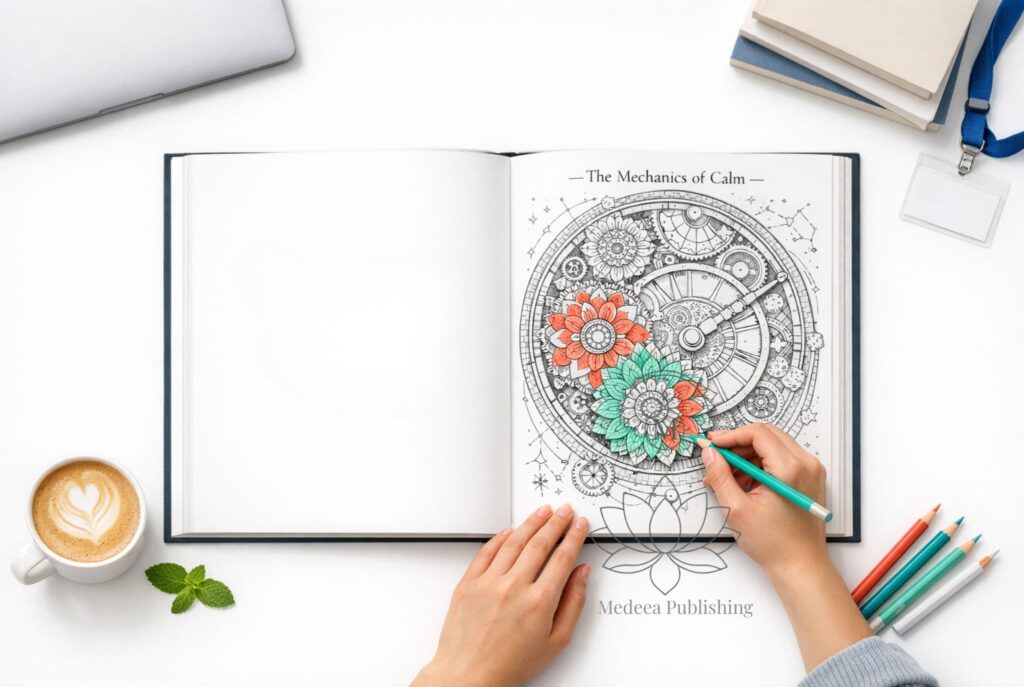
At Medeea Publishing, we have seen firsthand how the simple act of putting pen to paper can transform a person’s mental state. Mindful coloring is one of those unique mindfulness techniques for anxiety that combines the benefits of meditation with the joy of creativity. Unlike a blank canvas, which can sometimes feel intimidating to someone struggling with perfectionism, a coloring book provides a gentle structure that guides the mind into a “flow state.”
When you color, your brain experiences a shift in activity. The amygdala—the part of the brain involved in the fear response—gets a chance to rest. As you focus on choosing colors and staying within the lines, your worries begin to fade into the background. We invite you to explore our latest blog posts on the science of art therapy or browse through our exclusive coloring book collections designed specifically for adult relaxation. These books are not just about art; they are a sanctuary for your mind.
Why Coloring Works for Anxiety
Coloring requires repetitive motions and focused attention on small details. This “concentrated focus” is a core component of many mindfulness techniques for anxiety. It prevents the mind from wandering into catastrophic thinking. When you finish a page, you also gain a sense of accomplishment, which boosts dopamine levels and improves your overall mood.
3. The 5-4-3-2-1 Grounding Technique
When anxiety makes you feel like you are floating away or losing control, grounding exercises can pull you back down to earth. This is one of the most practical mindfulness techniques for anxiety because it can be done anywhere—in a grocery store, at your desk, or while commuting—without anyone else knowing.
According to experts at the Mayo Clinic, grounding techniques are essential for managing acute stress. The 5-4-3-2-1 method works by engaging all five of your senses:
- 5 Things You Can See: Look around and name five objects (e.g., a blue pen, a tree, a coffee mug).
- 4 Things You Can Touch: Notice the texture of your clothes, the coolness of a desk, or the weight of your shoes.
- 3 Things You Can Hear: Listen for distant traffic, the hum of a refrigerator, or the sound of your own breath.
- 2 Things You Can Smell: Can you smell coffee, or perhaps the scent of the air?
- 1 Thing You Can Taste: Notice the lingering taste of your last meal or simply the inside of your mouth.
4. Body Scan Meditation for Tension Release
Often, we carry anxiety in our bodies without even realizing it. Our shoulders hunch, our jaws clench, and our stomachs tighten. A body scan is one of the foundational mindfulness techniques for anxiety that helps you reconnect with your physical self and release stored tension.
To perform a body scan, find a quiet place to sit or lie down. Close your eyes and start at your toes. Mentally “scan” each part of your body, moving upward to your calves, knees, thighs, and so on. As you encounter areas of tightness, imagine your breath flowing into that area, softening and relaxing the muscle. By the time you reach the crown of your head, you will likely feel a profound sense of physical liberation.
5. The “Leaf on a Stream” Visualization
One of the hardest parts of anxiety is the feeling that our thoughts are “truth.” We often believe every scary thought our brain produces. This visualization is one of the mindfulness techniques for anxiety taught in Acceptance and Commitment Therapy (ACT).
Imagine you are sitting by a gently flowing stream. There are leaves floating down the water. Every time a worried thought pops into your head (“I’m going to fail,” “What if they’re mad at me?”), simply place that thought on a leaf and watch it float away. You aren’t trying to stop the thoughts; you are simply observing them and letting them pass without getting hooked by them. As noted by Psychology Today, observing thoughts rather than reacting to them is a key element of emotional regulation.
6. Mindful Walking: Movement as Medicine
For many individuals living with high-functioning stress or ADHD, the traditional image of meditation—sitting perfectly still in a silent room—can feel not only difficult but physically impossible. When the nervous system is stuck in a state of “fight or flight,” forced stillness can sometimes amplify the internal noise rather than quiet it. If sitting still feels like a battle you aren’t ready to fight, mindful walking serves as an extraordinary alternative. It is a bridge between the chaotic pace of our daily lives and the profound stillness we seek. Unlike a regular walk where you might be distractedly scrolling through your phone, listening to an intense podcast, or mentally rehearsing your tomorrow’s to-do list, this practice is centered entirely on the raw, physical sensation of movement.
This approach is widely considered one of the most effective mindfulness techniques for anxiety for those who find “active” meditation more accessible than stationary practices. Instead of trying to empty the mind, you are giving the mind a specific, physical anchor. As you take your first few steps, shift your internal gaze toward the soles of your feet. Pay close attention to the precise moment your heel strikes the pavement, the rolling transition of weight across your arch, and the final, firm push-off from your toes. By hyper-focusing on this mechanical process, you are utilizing mindfulness techniques for anxiety to pull your consciousness out of the “thought-loop” and back into the physical reality of the present moment.
As you continue your path, expand your awareness to the environment interacting with your body. Notice the subtle temperature of the air against your skin, the shifting rhythm of your gait as the terrain changes, and the feeling of your lungs expanding with each rhythmic breath. This is the essence of mindfulness techniques for anxiety: it is the art of being “here” rather than “there.” If your mind begins to wander—and it inevitably will—toward a stressful deadline or a past conversation, do not meet that distraction with frustration. Simply acknowledge the thought, let it pass like a cloud, and gently but firmly bring your focus back to the weight of your body and the repetitive, reliable act of walking.
This practice effectively turns a mundane, everyday activity into a powerful ritual of presence and psychological grounding. By integrating mindfulness techniques for anxiety into your movements, you are essentially telling your brain that the world is safe and that you are in control of your immediate experience. Over time, this “meditation in motion” builds a reservoir of calm that you can carry with you long after the walk has ended. It proves that you don’t need to be still to be at peace; you just need to be present.
The Challenge: Next time you walk from your car to your office or home, leave your phone in your pocket. Can you count 50 steps while focusing only on the sensation in your feet? 🎨
How did your level of tension change after just five minutes of focusing on the rhythm of your steps?
7. Loving-Kindness Meditation (Metta)
Anxiety is rarely just a physical sensation; it often arrives accompanied by a relentless and harsh inner critic. When we feel overwhelmed, we frequently fall into the trap of blaming ourselves for our perceived “weakness” or for our inability to simply “calm down.” This self-judgment creates a secondary layer of tension, essentially fueling a cycle where we become anxious about being anxious. One of the most transformative mindfulness techniques for anxiety to combat this cycle is Loving-Kindness Meditation, also known as Metta. This ancient practice isn’t about forced positivity; it is about systematically developing a sense of profound compassion for yourself and, eventually, for the world around you.
The practice of Metta works by softening the internal edges of your emotional landscape. By intentionally shifting your focus from fearful projections to heartfelt wishes, you replace the isolation of fear with a deep sense of universal connection. Among the various mindfulness techniques for anxiety, Loving-Kindness is unique because it directly targets the “sharp edges” of the ego that feel threatened or inadequate. As you cultivate a “soft heart,” the physiological symptoms of anxiety—such as a racing heart or a tight chest—often begin to dissipate, replaced by a warm, grounding energy that stabilizes the nervous system.
To begin, dedicate just five to ten minutes each morning to this practice. Sit comfortably, perhaps with a Medeea Publishing book open in front of you as a visual anchor, and silently repeat these phrases with intention:
May I be safe. (Focus on a sense of protection and peace)
May I be healthy. (Focus on the strength and resilience of your body)
May I be happy. (Focus on the right to experience joy regardless of external circumstances)
May I live with ease. (Focus on moving through life without the friction of constant worry)
As you become more comfortable with these mindfulness techniques for anxiety, you can gradually extend these wishes outward. Start with your loved ones, then move to neutral acquaintances, and eventually, extend this compassion to all beings. This expansion is vital because it reminds the anxious brain that it is part of a larger, supportive whole rather than an isolated unit under attack. By making this one of your primary mindfulness techniques for anxiety, you are effectively re-wiring your brain to default to kindness rather than criticism, making it much harder for chronic worry to maintain its grip on your daily life.
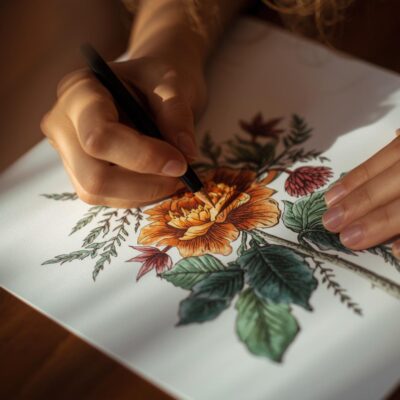
The Challenge: Does your inner critic speak louder than your inner friend? For the next 3 days, repeat these phrases while coloring a single flower in your book and see if the colors you choose become warmer and more vibrant. 🎨
How does your body feel different after five minutes of focusing on kindness instead of “fixing” your anxiety?
The Role of Medeea Publishing in Your Wellness Journey
At Medeea Publishing, we understand that finding peace is a journey, not a destination. Our mission is to create high-quality resources that act as anchors in your daily life. Whether it is through our detailed adult coloring books or our supportive community content, we aim to make mindfulness techniques for anxiety accessible and enjoyable for everyone.
Coloring isn’t just for children; it is a profound tool for adults to reclaim their focus and quiet the noise of the modern world. Our books feature intricate designs that require the kind of mindful attention that naturally lowers cortisol levels. When you pair a coloring session with deep breathing or a “leaf on a stream” visualization, you create a powerful synergy of healing.
Practical Tips for Starting Your Mindfulness Practice
Starting new mindfulness techniques for anxiety can often feel like just another daunting “to-do” item on an already overflowing schedule. For many, the irony of self-care is that the pressure to do it “right” can actually cause more stress than the original symptoms. However, the secret to a successful practice isn’t intensity—it is accessibility. By weaving small, manageable actions into the fabric of your existing life, you can transform these methods from chores into cherished rituals. Here is how to cultivate a practice that actually lasts:
1. Start Small: The Power of Five Minutes
One of the biggest misconceptions about mindfulness techniques for anxiety is that they require a massive time commitment, such as meditating for an hour or completing a complex art project in one sitting. In reality, your brain benefits most from “micro-doses” of presence. You don’t need a lifestyle overhaul to begin; you simply need a few minutes of intentionality. Start with just five minutes of coloring a single flower or taking three deep breaths before you start your car or enter a meeting. These small windows of calm act as a circuit breaker for the nervous system. Remember, consistency is significantly more important than duration. Five minutes every day will reshape your neural pathways far more effectively than an hour once a month.
2. Abandon the Myth of Perfection
The ultimate goal of mindfulness techniques for anxiety isn’t to achieve a perfectly “clear mind” or to reach a state of zen-like emptiness—that is a common myth that discourages many beginners. The true goal is awareness. Mindfulness is simply the act of noticing when your mind has wandered into the future (anxiety) or the past (regret) and gently bringing it back to the “now.” Every single time you catch yourself worrying about a deadline and consciously return your focus to the sensation of the pencil moving across the paper, you are performing a mental “rep.” You aren’t failing at being calm; you are actively strengthening your “mindfulness muscle” through repetition.
3. Create a Sacred Space for Your Practice
Environment plays a crucial role in how quickly your brain can transition into a relaxed state. To support your mindfulness techniques for anxiety, set aside a small, dedicated corner of your home specifically for this purpose. It doesn’t need to be an entire room; a comfortable chair or a specific spot at your desk will do. Keep your Medeea Publishing coloring books, your favorite high-quality pens, and perhaps a candle or a small plant in this area. Having a dedicated physical space acts as a powerful psychological anchor. Eventually, just sitting in that spot will signal to your brain that the workday is over and it is finally time to downregulate and relax.
4. Integrate Movement and Senses
If sitting still feels impossible, focus on somatic mindfulness techniques for anxiety. This involves using your body and your senses to anchor yourself. Notice the weight of the coloring book on your lap, the specific scent of the paper, and the vibrant transition of colors as they blend. By engaging multiple senses simultaneously, you leave less cognitive room for anxious “what-if” scenarios. You are essentially crowding out the anxiety with immediate sensory data. This makes the practice feel less like “work” and more like a rich, immersive lifestyle experience.
5. Reflect on the Shift
As you conclude your session, take a moment to acknowledge the transition. This is one of the most overlooked mindfulness techniques for anxiety. Simply spend sixty seconds noticing how your shoulders have dropped or how your breathing has deepened. By consciously noting the positive change, you are providing your brain with a “reward signal.” This makes the activity more attractive for the next day, turning your creative practice into a self-sustaining loop of wellness and peace.
Conclusion: Embracing a Calmer Future
Anxiety can feel like a heavy fog, but mindfulness techniques for anxiety are the sunlight that eventually breaks through. By practicing deep breathing, grounding yourself in your senses, and engaging in creative outlets like mindful coloring, you give yourself the gift of the present moment. You deserve to live a life that isn’t dictated by fear. At Medeea Publishing, we are honored to be a part of your path toward peace. Grab your favorite colored pencils, take a deep breath, and remember: you are here, you are safe, and you are enough.
Frequently Asked Questions
Navigating the world of mental wellness can feel overwhelming, especially when you are already dealing with the weight of stress. To help you integrate these practices into your life, we’ve expanded on the most common questions regarding how to effectively use mindfulness techniques for anxiety to reclaim your inner peace.
What are the best mindfulness techniques for anxiety for beginners?
For those just starting their journey, the most effective mindfulness techniques for anxiety are those that provide a “tangible anchor.” Silent meditation can often be intimidating for beginners because the lack of stimulation allows the mind to wander back to stressful thoughts. Instead, experts recommend the 5-4-3-2-1 Grounding Technique—where you identify five things you see, four you can touch, three you hear, two you smell, and one you can taste.
Additionally, mindful coloring is a premier entry-point. It provides an external focus point that occupies both the hands and the eyes, making it significantly easier to stay anchored in the “now” than traditional sitting meditation. By focusing on the movement of a pencil across textured paper, you are practicing one of the most accessible mindfulness techniques for anxiety available today.
How often should I practice mindfulness to see results?
Consistency is far more important than intensity. While even a single, spontaneous session can provide immediate physiological relief—such as a lower heart rate and calmed breathing—the true power lies in repetition. Research suggests that practicing specific mindfulness techniques for anxiety for just 10-15 minutes a day can lead to actual structural changes in the brain’s “stress center” (the amygdala).
By making this a daily ritual—perhaps every morning with your coffee or every evening before bed—you are essentially “gym training” your nervous system. Over time, these mindfulness techniques for anxiety become your brain’s default setting, allowing you to handle unexpected stressors with much greater resilience and composure.
Can coloring books really help with clinical anxiety?
t is important to clarify that while coloring is a powerful somatic tool, it is not a replacement for professional medical treatment or therapy. However, many clinical therapists now recommend mindfulness coloring as a supplementary “homework” assignment for their patients. It acts as a bridge between therapy sessions, helping to reduce immediate physiological distress and providing a healthy, non-destructive coping mechanism for managing symptoms.
When you engage in a Medeea Publishing book, you are engaging in a form of active meditation that disrupts the “rumination loop” often found in clinical anxiety. It gives the brain a safe, low-stakes environment to practice focus and emotional regulation, making it a valuable ally in any comprehensive mental health toolkit.
The Challenge: Think of one question you still have about your practice. Try to find the answer by focusing on your breath for 3 minutes during your next coloring session. 🎨