Mindful Coloring vs Art Therapy at the Beginning
Mindful coloring vs art therapy is a topic many beginners, therapists, and educators misunderstand. Though both practices use art materials and coloring pages, they differ greatly in purpose, method, emotional depth, and expected outcomes. This article explains the five major differences, supported by scientific evidence, therapeutic frameworks, and mindfulness research.
Many people assume coloring itself is therapy — but this is only partially true. Coloring can absolutely support emotional calm and present-moment focus, yet art therapy involves clinical training, psychological intention, and personalized interventions that coloring alone cannot replace.
Understanding the mindful coloring vs art therapy distinction empowers you to choose the right approach for your wellness goals.
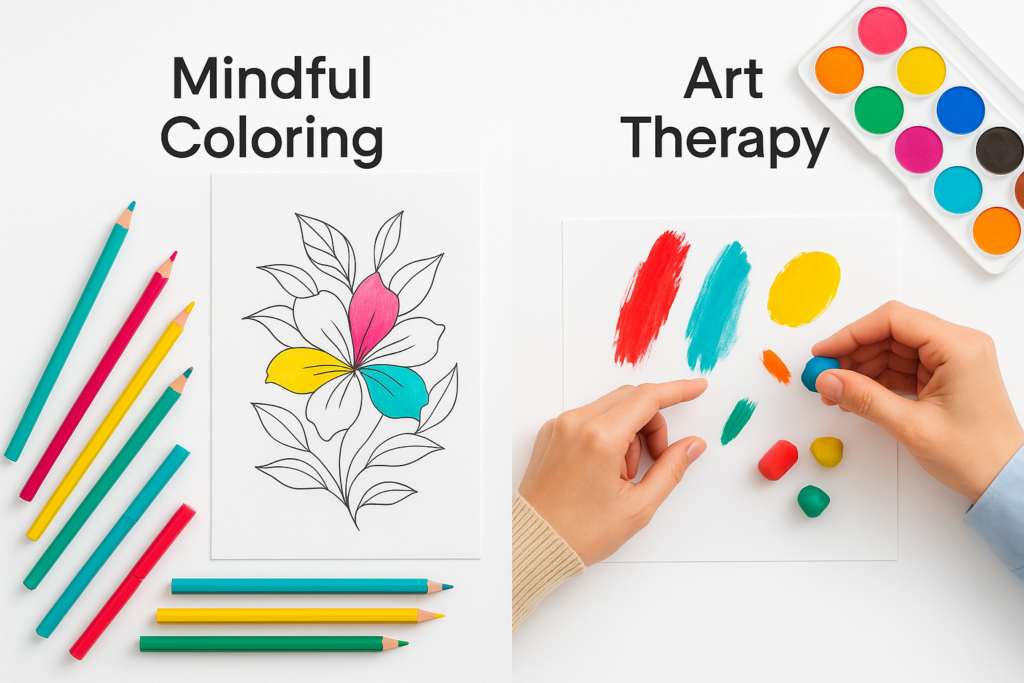
Why People Compare Mindful Coloring vs Art Therapy
The rise of adult coloring books has brought enormous new attention to mindfulness practices. Meanwhile, art therapy has become more recognized as a clinical support tool for trauma, anxiety, grief, and emotional regulation. Because both involve art materials and emotional expression, many people ask:
- Is mindful coloring therapeutic?
- Is art therapy just guided coloring?
- Can coloring replace therapy?
- Do both practices have scientific support?
The short answer: no coloring book or simple activity can replace art therapy, but mindful coloring has real, research-supported benefits when practiced intentionally.
A study published in Frontiers in Psychology found that structured coloring tasks significantly reduced anxiety by interrupting rumination and guiding attention toward sensory detail.
At the same time, art therapy involves professional assessment, emotional exploration, trauma-sensitive techniques, and personalized interventions from a trained therapist.
Both are valuable — but they are not the same.
What Science Reveals About Mindful Coloring vs Art Therapy
Mindful coloring and art therapy overlap in some benefits (like reduced stress), but they operate in different psychological domains.
Mindfulness research shows that mindful coloring:
- reduces activity in the amygdala (the brain’s fear center)
- lowers cortisol
- improves attentional control
- supports emotional grounding
- encourages flow state
Art therapy research shows:
- improved trauma processing
- deeper emotional exploration
- enhanced communication of internal states
- improved self-awareness and behavioral insight
- a safe avenue to process difficult experiences
Thus, comparing mindful coloring vs art therapy is not about determining which is “better,” but about understanding their different goals.
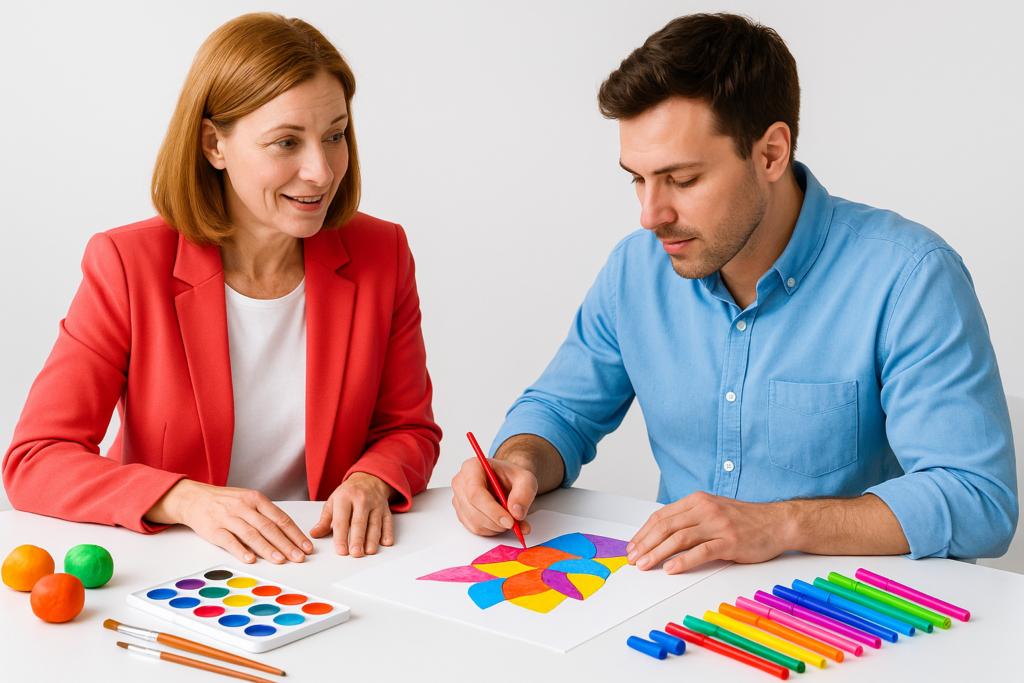
5 Major Differences in Mindful Coloring vs Art Therapy
These differences explain why the two practices cannot be used interchangeably.
1. Intention — Calm vs Clinical Emotional Exploration
Mindful Coloring Intention
The goal of mindful coloring is present-moment awareness. You observe the movement of your hand, the blend of colors, your breathing, and the sensory details of the experience.
The focus is on calming the nervous system, grounding attention, and relaxing the mind.
Art Therapy Intention
Art therapy is an intervention used by licensed clinicians. The intention is psychological insight, emotional processing, behavioral awareness, and therapeutic exploration. Art therapists use specialized techniques to:
- uncover internal conflicts
- address trauma
- process grief
- support emotional expression
- identify subconscious themes
Comparing mindful coloring vs art therapy here shows a fundamental distinction: one is meditative, the other clinical.
2. Facilitation — Self-guided vs Therapist-guided
Mindful coloring is a self-led activity. Anyone can sit down with a coloring page and practice mindfulness without external instruction. It is accessible, simple, and requires no training or interpretation.
Art therapy, however, is facilitated by a licensed art therapist with professional training in psychology, human development, and trauma-sensitive methods. Art therapists:
- choose therapeutic prompts
- interpret symbols and themes carefully
- maintain emotional safety
- respond to trauma reactions
- provide psychological insight
No coloring book can replicate this.
3. Emotional Depth — Surface Calm vs Internal Exploration
Mindful coloring reduces stress but does not intentionally evoke emotional content. It supports grounding, not emotional excavation.
Art therapy intentionally explores emotions — including difficult ones. It can bring up:
- hidden feelings
- personal narratives
- trauma memories
- relational patterns
This is why the comparison of mindful coloring vs art therapy shows a clear functional divide: one gently soothes, the other actively engages emotional material.
4. Tools and Materials — Structured Pages vs Creative Freedom
Mindful coloring uses pre-drawn pages. This structure supports focus and reduces decision fatigue.
Art therapy uses:
- blank paper
- clay
- acrylics
- collage
- mixed media
- symbolic objects
- sensory materials
Freedom of expression is essential. Structure is not the goal — expression is.
5. Outcomes — Relaxation vs Clinical Therapeutic Change
Mindful coloring leads to:
- reduced stress
- improved focus
- enhanced mindfulness
- calmer breathing
- emotional grounding
Art therapy leads to:
- trauma processing
- behavioral change
- emotional insight
- improved coping mechanisms
- enhanced communication skills
Both are beneficial, but they serve different needs.
Which Practice Should You Choose?
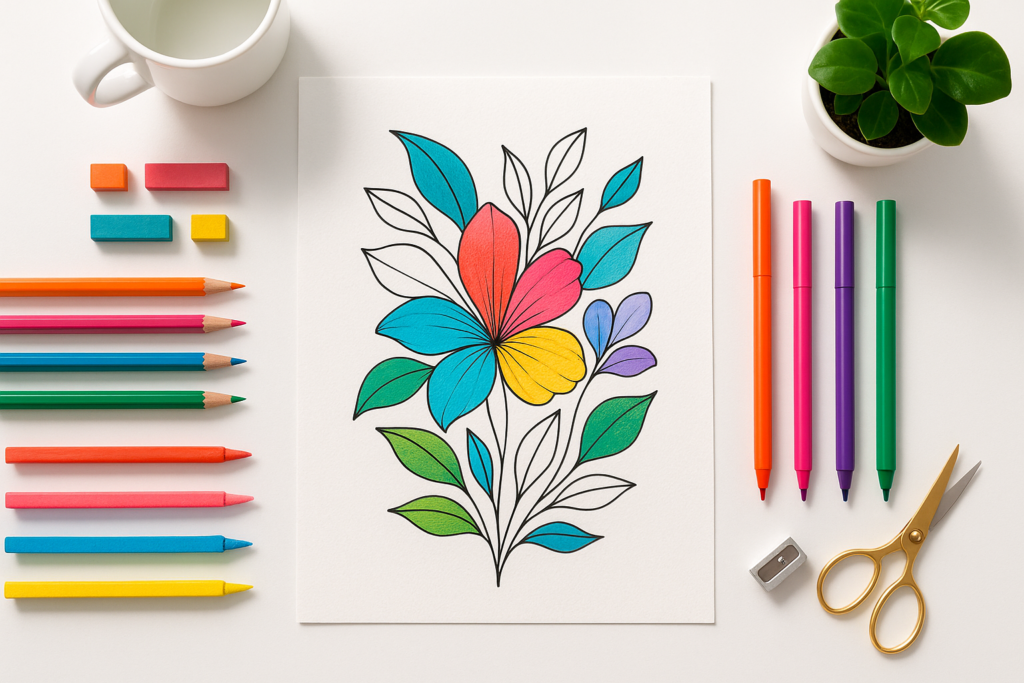
The choice depends entirely on your goals:
Choose Mindful Coloring if you want:
- relaxation
- anxiety reduction
- grounding during stressful moments
- sensory-based mindfulness
- accessible, low-pressure creativity
Choose Art Therapy if you need:
- emotional exploration
- trauma support
- a safe space to process internal struggles
- guidance from a trained clinician
- deeper psychological healing
Understanding mindful coloring vs art therapy empowers you to choose the practice that aligns with your emotional needs.
For additional mindfulness guidance, see:
7 Reasons Coloring Is a Form of Mindfulness – Science-Backed Benefits & How to Begin
For brain science behind coloring:
5 Powerful Reasons Mindful Coloring Calms Your Brain
How to Start With Mindful Coloring or Art Therapy
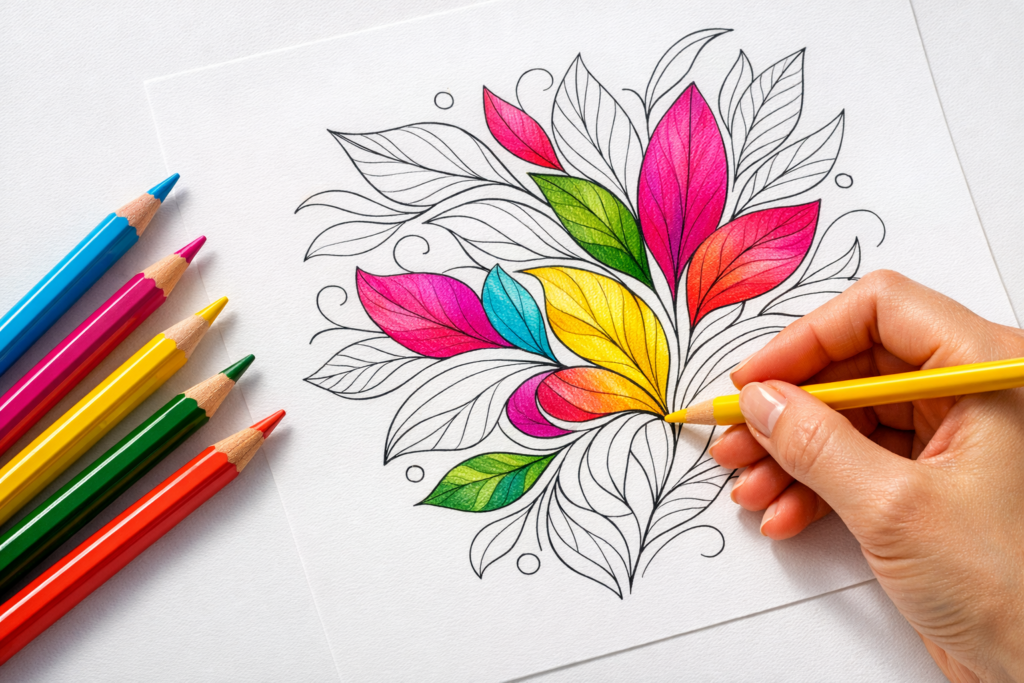
If You Want to Begin Mindful Coloring
Here’s a simple routine:
Step 1 — Choose a calming environment
Use warm light, soft textures, and minimal noise.
Step 2 — Set a mindful intention
Examples: “I want to slow down,” “I want to relax,” “I want to breathe.”
Step 3 — Color slowly
Notice:
- how the pencil feels
- how colors blend
- how your breathing changes
Step 4 — Observe your mind
When you drift into thought, return gently.
Step 5 — Reflect for 30 seconds
This reinforces the mindfulness benefits.
If You Want to Explore Art Therapy
Step 1 — Find a licensed art therapist
Use the U.S. Art Therapy Association directory
Step 2 — Identify therapeutic goals
Examples: grief, trauma, identity, anxiety, relationship issues.
Step 3 — Engage in structured sessions
Your therapist will guide the materials and prompts.
Step 4 — Explore the emotions that arise
Sessions may include reflection, discussion, or symbolic interpretation.
The comparison of mindful coloring vs art therapy reveals that both practices are powerful, but they serve very different purposes.
Use mindful coloring for grounding, relaxation, and meditation.
Use art therapy for emotional exploration, psychological healing, and therapeutic transformation.
Both practices offer unique paths toward emotional well-being. Your personal goals determine which one is right for you.