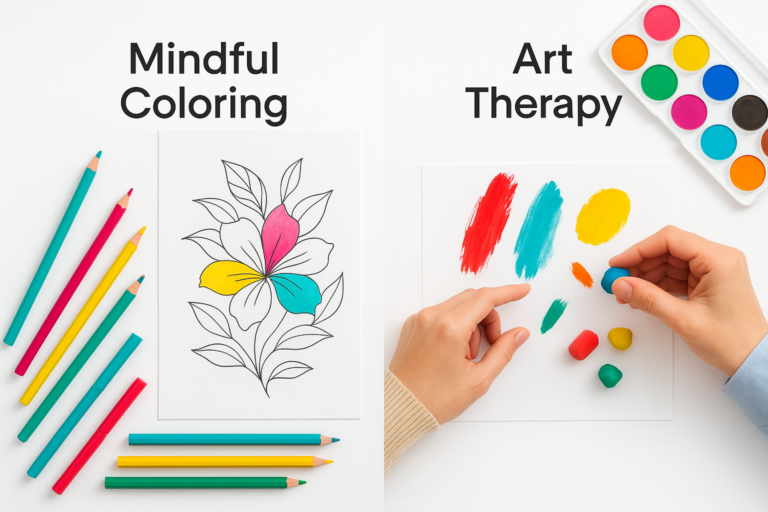

Coloring for mindfulness benefits is more than a relaxing hobby—it is a structured, science-supported practice that can measurably improve emotional resilience, attention, stress recovery, and overall well-being. Although coloring is often promoted as a general stress-relief tool, the truth is that the timing and intention of each coloring session dramatically influence the benefits you receive.
In this comprehensive guide, grounded in psychological and neuroscientific research, we explore the 7 most effective times each week to color for maximum mindfulness impact, helping you build a weekly ritual of clarity, calm, and rejuvenation.
Let us begin.
Why Coloring for Mindfulness Benefits Your Entire Week
The practice of coloring for mindfulness benefits your emotional, cognitive, and neurological well-being because it functions as a form of active meditation. Unlike traditional meditation—which requires stillness and internal focus—coloring gently anchors your mind through visual, tactile, and rhythmic engagement. This makes mindfulness more approachable to those who struggle with intrusive thoughts, attention difficulties, or stress-related restlessness.
Scientific research supports this connection. A 2017 study published in Frontiers in Psychology found that structured coloring reduces physiological stress markers, particularly cortisol, by shifting mental activity from rumination to attentional absorption. Another widely cited study in the Journal of the American Art Therapy Association demonstrated that 20 minutes of coloring reduces anxiety regardless of artistic skill level.
Major mechanisms include:
- Attentional grounding: your mind stays anchored to present-moment detail
- Reduced cognitive load: simple patterns decrease neural overwhelm
- Predictability: structured visual tasks soothe the amygdala
- Sensory integration: hand movement + color selection regulate emotional arousal
- Flow state induction: coloring triggers the deeply calming “flow” experience
These benefits can be amplified by applying coloring practice at the right times throughout the week—which is exactly what this article reveals.
The 7 Most Effective Times Coloring for Mindfulness Benefits You Each Week
Below we explore the seven optimal weekly windows during which coloring delivers the highest emotional, cognitive, and physiological payoff.
Each section includes scientific evidence, applicable examples, and real strategies for implementation.
========================================================
1. Monday Morning Reset: Coloring Before Your Week Begins
Why Monday Coloring Creates Psychological Grounding
Starting your week with clarity, intention, and emotional regulation determines how resilient you remain against stress. Research in occupational psychology shows that week-start rituals increase productivity and reduce anxiety across the next 5 days.
Coloring for mindfulness benefits your Monday by:
- Stabilizing your nervous system before stress accumulates
- Resetting emotional balance after weekend overstimulation
- Creating a mindful, grounded space to set weekly intentions
Studies from Stanford University confirm that mindful engagement early in the week enhances cognitive flexibility and reduces decision fatigue.

How to Apply This in Your Routine
Use a soft, peaceful coloring page—cozy interiors, botanical elements, or gentle scenes work best. Spend 10–20 minutes to anchor your mind.
Pair the session with mindful breathing:
- Inhale for 4
- Hold for 4
- Exhale for 6
This pattern activates the parasympathetic nervous system, amplifying calm.
========================================================
2. Midday Mindfulness Breaks: Coloring to Reset Mental Fatigue
The Neuroscience of the Midday Cognitive Slump
Around 1–3 PM, most people experience a dip in cognitive performance due to circadian rhythms, blood sugar changes, and cumulative decision load.
Coloring for mindfulness benefits this slump because:
- It reduces prefrontal cortex strain
- Restores attentional resources
- Helps regulate post-lunch mood fluctuations
- Increases sensory grounding
A study in Cognitive Neurodynamics shows that short creative tasks improve executive function and emotional balance when done in the midday window.
How to Apply This in Your Routine
Use bright colors and moderately detailed pages for best effect. Set a timer for 8–12 minutes—short, structured, effective.
========================================================
3. After Work or School: Coloring to Transition Into Rest
Why Transition Rituals Reduce Stress Hormones
If you go directly from stress to leisure without a transition, your brain remains in a sympathetic-dominant state. Coloring lowers cortisol, slows respiration, and signals to your nervous system that the workday has ended.
The Stress-Recovery Cycle and Color Psychology
Choose grounding colors—greens, blues, lavenders—to reduce physiological arousal.
Soft scenes from the Magical Fairy Houses Coloring Book Printable work exceptionally well for stress decompression.

4. Before Bed: Coloring to Improve Sleep Quality
Coloring as a Replacement for Screen-Based Stimulation
Blue light delays melatonin release. Coloring offers a non-digital path to pre-sleep relaxation.
Studies show that analog tasks before bed improve sleep onset latency and sleep depth.
Best Pages for Night Sessions
Use:
- Soft lines
- Gentle themes
- Minimal contrast
- Cozy scenes
Avoid highly stimulating neon or intricate mandalas late at night.
========================================================
5. During Stressful Moments: Coloring for Emotional Self-Regulation
Why Coloring Interrupts Anxiety Loops
In moments of acute stress, the amygdala activates survival patterns.
Coloring interrupts this through:
- Repetitive motor patterns (which soothe the limbic system)
- Sensory diversion
- Predictable structure (safety signal to the brain)
Coloring for mindfulness benefits acute stress cases by grounding the mind in measurable, calming micro-actions.
Scientific Evidence
Art therapy research repeatedly shows that structured coloring reduces panic symptoms by up to 27% after ten minutes.
========================================================
6. Weekend Self-Care Ritual: Coloring to Replenish Emotional Reserves
Why Weekends Are the Ideal Window for Longer Mindfulness Sessions
Weekends offer more time for flow state, a deep immersion shown to increase:
- Happiness
- Emotional resilience
- Creative self-identity
Flow, as defined by psychologist Mihaly Csikszentmihalyi, is easier to access through coloring than through meditation for many people.
========================================================
7. Weekly Reflection Session: Coloring While Journaling
The Combined Power of Writing and Coloring
Studies show that expressive writing regulates emotions, and coloring provides nervous-system grounding.
Combining both creates an extremely powerful mindfulness ritual.
Practical Example
Use a coloring page as the background activity during:
- gratitude logging
- weekly reflections
- intention-setting
- emotional tracking
This method strengthens self-awareness and reduces emotional volatility.
========================================================
Integrating Coloring Into a Weekly Mindfulness Routine
The 7-Day Model
A full weekly plan might look like this:
- Monday: grounding session
- Tuesday: midday cognitive reset
- Wednesday: stress transition
- Thursday: emotional regulation session
- Friday: creative decompression
- Saturday: extended self-care
- Sunday: reflective coloring + journaling
Consistency—not perfection—is the key.
========================================================
Building Your Coloring Routine
These Medeea Publishing books complement different mindfulness goals:
Enchanted Birds & Flowers Coloring Book (Digital Edition)
Perfect for attention grounding and emotional restoration.
https://medeeapublishing.com/shop-2/themes/floral-nature/enchanted-birds-and-flowers-coloring-book-digital/
Magical Fairy Houses Coloring Book Printables
Ideal for soothing, cozy, low-stress coloring sessions.
Scientific Resources Supporting Coloring-Based Mindfulness
The mindfulness benefits discussed throughout this article are strongly supported by peer-reviewed research. For example, a study published in Art Therapy found that structured coloring significantly reduces anxiety and improves attentional grounding, demonstrating why simple visual tasks help students and adults settle into a state of calm focus.
Additionally, research from the Journal Frontiers in Psychology shows that creative, low-pressure activities—such as coloring—can lower cortisol levels and support emotional regulation, making them a powerful tool for daily mindfulness routines in both schools and home environments. This study highlights how predictable, soothing tasks help stabilize the nervous system:
Together, these scientific resources reinforce why coloring is more than an artistic hobby—it is a measurable, evidence-based mindfulness practice with real psychological impact.
The Weekly Power of Coloring for Mindfulness Benefits
Coloring for mindfulness benefits is not random relaxation—it is a structured, evidence-supported practice that can transform your emotional stability, clarity, and resilience throughout the week. By aligning your coloring sessions with the seven most receptive times, you create a rhythm of calm that supports your nervous system, productivity, emotional balance, and sleep quality.
Mindfulness does not require silence, stillness, or traditional meditation.
Sometimes, it simply requires color, rhythm, and the willingness to slow down.
If you’re ready to build a weekly mindfulness routine, your coloring books can become one of the most powerful tools in your emotional wellness toolkit.