
Why Paper Still Wins in a Digital World
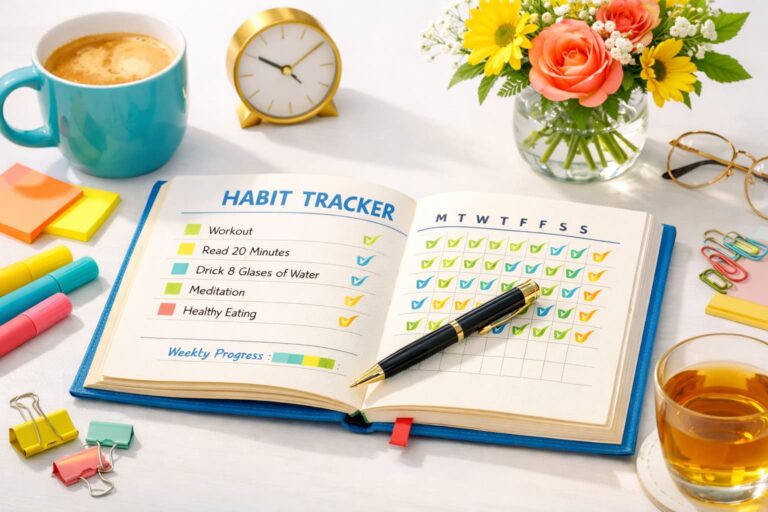
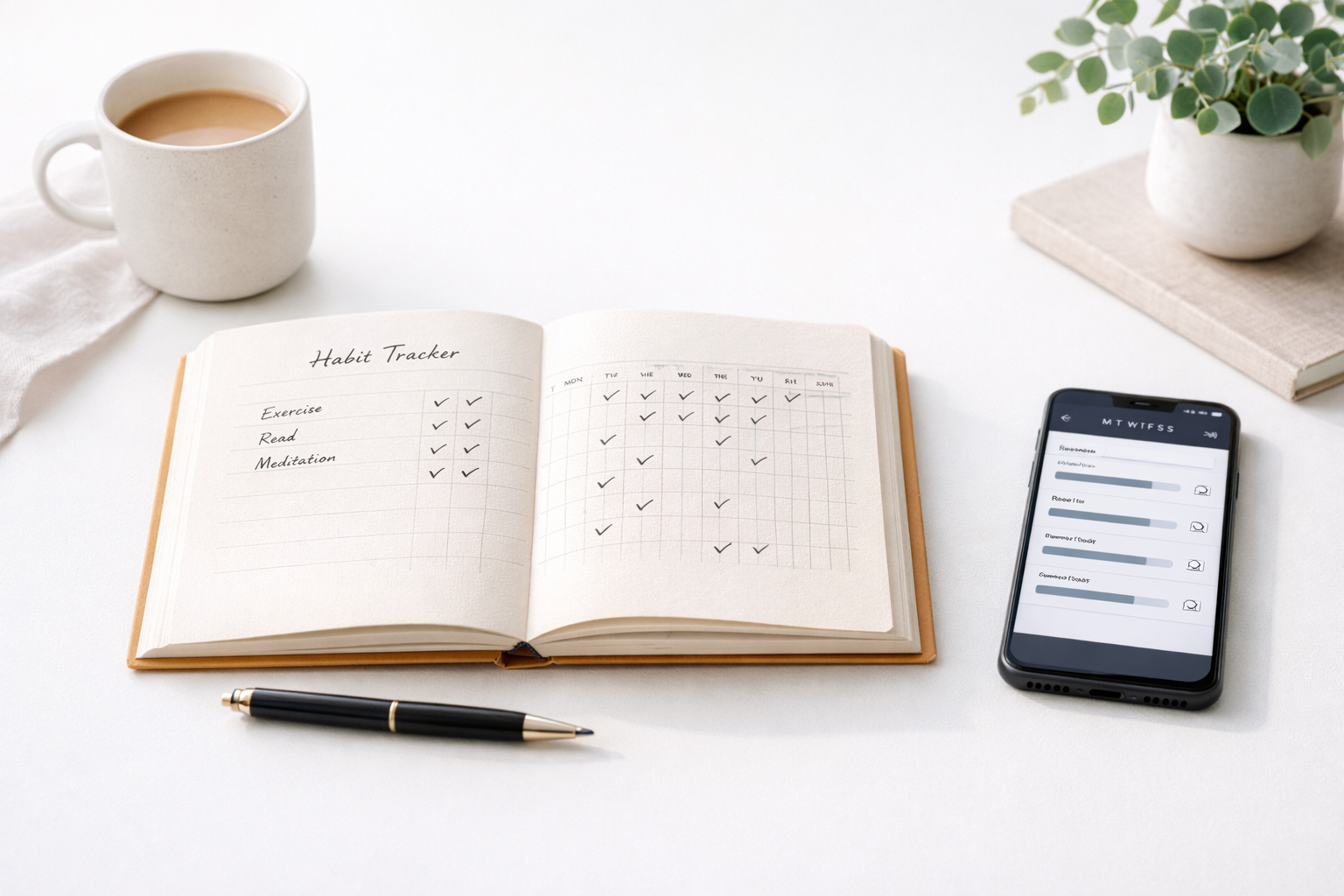
The Habit Tracker is more than just a notebook—it’s a proven tool for building lasting routines and staying accountable. While digital apps promise convenience, science shows that paper tracking delivers better focus, deeper learning, and stronger follow-through.
This post breaks down the seven key reasons the Habit Tracker outperforms its digital competition. Whether you’re building a wellness routine, aiming for productivity, or creating new lifestyle habits, you’ll learn why a simple spiral-bound notebook might be your smartest tool yet.
Reason 1: Handwriting Boosts Memory and Motivation
What Type of Habit Tracker Is the Most Effective?
According to a study published in Psychological Science, handwriting activates regions of the brain associated with learning and memory. Writing down your habits helps you remember goals better than typing them into a phone.
The Habit Tracker taps into this powerful advantage by encouraging daily handwritten check-ins. You physically engage with your progress, which strengthens your mental connection to the habit.
Reason 2: Fewer Distractions, More Focus
Why Should I Choose Paper Over an App?
Apps come with pings, pop-ups, and endless screen time. Your Habit Tracker, by contrast, is always on and always quiet.
You won’t fall down a rabbit hole of social media while filling out your tracker. Instead, you gain mindful moments that help you build habits intentionally.
This kind of distraction-free space fosters true focus, helping you reinforce daily goals and reflect without digital overload.
Reason 3: Flexibility You Can Actually See
Unlike apps, which force you into pre-made templates or tracking formats, this Habit Tracker lets you create your own layout. Each weekly page is undated, so you never feel behind.
Use it daily or occasionally, for multiple goals or just one. Track habits like hydration, workouts, sleep, mindfulness, screen time, and more—with total freedom.
Reason 4: Encourages Focus Through Simplicity
What Should I Track in a Habit Tracker?
The beauty of paper lies in its simplicity. There are no algorithms or distractions—just you, a pen, and your vision.
You might choose to track:
- Sleep quality
- Meditation sessions
- Reading or journaling time
- Stretching or fitness routines
- Gratitude entries
The Habit Tracker lets you design a routine that supports focus and progress.
Reason 5: Visually Rewarding Progress
Your mind loves visuals. Checking a box or coloring in a square on paper gives your brain a dopamine boost—that satisfying “I did it!” feeling.
Apps simulate this, but science shows tactile engagement increases emotional connection. That means you’re more likely to keep going.
Your Habit Tracker is a physical record of your success—no deleted files, no app crashes.
Reason 6: Portable, Durable, and Always On
No battery? No updates? No problem.
This spiral-bound Habit Tracker is built for the real world. Toss it in your bag or leave it by your bed. It’s there whenever you need it, without having to tap and scroll.
Plus, with a durable matte cover and thick pages, it resists wear and tear while looking elegant.
Reason 7: Encourages Reflection and Self-Awareness
How Do I Start Using a Habit Tracker?
Reflection is key to habit building. Unlike apps that nudge you to complete tasks, the Habit Tracker invites you to slow down, evaluate your week, and note what helped or hindered your progress.
Each blank page is a new opportunity to experiment and adjust. You’re not just tracking habits—you’re becoming more self-aware.
What is a Habit Tracker and How Does It Work?
A habit tracker is a simple tool—often a notebook or app—that helps you log and monitor behaviors you want to build or change. Essentially, you decide which habits (tasks) you want to practice (e.g., journaling, exercise, studying), then each day you mark whether you completed them. Over time, you see your progress visually (like a grid of checkmarks), which creates motivation and accountability.
Tracking your habits works by leveraging basic psychology: self-monitoring and feedback. When you check off a task, it triggers a small reward in your brain. Studies show that simply measuring and tracking a behavior significantly increases the likelihood you’ll stick to it. In one analysis of over 19,000 people, those who monitored their progress consistently achieved their goals at much higher rates. The act of writing things down or marking a box on paper provides immediate feedback and a sense of accomplishment (a tiny dopamine reward) every time. This feedback loop – cue → behavior → reward – reinforces the habit loop in your brain.
Furthermore, offloading your intentions into a tracker reduces mental clutter. Our working memory can only hold so many tasks at once. When you track habits in a notebook (especially one you see on your desk or nightstand), you don’t have to remember mentally. The cues (pages) and logs act as external reminders. Over time, this shifts the responsibility of remembering from fragile mental recall to a sturdy, visible system.
Key Takeaway: A habit tracker turns abstract goals into concrete data. By writing or checking off tasks, you give your brain clear feedback and rewards, making habits more likely to form. In essence, you’re training your focus: each checkmark reaffirms “I am someone who completes this habit.” Over weeks, these small confirmations build a new identity of consistency.
Do You Have the Cover and the Inside Loaded?
Focus on this: our Spiral-Bound Habit Tracker comes fully “loaded” with useful content from cover to cover.
- Durable Spiral Binding & Cover: The sturdy metal spiral binding allows the journal to lie flat and fold back, making it easy to write on any page. The cover is made of thick cardstock (or hardcover, if applicable) with a trendy design (e.g., watercolor florals or geometric focus motifs). It’s both stylish and hard-wearing, so tossing it in your bag won’t harm the pages inside.
- Pre-Loaded Goal Planning: Inside, the first pages guide you through goal-setting and habit selection. You’ll find prompts to write a personal mission statement, list big-picture goals, and break them into smaller daily habits. Having these planning pages “loaded” means you don’t have to come up with a layout yourself. We’ve included examples of habit ideas and tips on how many to track (3–5 max for starters).
- Monthly, Weekly, and Daily Tracking Sections: Each month begins with a goals review and habit tracker grid. The weekly layouts include space for planning tasks and reflecting on wins or challenges. Daily sections have checkboxes for your chosen habits and a small area for notes or reflections. All pages are adorned with motivational quotes or productivity tips to keep you inspired.
- Built-In Accountability: The journal includes built-in review pages (e.g., end-of-week or end-of-month reflection prompts). These ask you to note successes and pitfalls, fostering a growth mindset. By focusing on reflection, you ensure the “inside” content isn’t just static. This is aligned with research that suggests reflecting on your behavior enhances meta-cognition and self-control.
- Stickers and Fun Extras: Some editions come with a sheet of stickers (stars, checkmarks, or fun icons) to mark achievements. Adding a tactile element like stickers can make tracking more enjoyable and reinforce your focus on the habits.
Yes, the planner is loaded with everything you need to start. You don’t need to buy extra inserts or printouts. Just open it, fill in your habits, and start tracking. This is intentional: when tracking is convenient and pre-formatted, you’re more likely to maintain it. According to habit-formation studies, removing friction and decision paralysis is crucial for consistency. We’ve done that work for you.
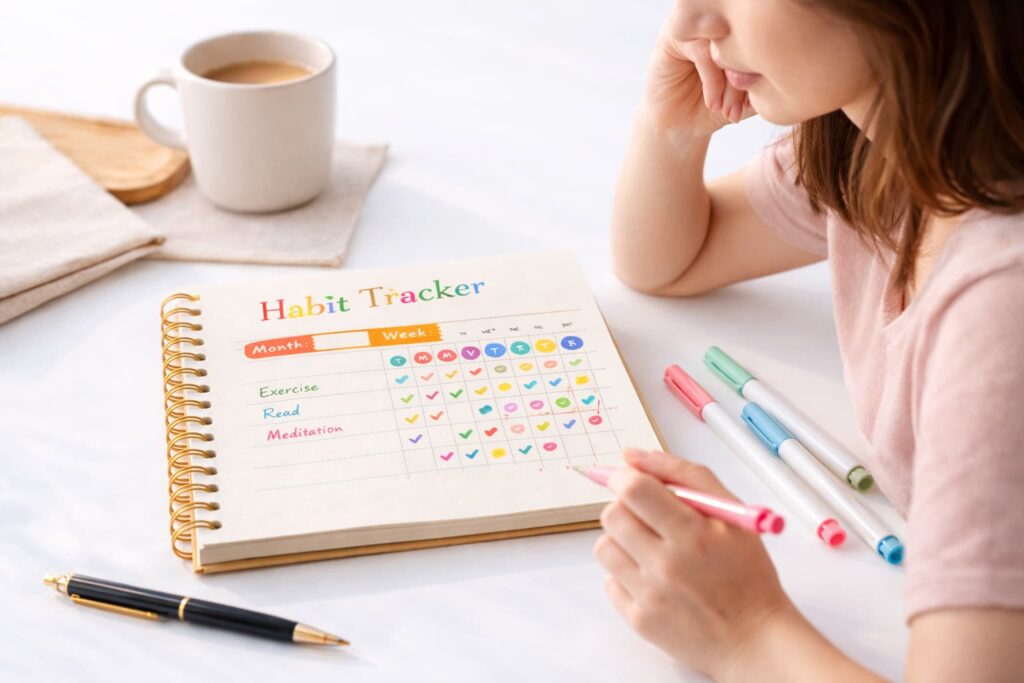
What is the Best Free Tracker App?
Focus on finding the right tool: if you prefer an app, there are many free options, but they vary greatly. Here are a few popular free habit-tracking apps (at the time of writing) with quick notes:
- Loop Habit Tracker (Android) – Open-source, minimalistic, with strong reminder features. It offers statistics and a scoring system. Good for simple daily habits. (No iOS version.)
- Habitica (iOS/Android) – Turns habits into a role-playing game. You earn rewards for streaks. Fun if you like gamified systems, but can be distracting.
- Streaks (iOS) – Very user-friendly with clean design, encourages long streaks of habit completion. Free version limits number of habits (premium unlocks more).
- Strides (iOS) – Combines habits and goals, has charts and flexible goal types. The free version covers basic tracking, with more features in paid.
- HabitBull (Android/iOS) – Cross-platform, with motivational quotes and pictures. It’s free for limited habits (premium needed for unlimited).
- Daylio (iOS/Android) – A micro-diary style: you track habits and mood without writing. Good for mood or exercise logs.
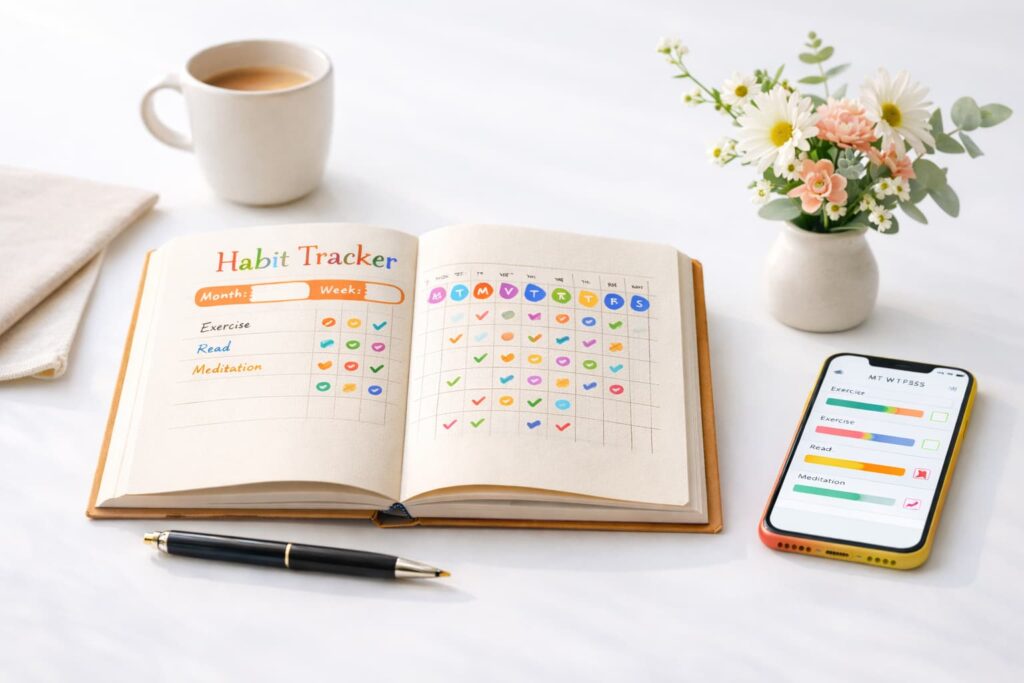
Each app has strengths, but no app will “magically” build your habits without your effort. They can send reminders and show graphs, but they still rely on you to open them and log in. Studies have shown many people abandon even good apps quickly if they require daily effort. Also, apps can sometimes make you feel good only within the app environment (“I did it for the app’s streak”), rather than integrating the habit into your identity.
In contrast, our Spiral-Bound Habit Tracker requires no downloads or battery. It’s always with you when you grab it. You see it on your desk or nightstand, serving as a constant cue. Research on habit formation indicates that when you attach a behavior to visible cues in your environment, it’s easier to perform automatically. A physical planner can be that cue. Plus, using pen and paper has cognitive benefits over tapping on a screen.
If you prefer an all-in-one digital solution, feel free to use one of the free apps above alongside your Spiral-Bound Habit Tracker. Some people check off easier habits (like water or walking) on an app, while reserving their journal for more complex goals (like project progress or reflection). The key is to ensure your habit tracker (app or journal) doesn’t become a chore. We designed our Spiral-Bound version to be as engaging and flexible as possible, so it complements any digital tool you use.
How Does a Spiral-Bound Habit Tracker Work? How Can You Use It?
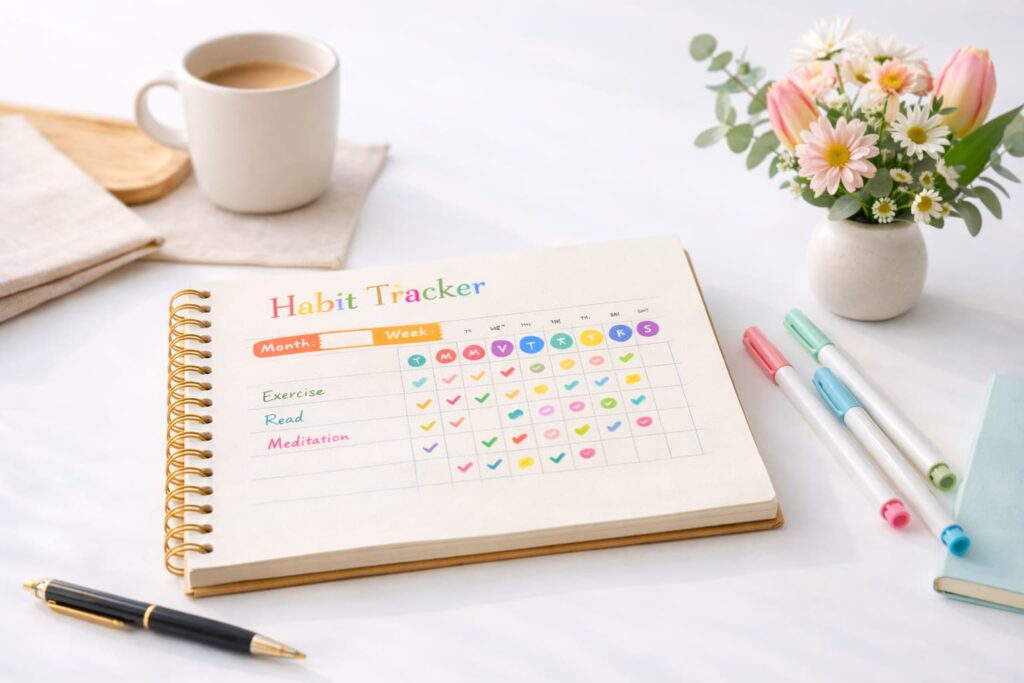
Focus on the process: How do you make a habit tracker part of your routine? Here’s a simple approach:
- Set Up Your Tracker: Start by filling in the introduction pages. Write down 3–5 key habits you want to build this month. For each, decide a cue (like “after breakfast” or “before bedtime”) that will prompt the habit. Set a realistic initial frequency (every day, or 3x a week, etc.).
- Daily Logging: Each morning or evening, open your Spiral-Bound Habit Tracker and find the current date’s section. Check off the habits you completed. If you missed one, that’s OK – habit science shows missing an occasional day doesn’t ruin the process. Simply record it and plan to do it tomorrow.
- Weekly/Monthly Review: Use the weekly reflection pages to note any patterns. Did you consistently skip evenings? Did you face the same obstacle two weeks in a row? Understanding this helps you adjust. At month’s end, review your overall streaks. Celebrate wins (even small ones) and rewrite goals for the next month.
- Stay Accountable: Share your commitment with a friend or join a community. If using the Spiral-Bound Habit Tracker in a class or group, you might even show your tracker progress for accountability. Social support is known to improve habit success. If you find your progress visual on paper, you may naturally feel motivated to share that pride.
- Adapt and Iterate: If a habit isn’t sticking, reframe it or adjust the cue. If too ambitious, break it into smaller steps. The planner’s flexibility (undated pages, free journaling space) means you can customize each habit’s approach. Over time, refine which habits to track.
Throughout this process, focus is your guiding principle. Every time you open the tracker to log or review, you’re reinforcing your focus on what matters. Scientific evidence supports this: consistent repetition in a stable context (your daily routine plus a physical tracker) is what eventually makes a habit automatic. And as habits form, your need to consciously decide each time diminishes – the spiral-bound notebook will simply be part of your normal day.
Using Focus to Boost Habit Formation
The Spiral-Bound Habit Tracker is more than just pages; it’s a concentration tool. Habit-forming research suggests that environmental cues and focus-enhancing strategies speed up new habits. By dedicating a beautiful, spiral-bound journal to your habits, you’re telling your brain “this is important.” The first-person narrative of habit theory is that people become who they think they are. Each completed habit mark says “I am someone who follows through,” reinforcing your identity.
Focus on small wins: that satisfying checkmark or completed page gives your brain a micro-dose of reward. This matters because dopamine, the brain’s feel-good chemical, actually responds to predictable rewards. By plotting your progress on paper, you set up a consistent reward (seeing the checkmark turn green or seeing your weekly grid fill). Over time, these cumulative wins create momentum and confidence. This momentum lowers resistance (friction) for future efforts.
Focus on longevity: Remember the myth of “21 days to form a habit.” Science debunks it. Most habits take months, not weeks. With the spiral-bound tracker by your side, you won’t feel discouraged by early slip-ups. It’s loaded with pages that let you start at any time of year. You can pause after a busy week (say, if you travel) and pick back up without wasting pages. This flexibility keeps tracking sustainable.
Ready to Elevate Your Focus?
Focus on success: building habits is the cornerstone of long-term achievement and well-being. Whether you’re a student, a professional, or anyone looking to improve daily routines, the right tools matter. Our Focus Spiral-Bound Habit Tracker is crafted to be that tool. It harnesses proven habit science, elegant design, and the power of focus to guide you to your goals.
Don’t just take our word for it – the research shows tracking and handwriting improve habit success. Now imagine combining that with a beautifully laid-out planner designed for habit and goal tracking. That’s what our product delivers.
Take action: Start focusing on what matters today. Grab your Spiral-Bound Habit Tracker and begin turning daily actions into lasting habits. Remember: consistency is built one checkmark at a time. Visit our product page to order your Focus Spiral-Bound Habit Tracker now and take the first step toward a more focused, productive you!
Product Features
What’s Inside?
- 100 undated habit-tracking pages
- Elegant floral design
- 7×10 spiral format
- Weekly layout with space for notes
- Lightweight and portable
Perfect For:
- Wellness and fitness routines
- Productivity goals
- Student planning
- Work-life balance
Or browse more Journals and Planners
FAQs
H2: What Type of Habit Tracker Is the Most Effective?
Research suggests that habit success depends on consistency, not complexity. Tools that promote regular use—like a paper Habit Tracker—are best.
Paper or Digital: Which Habit Tracking Method Works Best?
Studies show that writing by hand improves goal commitment and recall. Apps may track data, but paper deepens intent.
What Is the Best Free Tracker App?
Apps like Streaks or Habitica are great, but they can’t match the emotional impact and personal reflection of using a physical Habit Tracker.
The Habit Tracker gives you more than a checklist—it gives you ownership of your goals. From improved focus to lasting motivation, it makes success a daily experience.
Ready to build real habits?