
The Modern Student’s Need for Mental Escape Art
Current research suggests that university students are facing higher levels of anxiety than previous generations. The constant connectivity provided by smartphones means that academic stress doesn’t end when you leave the classroom; it follows you into your bedroom via emails and group chats. This “always-on” culture makes it incredibly difficult to find a moment of peace. Engaging in mental escape art provides a physical and psychological barrier against this digital intrusion.
When you sit down with a coloring page, your world shrinks to the tip of your colored pencil and the intricate lines of the design. This narrowing of focus is actually a form of meditation. Unlike traditional meditation, which many students find difficult because it requires “doing nothing,” coloring gives the hands a task, which in turn quiets the mind. It is a proactive way to achieve a lifestyle of balance and wellness.
Understanding the Psychology of the “Flow State”
One of the primary reasons mental escape art is so effective is its ability to induce a “flow state.” Flow, a concept popularized by psychologist Mihaly Csikszentmihalyi, is the state of being completely immersed in an activity. For a student, whose attention is usually fragmented between five different browser tabs and a textbook, the flow state is a rare gift. Coloring facilitates this because it is challenging enough to be engaging but simple enough to not be stressful.
In this state, the passage of time seems to change, and the nagging voice of “imposter syndrome” or “exam dread” fades into the background. This is why many psychologists recommend creative outlets as a primary tool for stress management. According to Psychology Today, mindfulness practices like these can significantly lower cortisol levels and improve overall emotional regulation.
Why University Students Need Mental Escape Art Today
The academic environment is inherently competitive. Whether you are vying for the top grade in a law seminar or trying to master organic chemistry, you are constantly being evaluated. Mental escape art offers a “no-judgment zone.” There is no right or wrong way to color a dragon, a floral pattern, or a geometric mandala. This lack of evaluation is therapeutic for a brain that is exhausted by constant grading.
Moreover, the tactile sensation of paper and the vibrant transition of colors provide sensory stimulation that is often missing from a student’s day-to-day life, which is heavily dominated by screens. This lifestyle shift—moving from digital consumption to physical creation—rebalances the brain’s reward system. Instead of the cheap dopamine hits from social media likes, you get the sustained satisfaction of completing a beautiful piece of art.
1. Reducing Academic Anxiety Through Creative Focus
Anxiety is often a result of “future-tripping”—worrying about things that haven’t happened yet. Will I pass the exam? Will I get a job? Coloring anchors you in the present. You are not thinking about your thesis; you are thinking about whether to use teal or emerald green. This immediate focus is the essence of mental escape art.
Medeea Publishing’s books are specifically crafted with varying levels of complexity. For those days when your brain is too fried for intricate patterns, we have broader, bolder designs. For the days when you need to lose yourself for hours, our intricate illustrations provide the perfect challenge. These books serve as the ultimate tool for anxiety relief, helping you reclaim your calm.
2. The Benefits of a Digital Detox: Reclaiming Your Mental Space
In the modern academic landscape, students find themselves tethered to technology more than ever before, spending an average of 8 to 10 hours a day staring at high-resolution screens. Between attending virtual lectures, researching online databases, and the inevitable social media “scroll,” the biological toll is staggering. This constant digital bombardment leads directly to debilitating digital eye strain and a persistent “brain fog” that makes it nearly impossible to focus on deep work. To combat this, more students are turning to mental escape art as a tactical intervention. By replacing the glowing rectangle of a smartphone with the tactile, physical presence of a coloring book, you provide your ocular muscles with a much-needed break from the intensity of near-point focus.
Incorporating mental escape art into your evening routine serves a vital physiological purpose beyond mere relaxation. It is a well-documented fact that the short-wavelength blue light emitted from our screens inhibits the production of melatonin, the hormone responsible for regulating our circadian rhythm. When you stare at a screen late at night, you are effectively lying to your brain, telling it that it is still midday. In contrast, the soft, reflected light of a physical coloring book does exactly the opposite. Because you are looking at light reflected off paper rather than a direct light source, it signals to your autonomic nervous system that the day’s cognitive work is complete, allowing your body to transition from a high-alert “fight or flight” mode into a “rest and digest” state.
By adopting this creative lifestyle, you are essentially drawing a line in the sand and setting a firm psychological boundary. Engaging in mental escape art is an act of self-reclamation; it is a way of telling yourself that your time is inherently valuable and that you deserve at least one sanctuary in your life that isn’t colonized by the constant ping of notifications or the pressure of the infinite scroll. This boundary-setting is crucial for mental health, as it prevents the professional and academic world from bleeding into your private hours of rest. You are creating a “no-notification zone” where your only responsibility is the movement of color across a page.
The results of this shift are often immediate and profound. Many students find that dedicating just 15 to 20 minutes to mental escape art immediately before bed leads to significantly deeper, more restorative sleep cycles. Instead of your brain processing a chaotic jumble of digital data as you drift off, it processes the rhythmic, repetitive, and soothing motions of artistic creation. This leads to a higher quality of REM sleep, meaning you wake up the next morning with a sharper mind, refreshed eyes, and a nervous system that is truly prepared to handle the challenges of a new day. By choosing the pencil over the pixel, you aren’t just coloring—you are safeguarding your brain’s ability to heal and rest.
The Therapeutic Power of Mental Escape Art
Beyond simple relaxation, there is a biological component to why coloring works. When you engage in repetitive, rhythmic motions—like the back-and-forth of a pencil—you activate the parasympathetic nervous system. This is the “rest and digest” system that counteracts the “fight or flight” response triggered by academic stress. This is why mental escape art feels so physically relieving; your heart rate actually slows down, and your muscles lose their tension.
As noted by experts at the Mayo Clinic, art-based activities can help individuals cope with various stressors by providing a non-verbal outlet for emotions. For a student who may not have the words to describe their burnout, a splash of color on a page can say it all.
3. Enhancing Concentration and Cognitive Function
It might seem counterintuitive, but taking a break to color can actually make you a better student. The part of the brain that handles focus needs rest to function at its peak. When you engage in mental escape art, you are giving your executive functions a “micro-break.” When you return to your studies, you often find that your concentration is sharper and your ability to retain information is improved.
Think of it like an athlete stretching after a workout. Coloring is the “stretch” for your mind. It keeps the cognitive muscles flexible and prevents the “locking up” that happens during periods of intense cramming. Discover more about Coloring and Stress Relief to see how different themes can impact your mood and productivity.
How Mandalas and Geometric Patterns Help
Many of Medeea Publishing’s most popular and beloved books feature intricate mandalas, and for a very scientific reason. These circular designs are not merely pretty patterns; they have been utilized for centuries across various cultures as a profound tool for centering the soul and anchoring the wandering mind. In the demanding context of mental escape art, mandalas serve as a visual map for a brain that feels lost in the fog of burnout. They provide a highly structured, rhythmic path for the eyes to follow, which is incredibly grounding for someone feeling scattered, disorganized, or emotionally frayed. By moving the pencil from the center outward, or vice versa, the user engages in a somatic ritual that pulls them out of their ruminating thoughts and into the physical present.
The inherent symmetry of these geometric patterns appeals to our deep, innate desire for order and predictability. When you are halfway through a chaotic semester, juggling impossible deadlines and social pressures, the world can feel like it’s spinning out of control. Utilizing mental escape art through mandalas allows you to step into a small, contained universe where everything is balanced and every line has a logical destination. This provides a much-needed sense of control and agency. In this space, you are the architect of order; you decide where the color goes, and you ensure the symmetry is maintained, which acts as a powerful psychological counterweight to the unpredictability of daily life.
Furthermore, the repetitive nature of geometric coloring induces a “meditative state” similar to the effects of deep breathing. Because the patterns are predictable, the brain doesn’t have to work hard to figure out “what comes next,” allowing the prefrontal cortex to finally take a break. This is the ultimate goal of mental escape art: to lower the cognitive load until the nervous system feels safe enough to relax. As you fill in each repeating petal or triangle, the rhythmic motion becomes a form of “active meditation.” Your heart rate slows, your breathing deepens, and the mental noise that usually fills your head begins to fade into a quiet hum.
Ultimately, incorporating these designs into your routine isn’t just about making art; it’s about brain health. Engaging with mental escape art specifically designed with geometric precision helps retrain the brain to find focus in a world designed to distract us. By the time you finish coloring a single mandala, you aren’t just left with a beautiful, vibrant design—you are left with a mind that has been “reset.” You emerge from the process feeling more integrated, more capable, and significantly more resilient, ready to face the complexities of the semester with a newfound sense of internal harmony.
How do you usually feel after finishing a complex geometric pattern—do you find it more relaxing than free-form drawing?
4. A Budget-Friendly Wellness Solution
University life is expensive. Therapy, spa days, and weekend getaways are often out of reach for the average student budget. Mental escape art is one of the most cost-effective wellness interventions available. A single Medeea Publishing coloring book and a set of pencils can provide dozens of hours of therapy-grade relaxation for the price of a couple of lattes.
This accessibility is vital. We believe that mental health support should not be a luxury. By making coloring a part of your lifestyle, you are investing in your well-being without breaking the bank. It is a portable sanctuary that fits in your backpack right next to your laptop.
Integrating Coloring into a Busy University Schedule
The most common objection a student has when introduced to the concept of therapeutic creativity is, “I simply don’t have time to color!” Between grueling lab reports, back-to-back lectures, and the social pressures of campus life, the idea of adding “art” to a to-do list can feel like an extra burden. However, the true beauty of mental escape art is that it is fundamentally designed to be flexible. It does not require a huge, uninterrupted time commitment or a dedicated studio space.
The Science of the “Pockets of Peace”
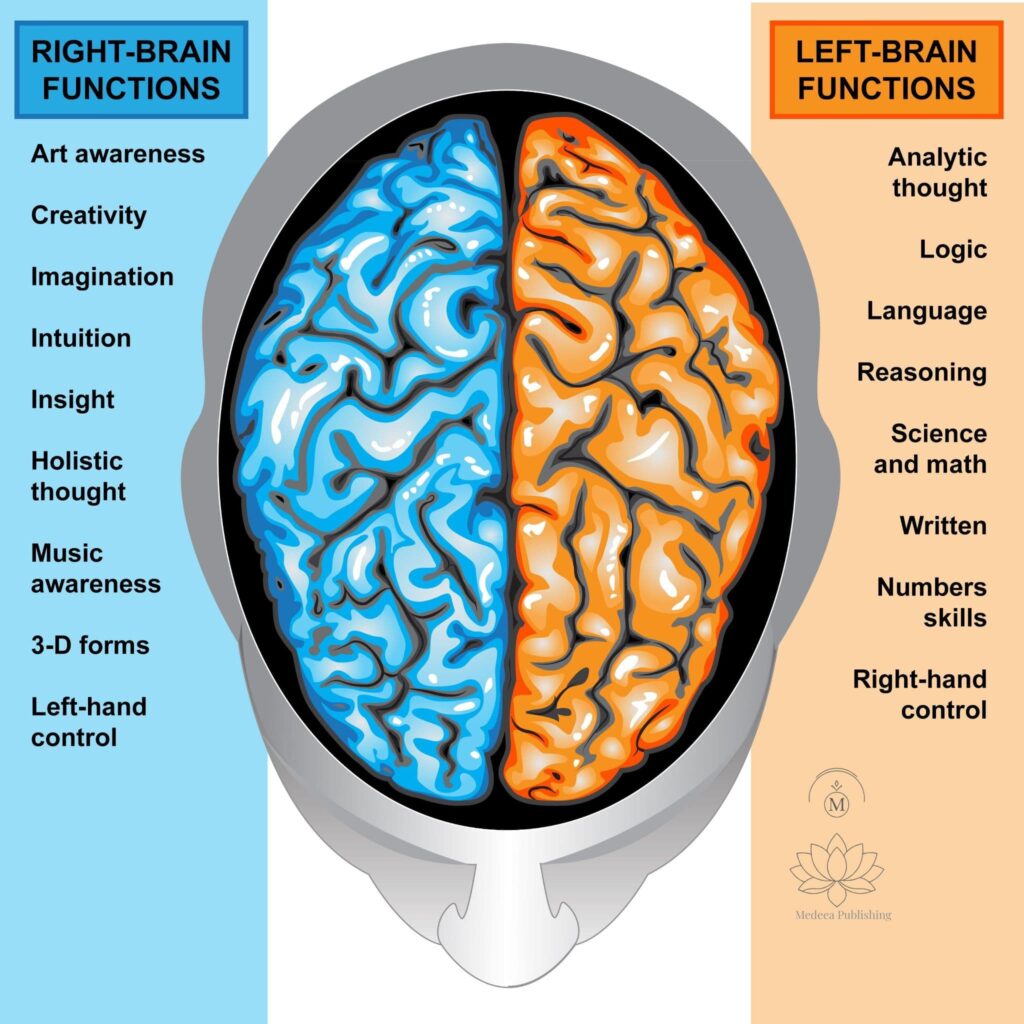
You don’t need to finish an entire, intricate page in a single sitting to reap the neurological benefits. In fact, some of the most profound shifts in focus happen when you utilize mental escape art for just five minutes between classes or ten minutes while waiting for your laundry to finish. These “pockets of peace” act as a reset button for a nervous system frayed by deadlines. By engaging the right hemisphere of the brain, you allow the overtaxed left hemisphere—responsible for logic and math—to rest.
Strategic Study Integration
Instead of viewing coloring as a separate chore, successful students view it as a supplementary tool for academic performance. Many find that engaging in mental escape art while listening to recorded lectures or educational podcasts actually helps them process and retain information better. This is not just a distraction; it is a strategic form of “dual-tasking.”
Quiet the “Fidgety” Brain: By giving your hands a repetitive, low-stakes motor task like shading a flower, you effectively quiet the internal noise.
Absorption over Boredom: This allows the analytical part of your mind to absorb complex audio content without drifting into daydreams or anxiety.
A Creative Lifestyle: When you integrate mental escape art into your study routine, you transform what would have been a stagnant session into a dynamic and creative lifestyle experience.
Long-Term Benefits
By the end of a long semester, these small increments of time—five minutes here, fifteen minutes there—add up to hours of active stress management. You are essentially training your brain to find calm in the midst of a storm. Rather than waiting for the “perfect” time to relax (which usually never comes during finals week), you are weaving relaxation into the very fabric of your day.
Ultimately, making space for mental escape art isn’t about finding more time in your day; it’s about making the time you already have more productive, peaceful, and sustainable for your long-term mental health.
5. Building a Supportive Community
Coloring doesn’t have to be a solitary activity. “Coloring circles” are becoming popular on many university campuses. Students meet in common areas or dorm rooms to color together and chat. This social aspect of mental escape art helps combat the loneliness and isolation that many first-year students feel. It provides a low-pressure environment for social interaction—there’s no need to maintain constant eye contact or perform; you can just “be” together.
Medeea Publishing encourages students to share their completed works on social media, creating a virtual community of creators. Seeing how someone else interpreted the same design you are working on can be inspiring and foster a sense of belonging in a global lifestyle movement of wellness.
6. The Nostalgia Factor
There is a powerful psychological comfort in nostalgia. For most of us, coloring was a staple of our childhood—a time before we had to worry about GPAs, student loans, or career paths. Engaging in mental escape art taps into those positive childhood memories. It activates the “inner child,” reminding you that you are more than just a student or a future worker; you are a creative being who deserves to play.
This regression is healthy. It provides a temporary reprieve from the “adulting” that university life demands. When you pick up that crayon or pencil, you are reclaiming a piece of your identity that existed before the world started telling you who you “should” be. This is the ultimate form of mental escape art.
Choosing the Right Tools for Your Mental Escape
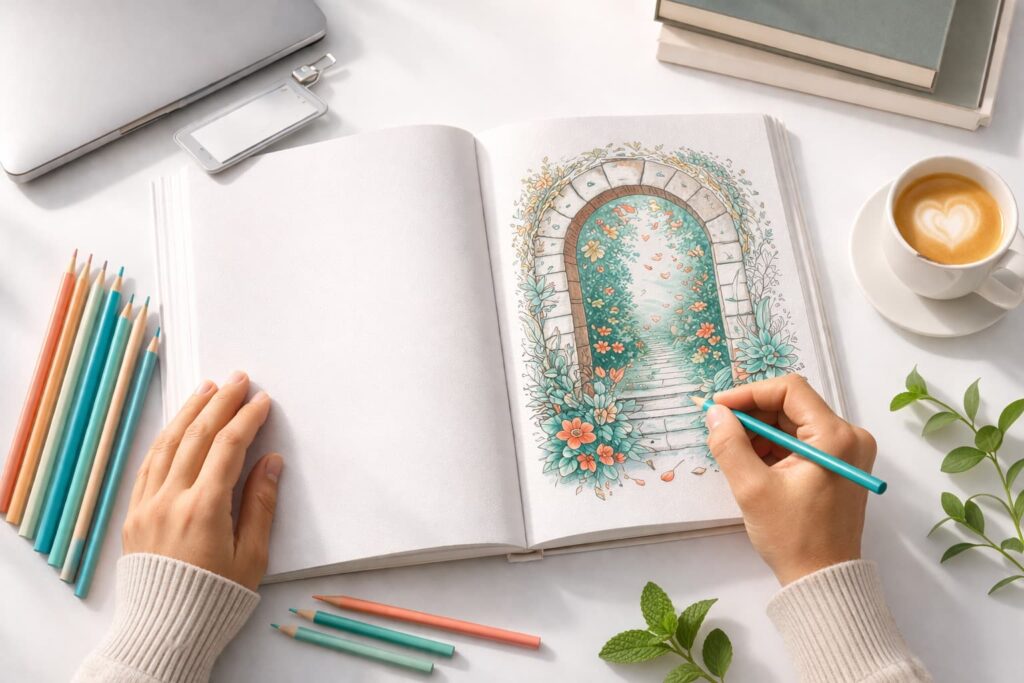
Not all coloring books are created equal. When using coloring for stress relief, the quality of the experience matters. This is why Medeea Publishing focuses on high-quality paper that prevents bleed-through, allowing you to use markers, gel pens, or traditional colored pencils. The tactile experience of the pencil gliding across smooth paper is a key component of the sensory relief that mental escape art provides.
We offer a variety of themes to match your mood. Feeling frustrated? Choose our “Stress-Relief Patterns.” Feeling uninspired? Try our “Nature and Landscapes” series. Each book is a curated journey designed to facilitate your lifestyle goals of peace and mental clarity. As a university student, your brain is your greatest asset; taking care of it with the right tools is the smartest move you can make.
7. Cultivating Mindfulness and Patience
In a world of “instant gratification,” coloring is a slow process. It teaches patience. You cannot rush a beautiful page. This slow-paced nature of mental escape art is the perfect antidote to the “hustle culture” prevalent in universities. It teaches you that some things take time, and that the process is just as important as the result.
By practicing mindfulness through coloring, you develop a skill that translates to your studies. You become better at sitting with a difficult math problem or a complex essay prompt without immediately reaching for your phone for a distraction. You learn to stay in the “discomfort” of the creative process until it transforms into something beautiful. This is a lifestyle change that will serve you long after you graduate.
Final Thoughts on Mental Escape Art
University life will always be demanding, but it doesn’t have to be draining. By integrating mental escape art into your daily or weekly routine, you are giving yourself a powerful defense mechanism against burnout. You are choosing to prioritize your mental health, to honor your creativity, and to find beauty in the midst of the books and binders.
Medeea Publishing is proud to be a part of your wellness journey. Our coloring books are more than just products; they are an invitation to slow down, breathe, and rediscover the joy of creation. Whether you are a freshman trying to find your footing or a PhD candidate finishing your dissertation, there is a page waiting for you to bring it to life. Embrace the lifestyle of creative wellness and let mental escape art guide you back to yourself.
Remember, your worth is not defined by your grades, but by the person you are becoming. Take the time to color your world, one stroke at a time. It’s not just a hobby; it’s a way to thrive in the modern world.
Frequently Asked Questions
1. Is coloring really as effective as meditation for students?
While traditional meditation focuses on clearing the mind, coloring is a form of “active meditation.” For many university students, it is actually more effective because it provides a focal point (the art) that prevents the mind from wandering back to academic stressors. It achieves similar physiological results, such as lowered heart rate and reduced cortisol.
2. How often should I engage in mental escape art to see benefits?
Consistency is more important than duration. Even 10 to 15 minutes of coloring a day can significantly reduce stress levels over time. Many students find it most beneficial to use as a “bridge” between study sessions or as a wind-down activity before bed to improve sleep quality.
3. What are the best coloring tools for a university student on a budget?
You don’t need expensive supplies to start your lifestyle of mental escape art. A basic set of colored pencils or even fine-liner pens works perfectly. The most important factor is the quality of the coloring book itself; Medeea Publishing offers affordable, high-quality books with thick paper that ensures a premium experience regardless of the pencils you use.