Living in a world that never seems to turn down the volume can be an exhausting experience. For highly sensitive people (HSPs) who also navigate the complexities of ADHD, the daily influx of sensory information—sights, sounds, emotions, and internal thoughts—can lead to a state of chronic overwhelm. If you find yourself constantly scanning your environment, feeling deeply affected by the moods of others, or struggling to quiet a racing mind, you are not alone. There is a biological reason for your intensity, and more importantly, there is a simple, creative sanctuary available to you: the world of adult coloring.
At Medeea Publishing, we understand that for highly sensitive people, art is not just a hobby; it is a form of survival. Our curated coloring books are specifically designed to provide the structured yet flexible environment that an ADHD brain craves, offering a gentle path toward neurological regulation and emotional peace.

Understanding the Intersection: ADHD and Highly Sensitive People
The term “Highly Sensitive Person” (HSP) was coined by Dr. Elaine Aron to describe individuals with a high measure of Sensory Processing Sensitivity (SPS). According to Psychology Today, highly sensitive people make up about 15% to 20% of the population. Their brains process information more deeply and they possess a more reactive central nervous system.
When you layer ADHD on top of high sensitivity, the experience becomes even more profound. While ADHD often involves challenges with executive function and dopamine regulation, being an HSP adds a layer of deep emotional processing and sensory awareness. This combination can make “normal” daily tasks feel like navigating a minefield of overstimulation. This is why finding a grounding activity—like coloring—is not just “fun,” but a vital mental health strategy.
The Neurobiology of Sensory Overload
For highly sensitive people, the amygdala—the brain’s emotional “alarm system”—tends to be more active. In ADHD adults, the prefrontal cortex may struggle to filter out irrelevant stimuli. Together, these traits mean your brain is constantly “on,” processing the flicker of a fluorescent light, the subtle tone in a colleague’s voice, or the texture of your clothing with the same intensity as a major life event.
Coloring acts as a “bottom-up” regulation tool. By focusing on the rhythmic motion of a pencil on paper, you provide your nervous system with a predictable, repetitive stimulus that signals safety to the brain, allowing the “alarm system” to finally power down.
Why Coloring Is a Sanctuary for Highly Sensitive People
Why has coloring become such a global phenomenon for adults, particularly those in the neurodivergent community? For highly sensitive people, the benefits go far beyond the aesthetic. It is a sensory-friendly exercise that bridges the gap between chaotic thought and physical grounding.
1. It Provides “Low-Stakes” Creative Expression
Many ADHD adults struggle with “perfectionist paralysis.” The desire to create is strong, but the fear of a blank canvas or a complex project can be debilitating. Coloring removes the “fear of the start.” The lines are already there, providing a safe container for your creativity. For highly sensitive people, this structure reduces the cognitive load of decision-making, which is often a source of exhaustion.
2. Achieving the Flow State
The “Flow State,” a term popularized by psychologist Mihaly Csikszentmihalyi, refers to the state of being so immersed in an activity that time seems to disappear. For an ADHD mind, which often feels fragmented, reaching flow is incredibly healing. The intricate designs in Medeea Publishing’s latest collections are crafted to be engaging enough to hold your attention without being so difficult that they cause frustration.
3. The Therapeutic Power of Color Psychology
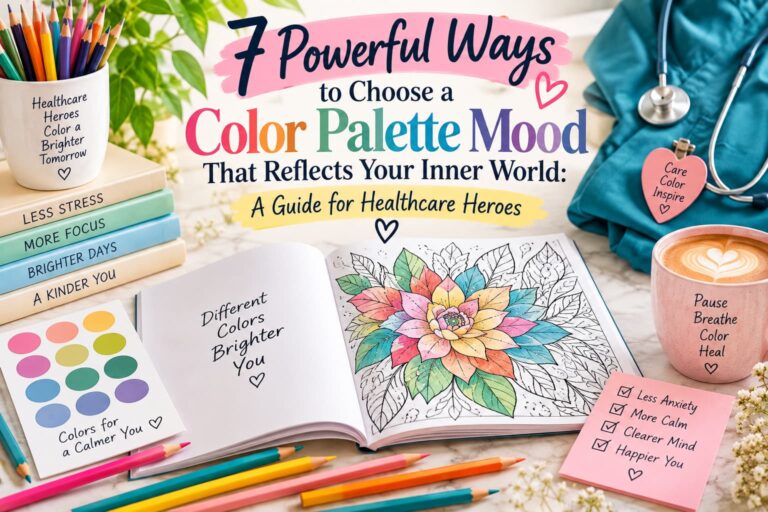
Coloring allows highly sensitive people to communicate emotions that might be too complex for words. Are you feeling overstimulated? You might reach for cool blues and greens to soothe your nervous system. Are you feeling the under-stimulation often associated with ADHD boredom? Vibrant yellows and oranges can provide a much-needed dopamine hit. This intentional use of color helps in regulating the “emotional intensity” that HSPs experience daily.
4. Reduction in Cortisol and Stress Levels
Clinical studies have shown that engaging in art-making activities for as little as 45 minutes can significantly lower cortisol levels. For highly sensitive people, whose baseline stress levels are often higher than average, this physiological shift is crucial. According to the Mayo Clinic, mindfulness practices like focused coloring can help lower heart rates and improve overall well-being by anchoring the individual in the present moment.
5. Improving Executive Function Through Micro-Decisions
ADHD adults often struggle with “decision fatigue.” However, coloring involves “micro-decisions”—choosing which petal to color or which shade of purple to use. These small, successful decisions build “competence confidence.” It trains the brain to make choices in a safe environment, which can eventually translate to better decision-making in high-pressure real-world situations.
How Medeea Publishing Supports the Neurodivergent Community
At Medeea Publishing, we don’t just make coloring books; we create tools for mental clarity. We recognize that highly sensitive people have specific needs when it comes to paper quality, line weight, and thematic content. Our books feature:
- High-Quality Paper: To prevent bleed-through, ensuring a tactile experience that isn’t ruined by messy ink—a common trigger for sensory-sensitive individuals.
- Intricate yet Accessible Designs: Perfect for the ADHD need for variety and the HSP need for beauty.
- Calming Themes: From nature-inspired mandalas to whimsical landscapes that provide an escape from the digital noise.
If you are looking for your next creative outlet, explore our full range of coloring books here.
7 Proven Reasons Why Coloring Works for ADHD and HSPs
To summarize why this practice is so effective, let’s look at the seven core reasons highly sensitive people find solace in coloring:
1. Rhythmic Repetition Calms the Nervous System
The back-and-forth motion of coloring is inherently meditative. It mimics the “bilateral stimulation” used in therapies like EMDR, helping to process emotions and calm the amygdala.
2. It Acts as a “Fidget” for the Brain
ADHD adults often need to do something with their hands to focus. Coloring provides that kinesthetic output, allowing the “noise” in the brain to settle into a single channel of focus.
3. Sensory Control
In a world where you cannot control the loud music in a store or the bright lights of an office, your coloring page is a world where you have total control. For highly sensitive people, this sense of agency is a powerful antidote to anxiety.
4. Immediate Visual Reward
The ADHD brain thrives on immediate feedback. Unlike long-term projects, you can see the progress on a coloring page instantly. This releases small bursts of dopamine, keeping you motivated and satisfied.
5. Digital Detox
Blue light and the constant scrolling of social media are poison for the sensitive nervous system. Coloring offers a tactile, analog experience that allows your eyes and your mind to rest from the digital onslaught.
6. Encourages Mindfulness without “Sitting Still”
Many ADHD adults find traditional “breath-focused” meditation nearly impossible. Coloring is “active mindfulness.” It gives the brain a job to do, which actually makes it easier to stay present than trying to think of “nothing.”
7. A Safe Space for Perfectionism
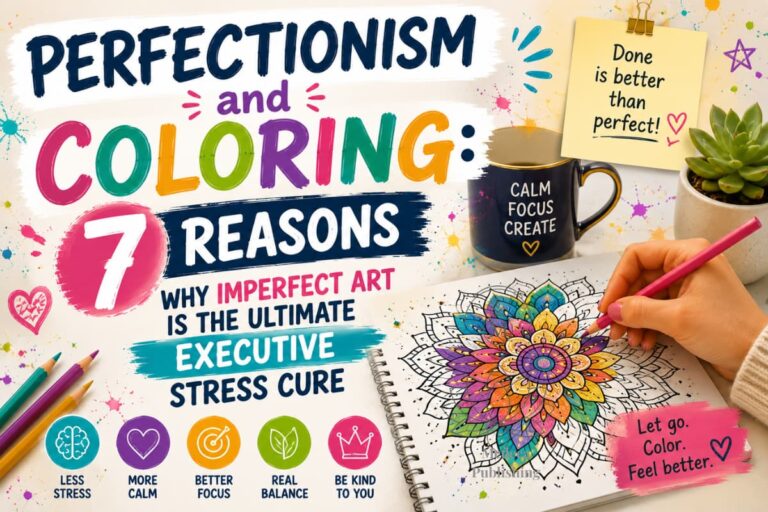
For highly sensitive people, the fear of making a mistake can be paralyzing. In a coloring book, there are no “mistakes”—only “happy accidents” (as Bob Ross would say). It’s a space to practice letting go of perfection in a low-risk way.
Practical Tips for Creating an HSP-Friendly Coloring Routine
To get the most out of your coloring experience as one of the highly sensitive people in our community, consider these tips for setting up your environment:
Choose Your Lighting Wisely
Since HSPs are sensitive to light, avoid harsh overhead fluorescents. Use a warm desk lamp or natural sunlight. This reduces the strain on your visual processing system.
Pair with Auditory Grounding
Some ADHD adults find total silence deafening. Try pairing your coloring with “Brown Noise” (which is deeper and more soothing than White Noise) or a low-fi instrumental playlist. This creates a “sensory cocoon” that protects you from outside interruptions.
Set a Timer
Because of the “hyperfocus” trait in ADHD, you might find yourself coloring for four hours and forgetting to eat. Set a gentle timer for 30 or 45 minutes to remind yourself to stretch and hydrate.
Don’t Finish If You Don’t Want To
The beauty of being a highly sensitive person is your deep appreciation for the process. If you lose interest in a page, move to another. There are no rules in your coloring sanctuary.
The Connection Between Hand-Eye Coordination and Anxiety
There is fascinating research suggesting that the coordination required for coloring—keeping the hand within the lines and choosing colors—occupies the same “spatial” part of the brain that generates anxious imagery. For highly sensitive people who suffer from intrusive thoughts or “worst-case scenario” thinking, coloring literally pushes those images out of the brain’s workspace. You cannot easily visualize a stressful future while you are intensely focusing on the curve of a mandala’s edge.
Why Medeea Publishing Books are the Perfect Tool
We take pride in the fact that our designs are created with the neurodivergent experience in mind. We avoid overly cluttered pages that might cause “visual “vibration” or stress for highly sensitive people. Instead, we focus on harmony, balance, and organic shapes that feel natural to the eye. Our mission at Medeea Publishing is to provide a bridge from chaos to serenity.
Addressing the Skepticism: “Isn’t Coloring Just for Kids?”
It is a common misconception, but the science says otherwise. The adult brain requires “play” just as much as the child’s brain. For highly sensitive people, play is often the first thing sacrificed in the face of adult responsibilities and sensory overwhelm. Reclaiming the right to color is an act of self-care and a recognition that your sensitive brain deserves a break from the “productivity at all costs” culture.
The Social Aspect for HSPs
While many highly sensitive people are introverted, some find that “parallel play”—coloring in the same room as a friend without the pressure of constant conversation—is the perfect way to socialize without becoming drained. It’s an ADHD-friendly way to connect that respects your energy boundaries.
Conclusion: Embracing Your Sensitivity Through Art
Being a highly sensitive person with ADHD is a double-edged sword. You feel the world’s pain, but you also feel its incredible beauty. You have a brain that moves at a million miles an hour, capable of profound creativity and empathy. To protect those gifts, you must protect your peace.
Coloring is more than just putting pigment to paper. For highly sensitive people, it is a way to recalibrate the soul, soothe the nervous system, and find a moment of quiet in a loud world. Whether you are using a 64-pack of crayons or professional-grade markers, the act itself is what matters.
We invite you to explore the collections at Medeea Publishing and find the book that speaks to your unique sensitivity. Your brain does so much for you; it’s time to give it the colorful, quiet, and creative rest it deserves.
Final Thoughts for Highly Sensitive People
Remember that your sensitivity is a superpower, not a flaw. By integrating simple tools like coloring into your daily or weekly routine, you are honoring your neurobiology and giving yourself the grace to slow down. Start small, pick colors that make you feel safe, and let the lines of a Medeea Publishing book guide you back to yourself.