If you are a stay-at-home mom, you know the feeling all too well. You walk into a room and completely forget why you are there. You find yourself staring at a pile of laundry as if it were a complex mathematical equation you can’t solve. Your thoughts feel like they are trapped in a thick, grey cloud. This is often referred to as “Mom Brain,” but its technical term is cognitive dysfunction. However, there is a creative and accessible solution gaining popularity: brain fog coloring. By engaging in this simple activity, you can begin to pierce through the clouds and find your mental sharpness again.
The constant demands of parenting—managing schedules, emotional labor, and the never-ending loop of household chores—can leave your nervous system in a state of perpetual high alert. When your brain is constantly scanning for the next “fire” to put out, it loses the ability to focus on the present. Brain fog coloring acts as a bridge, pulling you out of the chaos and back into a state of mindful awareness. It is not just about staying within the lines; it is about reclaiming your peace of mind.
Understanding the “Mom Brain” and Why You Need a Reset
Before we dive into the mechanics of brain fog coloring, it is essential to validate what you are going through. Being a stay-at-home mom is one of the most mentally taxing jobs in existence. You are the CEO, the chef, the nurse, and the emotional anchor for your entire family. This level of responsibility, combined with interrupted sleep and a lack of adult conversation, leads to significant cognitive fatigue.
When your brain is fatigued, it struggles to process information. You might feel irritable, forgetful, or simply “tuned out.” This is where coloring for stress relief becomes a vital tool in your mental health toolkit. It provides a low-stakes environment where you can succeed, create, and relax simultaneously. Unlike scrolling through social media, which often increases feelings of inadequacy and “FOMO,” coloring engages the motor centers of the brain while quieting the amygdala—the part of the brain responsible for the stress response.
The Science Behind Coloring for Stress Relief
Many people dismiss coloring as a “childish” pastime, but the psychological benefits are deeply grounded in science. According to research cited by the Mayo Clinic, engaging in repetitive, creative activities can significantly lower cortisol levels. When you pick up a colored pencil, you are engaging in a form of active meditation.
Art therapy has long been used to help individuals process trauma and anxiety. While brain fog coloring isn’t a replacement for professional therapy, it serves as an excellent daily maintenance habit. It allows the “analytical” side of your brain to take a break while the “creative” side takes the lead. This shift in brain activity is precisely what helps clear the “fog” that accumulates throughout a long day of mothering.
When you focus on the movement of the pencil and the choice of colors, you enter a “flow state.” In this state, time seems to disappear, and your worries fade into the background. This is the ultimate goal of coloring for stress relief: to give your brain a dedicated space to rest without actually being asleep.
How Brain Fog Coloring Resets the Nervous System
The primary reason brain fog coloring is so effective for moms is its ability to regulate the autonomic nervous system. Most moms spend their days in “sympathetic” mode—fight or flight. You are reacting to a toddler’s tantrum, a spilled glass of juice, or a ringing phone. Coloring encourages the “parasympathetic” nervous system—rest and digest—to take over.
By slowing down your breathing and focusing on a single task, you signal to your body that you are safe. Once your body feels safe, the brain can begin to clear out the “clutter” of stress hormones, allowing for clearer thought patterns. This is why many women find that their best ideas or solutions to daily problems come to them while they are mid-page in a Medeea Publishing coloring book.
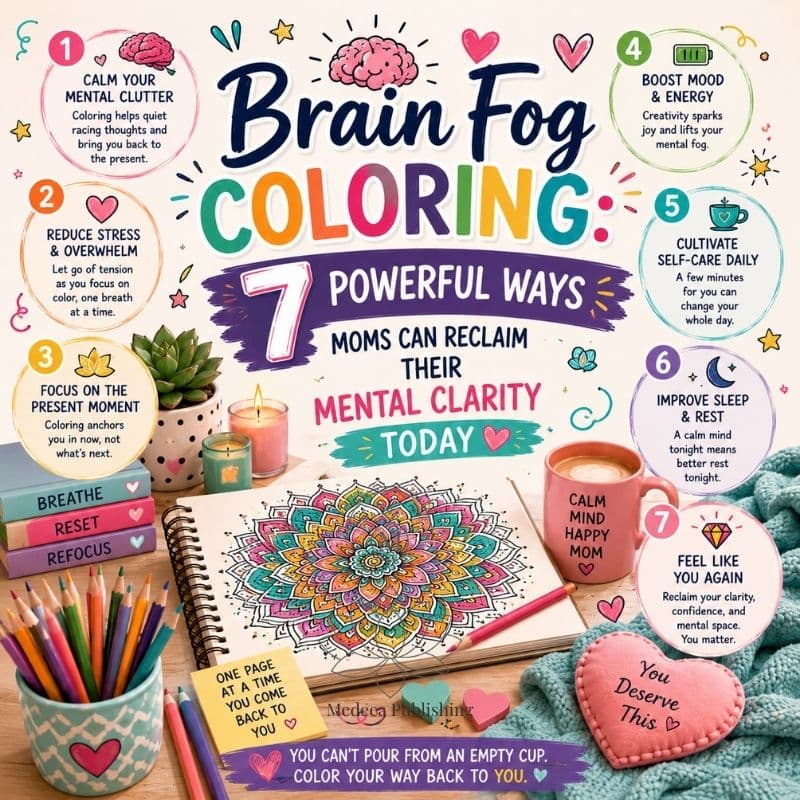
7 Powerful Ways to Use Brain Fog Coloring to Reclaim Your Clarity
If you’re ready to start your journey toward mental clarity, here are seven actionable ways to use brain fog coloring to transform your daily routine.
1. Create a “Micro-Break” Ritual
As a mom, you might not have an hour to yourself, but you likely have ten minutes. Use brain fog coloring as a scheduled micro-break. When the kids are napping or engaged in independent play, set a timer. Dedicate that time solely to your coloring book. This ritual tells your brain that your needs matter, too.
2. Focus on “Process” Over “Product”
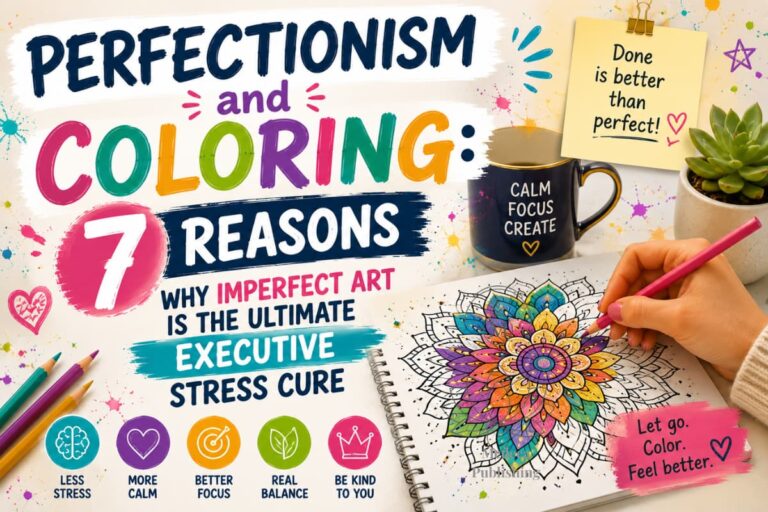
One of the biggest contributors to brain fog is the pressure to be perfect. When you engage in coloring for stress relief, give yourself permission to be “bad” at it. Use “ugly” colors, go outside the lines, or leave sections unfinished. The goal is the mental release, not a museum-quality masterpiece. This mindset shift helps reduce the performance anxiety that often contributes to mental fatigue.
3. Use Color Theory to Shift Your Mood
Did you know that different colors can affect your brain differently? If your brain fog feels heavy and depressing, try using bright yellows and oranges to stimulate joy. If your fog is driven by high anxiety, stick to cool blues and greens. Using brain fog coloring as a form of color therapy allows you to “paint” the mood you want to feel.
4. Combine Coloring with Affirmations
Many Medeea Publishing books feature beautiful, uplifting quotes. As you color these words, repeat them to yourself. This dual-engagement of the visual and auditory centers of the brain reinforces positive neural pathways. It’s a double dose of healing: brain fog coloring combined with positive self-talk.
5. Make it a Sensory Experience
To maximize the impact of brain fog coloring, engage all your senses. Light a lavender candle, put on some soft lo-fi music, and feel the texture of the high-quality paper. The more senses you engage in a relaxing way, the faster your brain will exit the “fog” and enter a state of calm. This multi-sensory approach is a cornerstone of mindfulness, as discussed in Psychology Today.
6. The “Brain Dump” Method
Sometimes the fog is caused by a “mental load” that is too heavy. Before you start brain fog coloring, spend two minutes writing down everything you’re worried about on a scrap piece of paper. Once it’s out of your head and on the paper, turn to your coloring book. This “clears the cache” of your brain, making the coloring session much more effective.
7. Digital Detox Integration
Our phones are often the biggest contributors to brain fog. The blue light and constant notifications keep our brains in a state of fractured attention. Replace your evening “doom-scrolling” with coloring for stress relief. Not only will this help clear your head, but it will also improve your sleep quality, which is the ultimate cure for brain fog.
Why Medeea Publishing Coloring Books Are the Perfect Tool
Not all coloring books are created equal. When you are using brain fog coloring as a mental health tool, the quality of the material matters. At Medeea Publishing, we specifically design our books with the needs of overwhelmed moms in mind. Our collections feature thick, bleed-resistant paper and intricate yet accessible designs that provide the perfect level of challenge without being overwhelming.
Whether you prefer botanical gardens, intricate mandalas, or empowering quotes, our coloring book collections are crafted to be your sanctuary. We believe that every mom deserves a moment of beauty and peace in her day. Our books aren’t just paper and ink; they are invitations to rediscover yourself amidst the chaos of motherhood.
Overcoming “Mom Guilt” When Taking Time to Color
One of the biggest hurdles to starting brain fog coloring isn’t the lack of time—it’s the presence of guilt. You might feel like you “should” be cleaning, “should” be meal prepping, or “should” be playing with your kids. However, you cannot pour from an empty cup. Taking 15 minutes for coloring for stress relief makes you a better, more present mother.
When you clear your brain fog, you are more patient, more creative, and more emotionally available for your children. In fact, letting your children see you engage in brain fog coloring sets a wonderful example of self-care and emotional regulation. You are teaching them that mental health is a priority.
Advanced Techniques for Brain Fog Coloring
Once you have established a routine, you can experiment with more advanced techniques to deepen the cognitive benefits of brain fog coloring. These techniques help sharpen your focus and further reduce the symptoms of mental exhaustion.
1. Monochromatic Shading
Try coloring an entire page using only one color but in different shades. This requires a higher level of visual discrimination and focus. By concentrating on the subtle differences between “sky blue” and “navy,” you are training your brain to notice details again. This is a fantastic exercise for brain fog coloring because it gently forces the brain out of its “auto-pilot” mode.
2. Symmetric Breathing
Incorporate “Box Breathing” into your coloring for stress relief. Inhale for four counts as you color one section, hold for four, exhale for four as you move to the next section, and hold for four. This synchronization of physical movement and breath is a powerful way to “hard-reset” your nervous system and dissolve the fog instantly.
3. Intention Setting
Before you touch the pencil to the paper, set an intention for your brain fog coloring session. It could be as simple as “I intend to be present” or “I intend to let go of today’s frustration.” Having a mental “anchor” helps keep your thoughts from drifting back into the foggy territory of your to-do list.
Addressing the Physical Side of Brain Fog
While brain fog coloring is a psychological and neurological powerhouse, it works best when paired with a basic understanding of your physical needs. Brain fog is often a “check engine” light for your body. Use your coloring time to check in with yourself:
- Hydration: Are you drinking enough water? Dehydration is a leading cause of cognitive slump.
- Nutrition: Are you fueling yourself, or just eating the scraps off your toddler’s plate?
- Rest: Even if you can’t get more sleep, are you getting enough “rest” (like coloring)?
By using coloring for stress relief as a “check-in” period, you can identify other areas where your body needs support. This holistic approach ensures that the clarity you gain from coloring lasts throughout the day.
The Long-Term Benefits of a Coloring Practice
Consistency is key. While a single session of brain fog coloring will provide immediate relief, the long-term benefits are even more profound. Over time, you will find that your “baseline” stress level decreases. You will find it easier to regain your focus after a distraction. You will start to feel more like “you” again, rather than just “Mom.”
This is the power of coloring for stress relief. It is a slow, steady rebuilding of your cognitive reserves. Every stroke of the pencil is a vote for your own well-being. At Medeea Publishing, we see this transformation in our community every day. Moms who felt lost in the fog are finding their way back to their passions and their peace, one page at a time.
Common Questions About Brain Fog Coloring
Does I need to be “artistic” to benefit?
Absolutely not. In fact, brain fog coloring is often more effective for those who don’t consider themselves artists. There is no pressure to create something original. The structure of the pre-drawn lines provides the “containment” that an anxious brain needs to feel safe and relaxed.
What are the best tools for coloring for stress relief?
We recommend starting with a high-quality set of colored pencils or fine-liner markers. Pencils allow for beautiful blending and shading, which can be very therapeutic. Markers offer vibrant colors that can help boost a low mood. The most important tool, however, is a coloring book that speaks to your soul, like those found in the Medeea Publishing collection.
How often should I color to see results?
Even five minutes a day can make a difference. However, for significant brain fog coloring benefits, aim for 15-20 minutes three times a week. You will likely find that once you start, you won’t want to stop!
Conclusion: Step Out of the Fog Today
Being a stay-at-home mom is a beautiful, exhausting, and often overwhelming journey. You don’t have to accept “brain fog” as your permanent reality. By embracing brain fog coloring, you are choosing to prioritize your mental health in a way that is creative, soothing, and effective.
Remember, the fog is not who you are; it’s just something you are experiencing. You are a vibrant, capable woman who deserves to have a clear mind and a peaceful heart. Let coloring for stress relief be the tool that leads you back to yourself. Explore our latest designs at Medeea Publishing and start your journey toward clarity today. Your mind—and your family—will thank you for it.
The journey of a thousand miles begins with a single stroke of a colored pencil. Don’t wait for the “perfect” time to start. The perfect time is now, in the middle of the mess, in the middle of the fog. Pick up a book, find a color that makes you happy, and let the healing begin. Brain fog coloring is more than just a hobby; it’s your path back to the bright, clear world you deserve to live in.