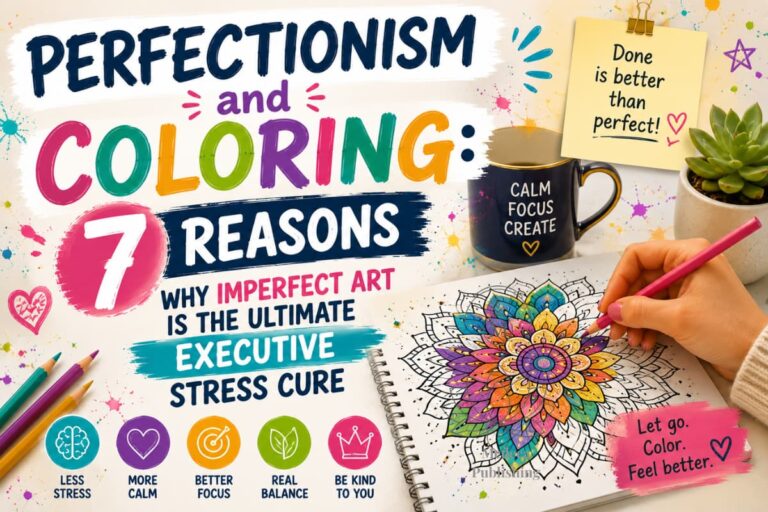
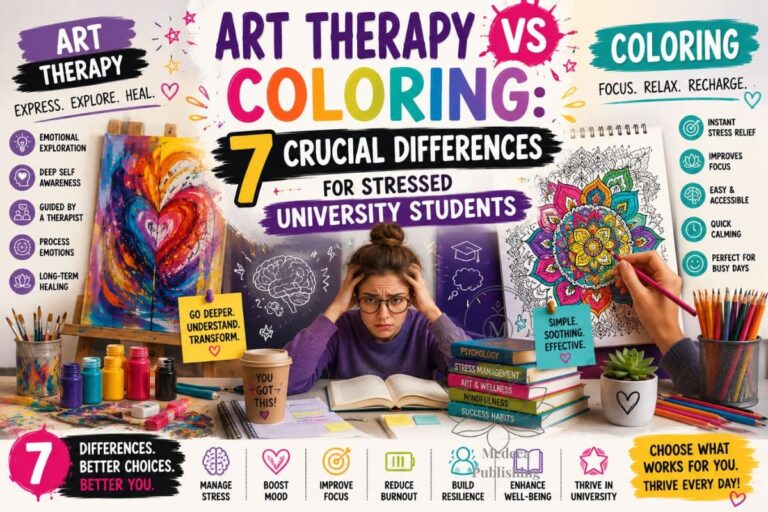
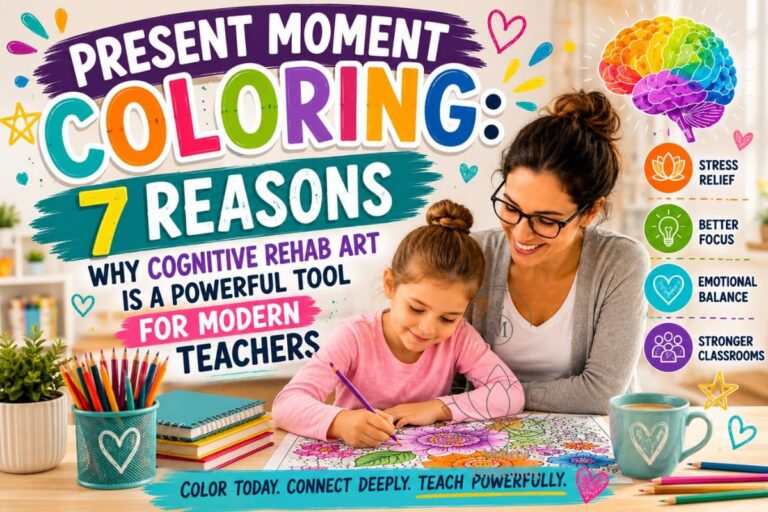
For an athlete, the world is defined by movement, precision, and the relentless pursuit of progress. But what happens when that movement stops? Whether it is a torn ACL, a long-term rehabilitation process, or the difficult transition into retirement, the sudden shift from high-octane physical activity to forced stillness can be jarring. This stillness often brings about a vacuum filled with anxiety, frustration, and a loss of identity. In these moments, finding a way to ground yourself is not just a luxury—it is a necessity for mental survival. This is where present moment coloring becomes a transformative tool for the sidelined warrior, supporting mindfulness for athletes during recovery.
When you are used to the “flow state” of a game or a race, the static environment of a recovery room can feel suffocating. Coloring for recovery offers a bridge back to that meditative state of focus, but in a low-impact, deeply healing way. By engaging in intentional creativity, athletes can recapture the discipline of their sport while allowing their bodies the rest they desperately need. At Medeea Publishing, we understand that recovery is as much a mental game as it is a physical one, and our curated resources are designed to support you through every stroke of the pencil.
The Psychological Challenge of the Athlete: Coloring for Recovery
The “athlete’s brain” is wired for action. When you are sidelined, your brain doesn’t simply turn off its craving for dopamine and achievement. Instead, that energy often turns inward, manifesting as ruminating thoughts about what you “should” be doing or fear about your future performance. This mental loop is the antithesis of the present moment.
Psychological studies, such as those discussed on Psychology Today, highlight how mindfulness for athletes can significantly reduce the cortisol levels that spike during periods of high stress or injury. For an athlete, coloring serves as a tactile form of mindfulness. It requires the same hand-eye coordination and spatial awareness as sports, but redirects it toward a creative output that lacks the pressure of competition.
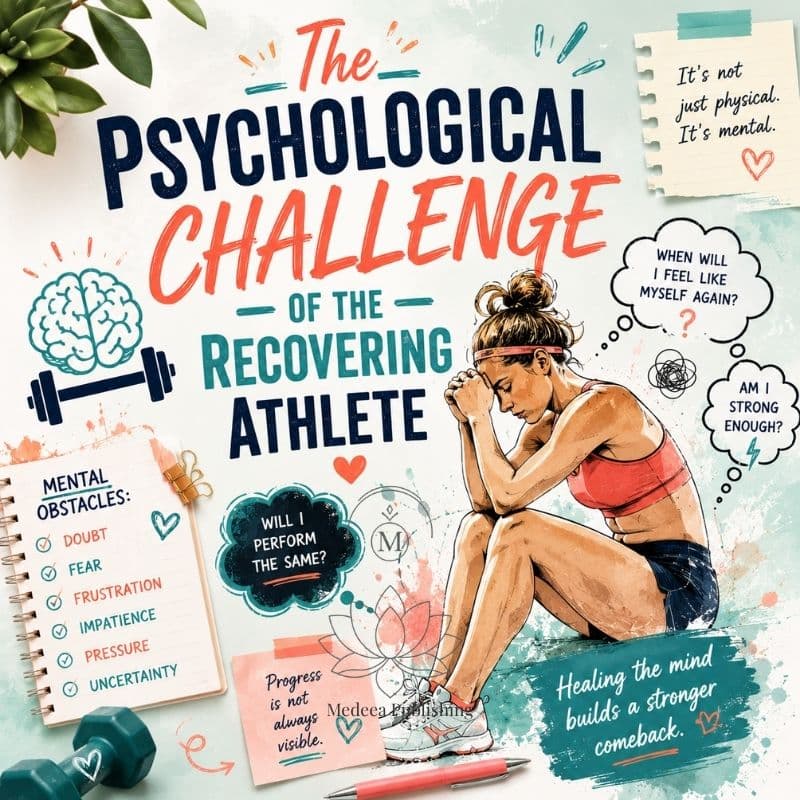
Perfect for recovering athletes who need calm, clarity, and a gentle way to reconnect with themselves.
Why Coloring is a Game-Changer for Recovery
You might wonder why a “childhood hobby” is being recommended to elite performers. The answer lies in the physiological response of the brain to repetitive, creative tasks. Coloring is not about creating a masterpiece; it is about the process of engagement. When you focus on the tip of a pencil meeting the paper, your sympathetic nervous system—the “fight or flight” mode—begins to downregulate.
For someone used to the high-stakes environment of competitive sports, the simple act of choosing a color can be a form of intentional creativity that restores a sense of agency. In recovery, so much is out of your control—the healing speed of your tendons, the decisions of your coaches, the timeline of the season. However, in the world of a Medeea Publishing coloring book, you are the one in total control. You decide the hue, the pressure, and the pace. This small reclaimed power is a vital stepping stone in psychological rehabilitation.
The Science of Flow State in Coloring for Recovery
Athletes often refer to “The Zone”—that magical space where time disappears and performance becomes effortless. Researchers call this “Flow.” While you may not be able to find flow on the field right now, you can find it through coloring for recovery. By focusing on the intricate patterns of a mandala or the flowing lines of a nature scene, you can induce a state of “micro-flow” that provides the same mental refreshment as a good practice session.
7 Techniques to Master Coloring Today
To get the most out of this practice, you must approach it with the same intentionality you would a training regimen. Here are seven ways to use coloring to navigate your recovery journey.
1. Use Breath-Synced Stroking
In athletics, breath is everything. Apply this to your recovery. As you inhale, fill a small section with color. As you exhale, move to the next. This rhythmic connection between the body and the page ensures that you remain anchored in the “now.” If your mind starts to wander toward your injury or your missed goals, the break in your breathing rhythm will act as a signal to return to the coloring task at hand.
2. Practice Intentional Creativity Through Color Choice
Intentional creativity involves making conscious choices that reflect your internal state or your desired state. If you are feeling frustrated and “hot-headed” about your recovery, try using cool blues and greens to balance your energy. If you feel lethargic and depressed, reach for vibrant yellows and oranges to stimulate your senses. Using coloring as a mirror for your emotions allows you to process feelings that are often difficult to put into words.
3. The “No-Eraser” Rule
Athletes are often perfectionists. This can be a hindrance during recovery when things aren’t going “perfectly.” When engaging in coloring, commit to not using an eraser. If you go outside the lines, incorporate that “mistake” into the design. This builds cognitive flexibility—the ability to adapt to unexpected outcomes—which is a crucial skill for any athlete returning to play.
4. Sensory Grounding with Professional Tools
Don’t settle for cheap supplies. Treat your recovery tools with the same respect you treat your gear. The weight of a high-quality colored pencil, the texture of the premium paper in a Medeea Publishing book, and even the scent of the wood shavings can be used as “anchors.” When you feel a panic attack or a wave of frustration coming on, use these sensory details of your coloring time kit to ground yourself.
5. Create a Dedicated “Recovery Studio”
Just as you had a gym or a field, create a space dedicated to your mental training. This doesn’t need to be a large room; a specific chair or a corner of a table will do. By only performing present moment coloring in this space, you prime your brain to enter a state of calm the moment you sit down. This is an essential part of creativity: creating the environment where healing can happen.
6. Use Coloring as a Pre-Rehab Warm-up
Physical therapy can be painful and mentally taxing. Spending 10 minutes on coloring before your session can help settle your nerves and increase your pain tolerance. By entering a relaxed state through creativity, you reduce the muscular tension that often makes physical therapy more difficult.
7. Reflect on the Completed Work
At the end of each week, look back at the pages you have colored. These aren’t just pictures; they are a visual record of your patience and your presence. For an athlete who feels they aren’t “doing anything,” these pages are proof of the mental work you are putting in. This is the heart of coloring: realizing that being present is an active, productive state.
The Role of Creativity in Pain Management
Chronic and acute pain are common companions for the recovering athlete. Traditional pain management often focuses solely on the physical, but the brain plays a massive role in how we perceive pain. According to resources on the Mayo Clinic, mindfulness-based stress reduction can actually alter the neural pathways associated with pain making it a powerful method of coloring that helps reduce perceived pain.
When you engage in coloring, you are essentially providing your brain with a “competing stimulus.” The brain has a limited bandwidth for processing information. By flooding the visual and tactile senses with the details of daily creativity, you can effectively “turn down the volume” on pain signals. It is a form of mental anesthesia that has no side effects and promotes long-term resilience.
Overcoming the “Non-Artist” Identity
Many athletes feel uncomfortable with “art” because they have spent their lives being judged on physical output and objective scores. You might think, “I’m not creative,” or “I’m not good at this.” But coloring is not an art competition. There are no scouts in the stands, and there is no scoreboard.
The beauty of your creativity is that it belongs to you alone. In the context of stress relief coloring, “good” simply means “I was here while I did this.” If you can shift your mindset from *performance* to *experience*, you will unlock a level of mental peace that will actually aid your physical recovery. The less stress you carry, the more energy your body has to heal tissues and bones.
Medeea Publishing: Your Partner in Mental Recovery
At Medeea Publishing, we create tools that support mindfulness through personal creativity and coloring. For an athlete, the intricate designs and high-quality construction of our books provide the “resistance” and “quality” you are used to in your training equipment. Using a high-quality book for your stress relief coloring practice makes the experience feel significant and worthy of your time.
We recommend starting with our complex geometric or nature-themed collections. These patterns require enough focus to quiet the “athlete’s inner critic” while providing the soothing benefits of art creativity. You can explore our full range of coloring book collections here to find the one that resonates with your current journey.
Structuring Your Practice for Maximum Benefit
To truly reap the rewards of coloring, consistency is key. Think of it as “Mental PT.”
Morning Session: Setting the Intent
Spend 15 minutes in the morning stress relief coloring with a focus on what you want to achieve today. This is intentional creativity in action. Use bright, energetic colors to set a tone of determination for your rehab exercises.
Evening Session: Decompressing the Day
Before bed, use coloring to process the day’s frustrations. If a rehab session didn’t go well, color it out. Use dark, heavy strokes if you need to release anger, then gradually transition to lighter, softer strokes as you calm down. This helps prevent the “nighttime rumination” that often keeps injured athletes awake.
The Long-term Benefits: Beyond the Injury
While you may have started coloring to survive a period of injury, the skills you develop will serve you long after you return to your sport. The ability to stay present, to manage anxiety, and to engage in creativity are elite-level mental skills.
Practicing mindfulness for athletes are more resilient under pressure, have better focus during competition, and recover faster from the inevitable setbacks of a professional or amateur career. Your injury, while painful and frustrating, is an opportunity to build a mental foundation that is just as strong as your physical one. Through coloring, you are not just passing time; you are training your brain for the next chapter of your life.
How to Stay Grounded When Progress Feels Slow
Recovery is rarely a linear path. There are days of great progress and weeks of plateau. During the plateaus, the urge to give up or “check out” is strongest. This is the most critical time for moment coloring. When the external world isn’t giving you the “wins” you crave, create your own wins on the page. Every finished section of a Medeea Publishing book is a tangible victory. It is proof that you can start something, stay with it through the boredom and the frustration, and see it through to completion.
This is the essence of creativity: it is a micro-cosm of the athletic struggle. It requires discipline, patience, and a willingness to stay in the moment coloring despite the desire to be somewhere else. When you master the page, you are one step closer to mastering your recovery.
Final Thoughts for the Sidelined Warrior
You are still an athlete, even if you aren’t currently on the field. Your “sport” right now is recovery, and your “equipment” includes your mind. Don’t neglect the mental aspect of your healing. Embrace coloring as a legitimate, powerful, and scientifically-backed method to manage the anxiety of recovery.
By engaging in creativity, you are taking an active role in your rehabilitation. You are choosing to stay present, choosing to stay calm, and choosing to heal from the inside out. Medeea Publishing is honored to be a part of that journey. Grab your pencils, open a book, and remember: the most important moment is the one you are in right now.
Frequently Asked Questions
How often should I practice present moment coloring?
Ideally, daily. Even 10-20 minutes of present moment coloring can have a cumulative effect on your stress levels and mental clarity. Consistency is more important than duration.
Do I need expensive pencils to see the benefits?
While you don’t need the most expensive tools, using quality materials can enhance the sensory experience of intentional creativity, making it easier to stay grounded in the moment.
Can coloring really help with physical pain?
Yes. By engaging the brain in moment coloring, you create a distraction that can lower the perception of pain and reduce the muscle tension that often exacerbates physical discomfort.
What if I feel more frustrated while coloring?
This is common for athletes who are used to being “the best.” If you feel frustration, acknowledge it. This is part of the process. Use coloring to sit with that frustration without judging it. Over time, the feeling will pass.
Where can I find books specifically for this kind of mindfulness?
You can browse the Medeea Publishing blog for tips or head straight to our collections to find a design that speaks to your recovery journey.
Recovery is a marathon, not a sprint. Take it one color, one stroke, and one moment coloring session at a time. You’ve got this.
Through present moment coloring, mindfulness for athletes becomes a daily practice, turning recovery into a structured process supported by coloring for recovery and stress relief coloring techniques