Adult coloring for beginners can be simple. If you are wondering how to start adult coloring, choose one page you like, use colored pencils or markers you already own, and color one small area first. You do not need art training, an expensive collection of supplies, or a detailed plan for the finished page.
The best first session is intentionally small. Pick three colors, place a protective sheet beneath the page, and give yourself ten or fifteen minutes. Continue if you are enjoying the process, but do not pressure yourself to finish. Even if you color only one flower, chair, cup, or corner of the design, you have still made a meaningful start.
This guide explains how to start adult coloring, choose a beginner-friendly book, select your first supplies, complete a page without overthinking every decision, and make coloring easier to return to. The aim is not to produce a perfect result. It is to create a clear, low-pressure starting point you can use today.
Research offers one useful perspective for anyone learning how to start adult coloring with less hesitation. In a peer-reviewed experiment on structured coloring, 84 undergraduate students were randomly assigned to color a mandala, a plaid design, or a blank page for 20 minutes after a brief anxiety-induction exercise. Participants in the mandala and plaid groups reported larger reductions in state anxiety than those in the free-form group, while the difference between the two structured-design groups was not statistically significant. The study was small and involved a narrow student sample, but its findings support a practical idea for adult coloring for beginners: starting with a prepared design may reduce the number of creative decisions you need to make.
The broader evidence remains cautious. A 2022 systematic review and meta-analysis combined eight studies involving 578 adult participants and found that mandala coloring did not reduce state anxiety significantly more than free drawing. The authors also identified possible bias and called for more high-quality research. Coloring should therefore be approached as an accessible creative activity and a screen-free pause—not as medical treatment or a guaranteed solution for anxiety.
Adult Coloring for Beginners Starts with Three Basics
You only need three things:
- A coloring page or book that looks approachable to you
- One coloring medium, such as colored pencils or markers
- A clean, flat surface with good light
A scrap sheet of paper is also useful. Place it behind the page you are coloring, especially if you use markers. It protects the next page and lets you see whether ink is passing through the paper.
Everything else is optional. You can add a sharpener, eraser, color chart, pencil case, or blending tools later. Buying a full set before your first page often creates more decisions than it solves.
Start with what you have. A basic set of twelve colored pencils is enough for many pages. A small marker set can also work if you test it first. The goal of adult coloring for beginners is to discover what feels enjoyable, not to assemble a professional art station.
How to Choose Easy Coloring Books for Adults
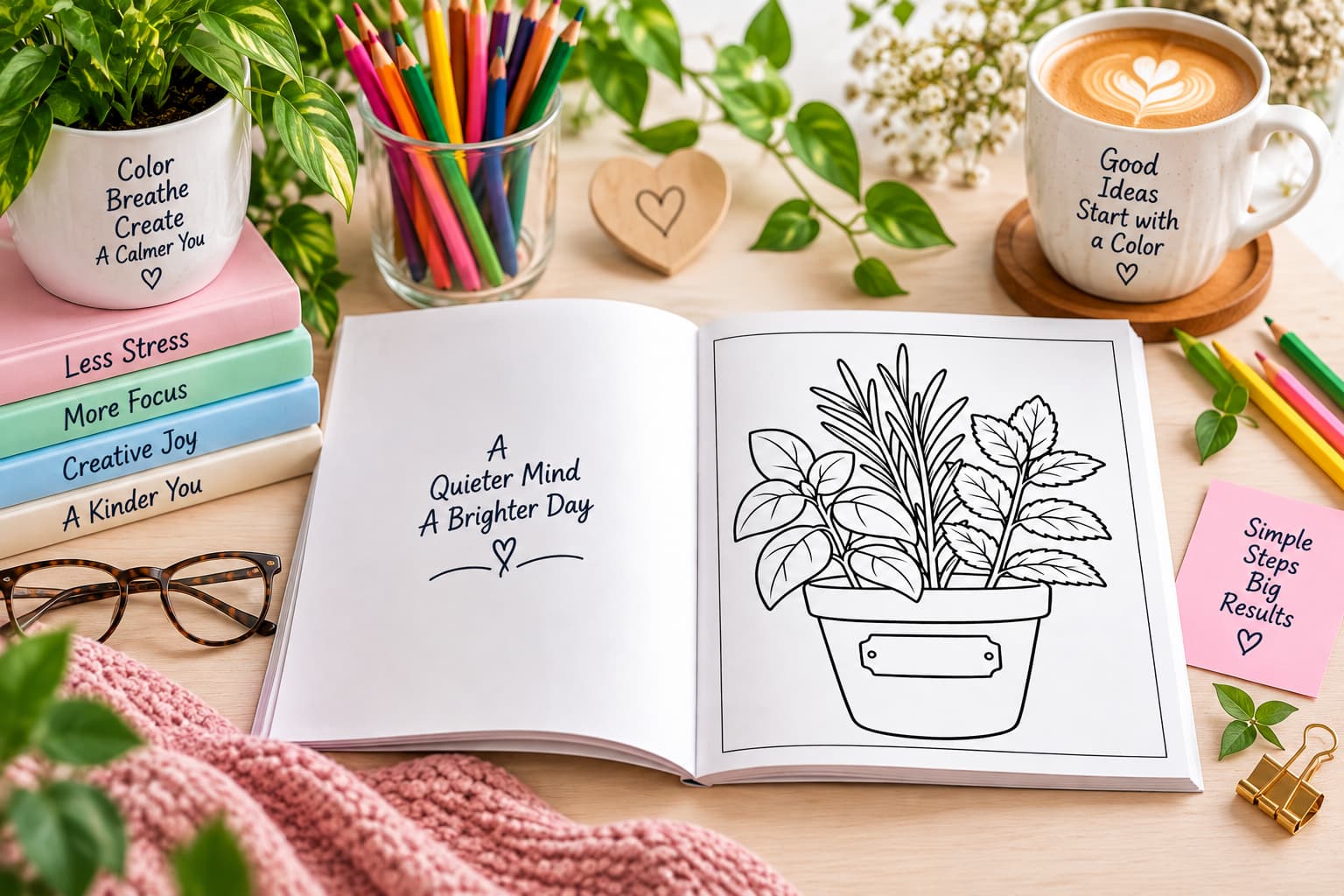
The cover may attract you, but the interior determines whether you will want to color. Before buying a book, look for real sample pages. Ask yourself whether you can quickly identify a place to begin.
A beginner-friendly page does not have to be extremely simple. It should feel readable. You should be able to see the main objects, understand where one area ends and another begins, and imagine coloring a small section without finishing the whole design. That practical test is more useful than assuming all easy coloring books for adults have the same level of detail.
The best easy coloring books for adults make the first step obvious. Look for pages with clear outlines, recognizable objects, and enough open space to color without needing advanced techniques. A page should feel inviting when you first see it, not like a project that must be carefully planned before you can begin.
Interior previews are especially important when comparing easy coloring books for adults because cover designs do not always show the actual level of detail inside. Examine several sample pages and notice the size of the coloring areas, the thickness of the lines, and the amount of visual clutter. Choose a book that offers enough detail to remain interesting without making every page feel demanding.
Themes also influence how approachable easy coloring books for adults feel. Familiar scenes such as reading corners, cafés, flowers, gardens, and comfortable rooms can simplify color choices because you already recognize the objects. You can begin with one plant, cup, cushion, or flower instead of deciding how the entire illustration should look.
Remember that easy coloring books for adults do not have to contain only large or extremely simple shapes. A well-designed beginner page can include moderate detail as long as the composition remains readable and the sections are clearly enclosed. The right book is one that allows you to enjoy a short coloring session and return later without feeling that you must complete the whole page at once.
Check the page format before using markers
Look for information about whether designs are printed on one side or both sides of the paper. Also check whether the publisher provides any guidance about the paper or recommended tools.
Do not assume that a page is marker-friendly because the illustration has thick lines. Line weight and paper behavior are separate issues. If the specifications are unclear, test the marker on a less important area or use a printable sample first.
The Medeea Publishing Cozy Collection offers familiar scenes for readers who prefer recognizable subjects. You can also begin with the 12 Free Cozy Coloring Pages before choosing a full book. Trying a sample is one of the most reliable ways to decide whether particular easy coloring books for adults match your preferred line weight and detail level.
Adult Coloring Supplies for Beginners
Colored pencils and markers are the most common adult coloring supplies for beginners. Neither option is universally better because each creates a different coloring experience, and the results also depend on the paper used in the book.
If you already own colored pencils or markers, use them for your first page. You will learn more from ten minutes of coloring than from comparing dozens of sets online. The purpose of adult coloring supplies for beginners is to make starting easier, not to create another complicated shopping project.
When selecting adult coloring supplies for beginners, begin with the coloring page rather than the size of the art set. A design with clear outlines and comfortably sized spaces can be easier to complete with basic pencils or markers. Browse the Medeea Publishing Shop to compare coloring-book themes and choose a book with an interior style that feels approachable before deciding which coloring tools you need.
Colored pencils are among the most practical adult coloring supplies for beginners because they allow you to build color gradually and work carefully inside smaller areas. The official Prismacolor colored pencils collection includes examples of soft-core, harder-detail, and water-soluble pencils. You do not need a professional set to begin, but comparing these pencil types can help you understand which features may suit the way you want to color.
Markers can also be useful adult coloring supplies for beginners when you prefer stronger color and faster coverage. Copic describes Copic Ciao as its entry-level alcohol-marker model, designed with a brush nib and a medium broad nib. This manufacturer information can help you compare marker features, but always test alcohol-based ink on the paper and place a protective sheet behind the active page because the ink may pass through some types of paper.
A sensible collection of adult coloring supplies for beginners does not need to include both pencils and markers immediately. Begin with one small color set, a sharpener if you choose pencils, a sheet for testing colors, and another sheet for protecting the page underneath. After completing a few sections, you will have a clearer idea of what you enjoy and which additional supplies would be genuinely useful.
Colored pencils give you more control
For many people, colored pencils are the most forgiving adult coloring supplies for beginners because they make it easy to control both color intensity and placement. Light pressure creates a pale layer, while additional layers gradually deepen the color. A sharpened pencil point can also help you work accurately inside small spaces.
You do not need to press hard. Heavy pressure can tire your hand, flatten the surface of the paper, and make additional layers more difficult to apply. Begin with light pressure and then decide whether the area needs greater color intensity.
A basic pencil set is enough for your first pages. Choose pencils that sharpen cleanly and feel comfortable in your hand. If a pencil lead breaks repeatedly or feels unusually scratchy, try another pencil before assuming that your coloring technique is the problem.
An eraser may lift some colored-pencil pigment, but it will not always return the page to pure white. Use it to soften an unwanted mark or reduce the intensity of an area rather than expecting every colored line to disappear completely.
Markers cover larger areas quickly
Markers can be effective adult coloring supplies for beginners when the chosen page contains larger shapes and you want strong, even color without building multiple layers. Fine tips provide more control in smaller areas, while brush or broader tips can cover backgrounds and large objects more quickly.
Markers require a little more preparation because ink behavior varies according to the marker, the paper, and the pressure applied. Alcohol-marker manufacturer Copic explains that its dye-based ink soaks into paper and may bleed through. Placing a sheet of scrap paper beneath the active page and avoiding excessive pressure can help protect the following pages.
Always test a marker before using it on the main design. Use the book’s color-test page if one is provided, a back-matter page, or a separate sheet printed on the same type of paper. Wait for the ink to settle, then inspect both the reverse side of the test page and the protective sheet underneath.
If a coloring book contains designs on both sides of each sheet, marker bleed-through may damage the image printed on the reverse. In that situation, colored pencils may be the safer first option unless the publisher confirms that the paper is compatible with your chosen marker type.
Gel pens and fineliners can be useful additions
Gel pens work well for small accents, dots, highlights, and decorative details. Fineliners can reach narrow spaces. Both may take longer to dry than expected, so avoid dragging your hand across a freshly colored area.
You do not need either one to begin. Add them when you want a specific effect instead of buying them because a supply list says they are essential.
Keep the starter set small
For your first few pages, try this simple kit:
- Twelve to twenty-four colored pencils or a small marker set
- A sharpener if you use pencils
- One scrap sheet behind the active page
- A plain sheet for testing colors
That is enough. Blenders, white pens, metallic colors, large storage cases, and specialty paper can wait until you know what you want to change or improve.
How to Start Adult Coloring Without Overthinking It
Your first page does not need a complicated technique. It needs an obvious first move. If you are wondering how to start adult coloring when every color and section looks equally possible, make the first decision deliberately small.
IMAGE 4 Place after this section how-to-start-adult-coloring.jpg
Start with a small section
Do not begin by deciding how the entire page will look. Find one object or enclosed area that feels easy. It might be a leaf, cushion, window frame, flower petal, coffee cup, or piece of clothing.
Color that area. Then choose the next neighboring shape. This reduces the number of decisions you must hold in mind at once.
You can also begin with the largest simple object on the page. Large areas give you room to learn how a pencil or marker behaves. Avoid a complicated face, detailed pattern, or central focal point if it makes you hesitate.
Choose three colors before you begin
A three-color palette is a useful beginner method because it limits choices without making every area identical. Select one main color, one supporting color, and one contrasting or accent color.
For example:
- Soft blue, warm yellow, and deep green
- Sage green, dusty pink, and cream
- Navy, pale blue, and golden yellow
- Lavender, plum, and soft gray
The colors do not need to follow formal color theory. Put them beside each other on a test sheet. If you like the combination, use it.
You can create additional variety with pressure. One blue pencil can produce a light blue layer and a darker blue layer. Leaving some areas white or using the paper color as part of the palette also keeps the page from feeling crowded.
IMAGE 5 Place after this subsection three-color-method.jpg
Test the colors together
Make three small swatches on a separate sheet. If you use markers, let the swatches dry before judging them because wet ink can look different from dry ink.
The test serves two purposes. It shows the actual color, and it removes the pressure of making the first mark directly on the page. Once the swatches are visible, the palette becomes a practical choice rather than an idea you must keep reconsidering.
Beginner Coloring Tips for Your First Page
The most useful beginner coloring tips improve your control without turning your first coloring session into a technical lesson. You do not need to practice every method separately before beginning. Try each technique while working on a real page, then continue using only the methods that feel comfortable and helpful.
One of the most practical beginner coloring tips is to test every color before applying it to the page. Make a small swatch on a separate sheet and, if you are using markers, wait until the ink dries before judging the final shade. This simple step helps you understand how the colors work together and reduces the pressure of making the first mark directly on your chosen design.
The best beginner coloring tips are the ones that make the activity easier to continue. Keep your current book, three or four selected colors, and a protective sheet together so that your next session requires almost no preparation. You can return for ten minutes, color one small section, and stop without feeling that the entire page must be completed.
Use light pencil pressure first
Among the easiest beginner coloring tips to apply is starting with light pencil pressure. Hold the pencil comfortably and add a pale first layer. Small circular motions can create even coverage, while short strokes that follow the printed shape can give the colored area a more natural sense of direction.
Another of the essential beginner coloring tips is to build color gradually instead of pressing hard immediately. Add another light layer when you want greater intensity, using either the same pencil or a related shade. Light layers preserve your options, while heavy pressure can tire your hand, flatten the paper surface, and make additional layers more difficult to apply.
Work in a consistent direction
Useful beginner coloring tips also include keeping your pencil strokes reasonably consistent. In a flat area, strokes moving in a similar direction will usually appear more even than scattered marks. They do not need to be perfectly parallel because consistency is more important than precision.
On curved objects, allow your strokes to follow the curve. When coloring leaves, work from the center vein toward the outer edge. On fabric, let the strokes follow the direction of the printed folds. These small choices help your coloring complement the shape of the illustration without requiring advanced shading techniques.
A basic pencil set is enough for practicing these methods. Choose pencils that sharpen cleanly and feel comfortable in your hand. If a pencil lead breaks repeatedly or feels unusually scratchy, try another pencil before assuming that your technique is the problem.
An eraser may lift some colored-pencil pigment, but it will not always return the page to pure white. Use it to soften a mark or reduce the intensity of an area rather than expecting every colored line to disappear completely.
Keep marker strokes moving
Some of the most important beginner coloring tips concern how markers interact with paper. Markers can leave darker edges where wet strokes overlap or where the tip pauses. Work on one small area at a time, keep the marker moving, and avoid repeatedly soaking the same spot—especially when you do not yet know how the paper will respond.
The official Copic Paper Selection guidance explains that the color, texture, and composition of paper can affect how dye-based marker ink spreads and appears. This is why testing your marker on the actual paper is more useful than assuming that one marker will behave the same way in every coloring book.
Use the book’s color-test page if one is provided, a back-matter page, or a separate sheet printed on the same type of paper. Wait for the ink to dry, then inspect the reverse side of the test area and the protective sheet underneath before using the marker on your main design.
Leave some areas uncolored
One of the most reassuring beginner coloring tips is remembering that white space can be an intentional design choice. You may leave a wall, sky, margin, or small decorative detail uncolored, either permanently or until you decide what to do with it later.
Trying to fill every printed space during your first session can turn a pleasant activity into a completion task. Color the parts that interest you and allow the remaining areas to wait. A page does not need to be finished in one sitting to make the time you spent coloring worthwhile.
My supplies are too basic
Basic supplies can tell you whether you like coloring, which themes you prefer, and whether you enjoy pencils or markers. Expensive materials may change the feel of the process, but they cannot choose a page or begin it for you.
Upgrade when you can name a specific limitation. You might want softer pencils because your current set feels hard, a fine-tip marker for small spaces, or more shades of one favorite color. A clear reason leads to a better purchase than a long general supply list.
Make Adult Coloring for Beginners Easy to Continue
Adult coloring for beginners is easier to repeat when the setup is small. Keep one book and a compact set of colors where you can reach them. If every session begins with finding supplies, clearing a large table, and choosing among several books, the setup may take more energy than the coloring.
Create a simple stopping routine. Put the active colors in a separate cup, pouch, or elastic band. Leave a scrap sheet behind the page. Mark the page with a removable tab. These steps allow the next session to begin with the next shape instead of another round of preparation.
It also helps to separate enjoyment from completion. You do not need to finish every page in order. Skip a design that does not interest you. Return to an old page with new colors. Use a page to test a supply. The book is a working creative object, not an assignment.
If you tend to overthink palettes, use one of these simple rules:
- Choose three colors and repeat them
- Use light and dark versions of one color plus an accent
- Copy colors from a room, outfit, flower, or photograph you like
- Use one warm color, one cool color, and one neutral
Keep the rule only while it helps. You can change it on the next page.
Simple Beginner Coloring Tips
Use this five-step plan when you are ready to begin. It turns broad beginner coloring tips into a short routine you can follow without preparing an entire creative workspace:
- Choose one page with a clear, inviting section.
- Select three pencils or markers and test them together.
- Place scrap paper behind the active page.
- Color one larger shape, then one neighboring detail.
- Stop after ten to fifteen minutes or continue if you want to.
That is a complete first session. You do not need to compare your page with anyone else’s work or decide whether the result is good enough. Notice only what you learned: which tool felt comfortable, which colors you liked, and what kind of page you want to try next.
Frequently Asked Questions
What are the best coloring tools for complete beginners
Colored pencils are often the easiest low-risk starting tool because they offer gradual coverage and control in small areas. Markers are also approachable if you prefer bold color and faster coverage, but you should test the paper and protect the page underneath.
Start with a small set. Add more supplies after you know what effect or limitation you want to address.
Are colored pencils or markers easier for adult coloring
Colored pencils make it easier to build color slowly and adjust pressure. Markers fill areas faster and produce stronger color, but ink can spread or pass through some papers. The easier choice depends on the page, paper, and experience you prefer.
If you are unsure, color one free printable page with pencils and another with markers. Compare the setup, hand comfort, control, coverage, and finished look.
How many colors should a beginner use
Three to six colors are enough for a first page. A smaller palette reduces decisions and makes repetition easy. You can create more variation by changing pressure, layering two colors, or leaving some areas white.
There is no required limit. The purpose of a small palette is to help you begin.
Do I need to finish a coloring page in one sitting
No. A page can be completed across several short sessions. Before you stop, keep the active colors together or record them so you can continue easily.
How do I prevent markers from bleeding through
Test the marker on the same paper when possible, place scrap paper behind the active page, and avoid saturating one spot with repeated strokes. Check whether the book prints designs on one side or both sides. No general tip can guarantee that a specific marker and paper combination will not bleed.
Try Adult Coloring for Beginners with a Free Page
You can begin without buying a large supply set or committing to a full book. Download the 12 Free Cozy Coloring Pages, choose one design, and use the five-step first-page plan from this guide. It is a practical way to test how to start adult coloring with the tools and time you already have.
If you enjoy recognizable indoor and lifestyle scenes, explore the Medeea Publishing Cozy Collection:
- Cozy Spaces Coloring Book for Adults
- Cozy Café Coloring Book for Adults
- Reading Nooks Coloring Book for Adults
Choose the page that makes the first mark feel easiest. Adult coloring for beginners does not require a perfect palette or a finished page. Three colors and a few quiet minutes are enough to begin.