Coloring Builds Mindfulness is becoming one of the most effective, accessible tools schools can integrate into daily routines to support student well-being, reduce stress, and strengthen classroom focus. As educational systems face increasing emotional and behavioral challenges, mindfulness activities have become essential—not optional. Coloring, a simple act that engages sensory systems and anchors attention, is emerging as a powerful mindfulness practice validated by neuroscience, psychology, and educational research.
This article explores seven research-supported ways coloring can be used in schools to help children self-regulate, improve concentration, reduce anxiety, and create calmer, more productive classrooms.
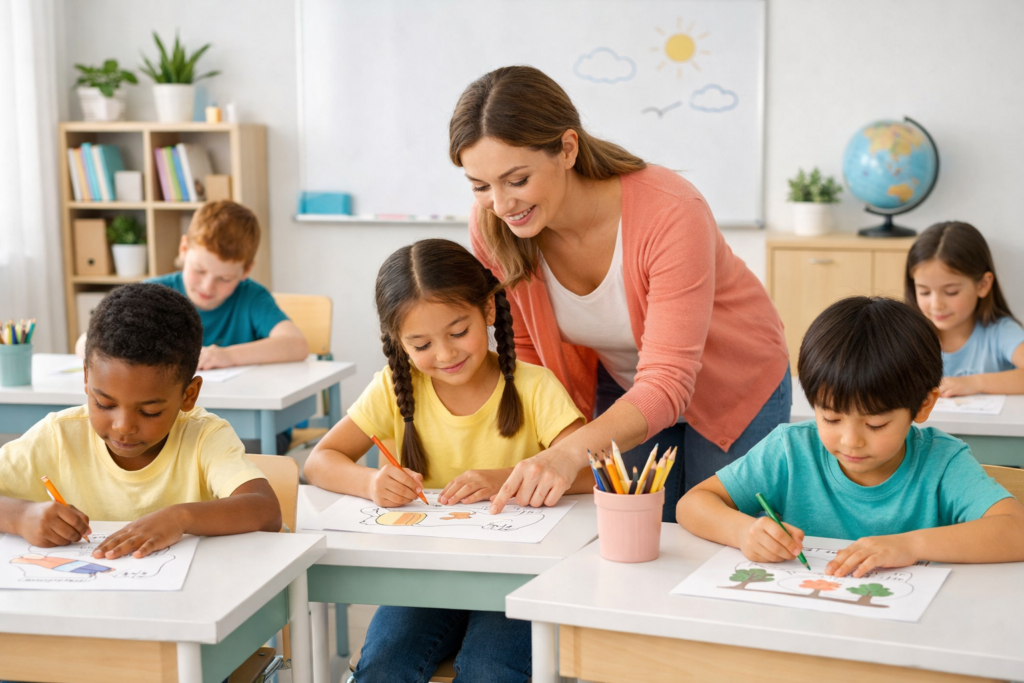
Why Coloring Builds Mindfulness in Educational Settings
School environments are increasingly overstimulating. Students face academic pressure, social comparison, constant sensory input, and emotionally complex environments. For many children—especially those with anxiety, ADHD, trauma backgrounds, or attention challenges—traditional coping strategies are insufficient.
Mindfulness programs have gained traction in schools worldwide because they help students calm the nervous system and build emotional resilience. But complex mindfulness instructions are not always suitable for young children.
This is where coloring as mindfulness becomes transformative.
Neuroscientists at the University of Washington have found that structured visual activities activate the parasympathetic nervous system, grounding children through patterned repetition and gentle sensory engagement. Coloring requires:
- Focused attention
- Controlled hand movement
- Visual tracking
- Awareness of shapes and boundaries
- Moment-by-moment decision making
These are core mindfulness principles presented in a child-friendly format.
The Rise of Mindful Coloring in Schools
Educators worldwide are adopting mindful coloring activities because they are:
- Low-cost
- Easy to implement
- Inclusive of all learning styles
- Neurologically soothing
- Classroom-friendly and quiet
- Non-verbal and accessible to ESL learners
Coloring Builds Mindfulness when implemented consistently, helping students develop emotional stability and focus.

Why Teachers Are Turning to Coloring for Mental Wellness
Teachers report that mindful coloring:
- Reduces transitional chaos
- Eases test-related anxiety
- Helps students calm down faster after recess
- Supports emotional decompression
- Reinforces classroom routines
Because coloring is simple, enjoyable, and non-threatening, it opens the door to mindfulness without the pressure of traditional meditation practices.
The Science: Stress, Attention, and Creativity in Learning
According to the American Journal of Art Therapy, coloring reduces physiological markers of stress by lowering heart rate and slowing breathing. Meanwhile, research from Johns Hopkins University indicates that creative activities enhance the brain’s executive functioning—critical for classroom success.
Coloring Builds Mindfulness precisely because it links emotional regulation with cognitive readiness, preparing the brain for learning.
1. Coloring Supports Emotional Regulation in Students
When children feel overwhelmed, anxious, overstimulated, or dysregulated, coloring becomes a direct path toward self-soothing.
How Coloring Creates a Safe, Predictable Activity
Children crave predictability. Coloring is repetitive, structured, and simple—qualities that calm the brain’s limbic system.
Predictability reduces amygdala activation, helping students shift into a calmer state quickly.
When coloring becomes part of a classroom routine, students gain an emotional anchor that signals:
“You are safe. You can slow down.”
Sensory Engagement Calms the Nervous System
Coloring integrates multiple sensory pathways:
- Visual (tracking shapes)
- Fine motor (pencil movement)
- Cognitive (choice making)
- Emotional (self-expression)
These inputs collectively activate the parasympathetic nervous system—the body’s “rest and restore” system.
Evidence From Clinical Psychology
A well-known study published in Frontiers in Psychology found that just 20 minutes of focused coloring significantly decreases symptoms of anxiety.
This evidence directly supports using coloring as a mindfulness tool in schools.
2. Coloring Encourages Present-Moment Focus
Mindfulness requires presence. Coloring Builds Mindfulness by engaging the student in slow, repetitive movement that interrupts anxious thinking.
Slow Movement Reduces Anxiety
Coloring slows cognition. When a student drags a pencil within lines, they must:
- Notice the motion
- Adjust pressure
- Guide their attention to the present moment
This disrupts rumination and worry cycles.
Teaching Students to Shift Attention
Coloring naturally teaches students how to self-direct their focus without verbal instruction.
Educators can say:
“Let’s color for two minutes and focus only on the shapes.”
Even young children can follow this.
3. Coloring Improves Attention Span and Focus
Coloring is a sustained attention activity. For children with ADHD or executive function challenges, coloring helps build neural endurance.
Why Structured Creativity Outperforms Passive Activities
Screens are overstimulating and passive. Coloring requires controlled engagement, which:
- Builds focus muscles
- Strengthens working memory
- Helps ADHD brains practice steady attention
A Bridge to Longer Academic Tasks
Teachers often use coloring as a warm-up task before:
- Writing exercises
- Reading sessions
- Homework review
- Tests
Classroom Applications
Examples include:
- Mindfulness stations for early finishers
- Coloring journals for daily practice
- Quiet boxes for emotional reset
- Transition pages during subject changes
4. Coloring Reduces Hyperactivity
Coloring Builds Mindfulness by offering a structured outlet for physical restlessness.
Hands-On Tasks Channel Excess Energy
Coloring provides motor engagement without chaos. Students who struggle with:
- Fidgeting
- Impulsivity
- Restlessness
experience relief through controlled movement.
Preparing the Brain for Learning
Studies show that children who participate in calming sensorimotor activities demonstrate improved attention for the next task.

5. Coloring Strengthens Fine Motor and Cognitive Development
Coloring supports learning readiness by refining neural pathways.
Coordination, Planning & Visual Processing
Students develop:
- Grip strength
- Spatial understanding
- Hand-eye coordination
- Decision-making
- Pattern recognition
Early Childhood Benefits
These skills directly support:
- Writing
- Math work
- Reading (tracking lines)
- Self-control
6. Coloring Builds Self-Esteem Through Expression
Coloring Builds Mindfulness not only through calming activities but also through emotional affirmation.
Why Completing a Page Feels Rewarding
Finishing a page stimulates dopamine release—reinforcing confidence and capability.
Confidence for Anxious or Struggling Students
Simple success improves:
- Self-belief
- Persistence
- Ownership of learning
7. Coloring Builds Mindfulness and Connection in the Classroom
Coloring strengthens classroom relationships.
Shared Activities Build Trust
Teachers who color with students establish emotional safety.
Communication Through Creative Activities
Coloring becomes a non-verbal bridge for children who:
- Feel overwhelmed
- Are nonverbal or shy
- Experience social anxiety
Best School Practices for Mindful Coloring
Choosing the Right Pages
Use simple, uncluttered designs that reduce cognitive load.
Ideal Session Length
5–10 minutes is enough to achieve mindfulness activation.
Recommended Materials
- Broad pencils
- Smooth crayons
- Pastel markers
- Calming color palettes
When Coloring Isn’t Enough
Signs a Student Needs Extra Support
- Extreme irritability
- Withdrawal
- Persistent anxiety
- Self-harm ideation (teachers must respond immediately)
Coloring Complements—but Doesn’t Replace—Therapy
Coloring is a mindfulness tool, not a medical intervention.
For deeper support, educators can refer to school psychologists or counselors.
Use these Medeea Publishing books as classroom mindfulness tools:
Both fit school mindfulness programs perfectly.
Coloring Builds Mindfulness Across the Entire School Day
Coloring Builds Mindfulness as a transformative classroom practice. It supports:
- Emotional regulation
- Focus
- Executive functioning
- Self-esteem
- Social connection
- Learning readiness
Schools that integrate coloring intentionally see calmer classrooms, more resilient students, and improved academic engagement.
Coloring is simple. But its impact—supported by research—is powerful.


Leave a Reply