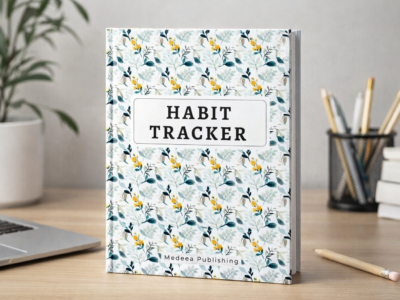



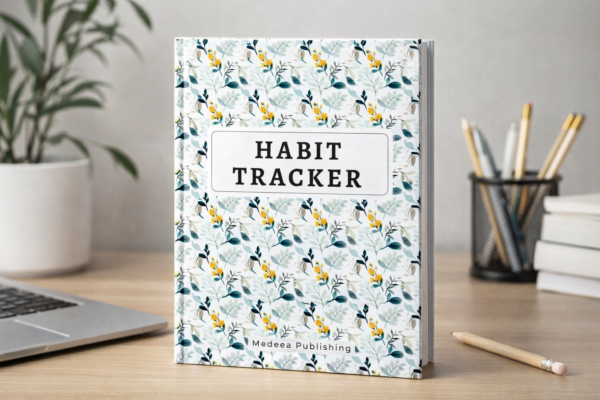



Description
Focus Is the Skill That Decides Everything
Focus determines whether intentions turn into actions, whether goals become habits, and whether effort leads to real results. In an age of constant distraction, focus is no longer optional—it is foundational.
Focus is the gateway skill behind productivity, learning, emotional regulation, and long-term success. Without it, motivation collapses, routines fragment, and even the best plans remain theoretical.
This article explores why focus fails, how habits actually form in the brain, and why a scientifically designed Habit Tracker is one of the most effective tools for restoring focus and consistency.
We will examine peer-reviewed research, cognitive psychology, behavioral neuroscience, and practical application—then connect that evidence directly to the Focus Habit Tracker as a daily, usable system.

Why Focus Is Breaking Down in Modern Life
Focus is under attack.
Neuroscience research confirms that constant task-switching, digital interruptions, and information overload reduce our ability to sustain attention over time. According to studies published in Nature Communications, frequent interruptions degrade working memory and executive function—two core mechanisms of focus.
The result is not laziness. It is cognitive fatigue.
Humans are not designed to rely on willpower alone. When focus erodes, habits collapse with it.
This is where most productivity advice fails: it assumes discipline is the solution. Science says otherwise.
The Science of Focus and Habit Formation
Focus Is a Trainable Neural Function
Focus lives primarily in the prefrontal cortex, the brain region responsible for decision-making, attention control, and impulse regulation. Repeated behaviors strengthen neural pathways through a process called neuroplasticity.
Research from University College London demonstrates that habits form through repetition, not motivation, with an average formation period of 66 days, though the range varies widely.
What matters is not intensity—but consistency.
Why Tracking Changes the Brain
Habit tracking works because it activates three proven psychological mechanisms:
1. Self-Monitoring Effect
Studies in behavioral psychology show that simply tracking behavior increases the likelihood of behavior change. This is known as the self-monitoring effect.
Tracking makes habits visible. Visibility creates awareness. Awareness enables control.
2. Dopamine Feedback Loops
Each completed habit triggers a small dopamine release. A visual tracker amplifies this reward signal, reinforcing the behavior loop.
3. Reduced Cognitive Load
Writing down habits externalizes memory. This frees working memory, improving focus on execution rather than recall.
According to research published by the American Psychological Association, reducing cognitive load significantly improves task persistence and focus.
Why a Focus Habit Tracker Outperforms Apps
Digital habit trackers promise convenience—but research shows that physical tracking tools outperform digital ones for long-term habit retention.
The Science Behind Paper-Based Tracking
Studies from Princeton University and UCLA demonstrate that handwriting activates deeper cognitive processing than typing. This enhances memory encoding and commitment.
A physical Focus Habit Tracker:
Reduces digital distraction
Encourages mindful engagement
Creates a tactile reinforcement loop
Strengthens intention-action alignment
This is why planners, journals, and trackers remain dominant in high-performance and therapeutic settings.
Focus Habit Tracker: Designed for Cognitive Alignment
What Makes This Habit Tracker Different
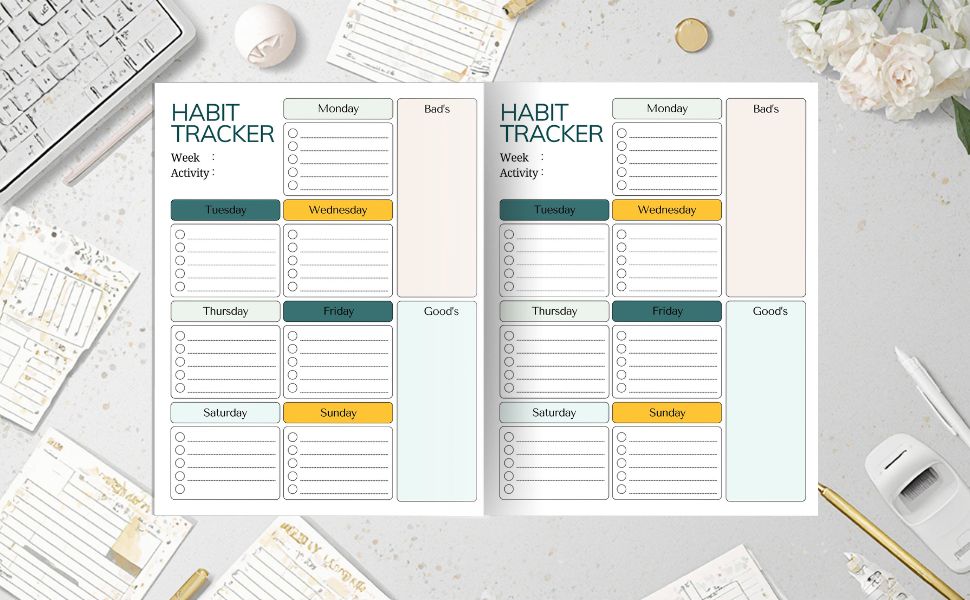
The Focus Habit Tracker is structured to align with how the brain actually builds habits.
Clear Habit Cue Design
Each habit is anchored to a defined cue—time, context, or trigger—supporting the cue-routine-reward loop described by behavioral science.
Visual Consistency Mapping
Daily check-ins create a visual chain. Research shows that visible progress increases persistence through the endowed progress effect.
Limited Habit Load
The tracker intentionally limits the number of habits per cycle. This prevents cognitive overload and increases success rates.
Reflection-Based Reinforcement
Weekly reflection prompts activate metacognition, strengthening long-term focus and behavioral insight.

Scientific Evidence Supporting Habit Tracking
Habit Formation Research
Lally et al., European Journal of Social Psychology: Habit strength increases through repetition, not motivation.
Wood & Neal, Annual Review of Psychology: Contextual consistency is more important than intensity.
Focus and Attention Research
APA studies on attentional control show that structured routines improve sustained focus.
Research in Cognitive Science confirms that external structure reduces attentional drift.
Self-Regulation Studies
Self-regulation improves when behaviors are measured. Tracking transforms abstract goals into actionable systems.
How Focus Habit Tracking Improves Mental Well-Being
Focus is not only about productivity—it directly impacts mental health.
Consistent habits improve:
Emotional regulation
Stress resilience
Perceived self-efficacy
Research published in Frontiers in Psychology links routine tracking with reduced anxiety and improved mood stability.
The Focus Habit Tracker acts as a cognitive anchor, especially during periods of overwhelm or transition.
Using the Focus Habit Tracker Effectively
Start With Identity-Based Habits
Instead of “I want to focus more,” track habits that reinforce identity:
“I show up daily”
“I finish what I start”
Track Process, Not Outcomes
Focus on behaviors you control. This aligns with research on intrinsic motivation.
Review Weekly, Not Constantly
Weekly reviews prevent obsession while maintaining accountability.
Internal Resources for Deeper Learning
For readers interested in expanding their understanding of focus and creative mindfulness, explore:
How Coloring Improves Focus and Emotional Regulation
The Science of Mindful Routines
Why Writing Things Down Increases Follow-Through
(Available on medeeapublishing.com)
Why This Focus Habit Tracker Works Long-Term
This Habit Tracker is not a motivational tool. It is a behavioral system grounded in neuroscience, psychology, and real-world usability.
It supports:
Sustainable focus
Habit consistency
Reduced cognitive overload
Long-term personal change
Focus is not found. It is trained.
And the simplest, most scientifically supported way to train it is through intentional habit tracking.
Focus is the invisible structure behind every meaningful outcome. When focus is supported, habits form naturally. When habits form, progress becomes inevitable.
A Focus Habit Tracker is not about doing more—it is about doing what matters, consistently, with clarity and cognitive support.
Science confirms it. Practice reinforces it. Results follow.
Read More:
Mindful Coloring vs Art Therapy: 5 Key Differences Explained
5 Powerful Ways Coloring Boosts Mindfulness – Is It Really That Effective?




Reviews
There are no reviews yet.