Leaving a long-term career is a monumental life transition, but when that career was defined by a hostile environment, the transition becomes a survival mission. For many seniors, the end of a professional era isn’t just about relaxation; it is about toxic work recovery. Years of high-pressure demands, office politics, and perhaps a lack of appreciation can leave deep psychological and physical scars. As we age, our resilience to chronic stress changes, making the post-career period a critical time for intentional healing.
Recovery is not a passive process. It requires more than just “not working.” It requires a proactive approach to reclaiming your identity, your peace of mind, and your physical health. This is where art enters the frame as a transformative ally. Whether you have never picked up a paintbrush or you are returning to a childhood hobby, creative expression provides a unique pathway to mend the nervous system. In this comprehensive guide, we will explore how art serves as the ultimate tool for those navigating the complexities of life after a damaging workplace experience.
Before we dive into the therapeutic depths of creativity, it is important to remember that you are not alone in this journey. Many seniors find solace in communal wisdom and shared experiences. Discover more about Healthy Living to find resources that support your transition into a more vibrant, art-filled lifestyle.
The Hidden Toll: Why Toxic Work Recovery is Essential for Seniors

For seniors, the impact of a toxic workplace often lingers far longer than the final paycheck. Chronic exposure to cortisol—the stress hormone—can lead to long-term issues such as hypertension, sleep disturbances, and a weakened immune system. When you spend decades in an environment that suppresses your voice or demands constant “fight or flight” responses, your body forgets how to exist in a state of rest.
Toxic work recovery involves “unlearning” the survival mechanisms you developed to cope with a bad boss or a cutthroat culture. For seniors, this process is particularly poignant because retirement is supposed to be the “Golden Age.” Feeling haunted by past work trauma can feel like a betrayal of this hard-earned freedom. Art acts as a bridge, moving you from a state of hyper-vigilance to a state of flow, allowing your health to stabilize as your mind finds a new, safe focus.
Recognizing the Symptoms of Post-Work Stress
Many retirees don’t realize they are in need of recovery until they stop. Common signs include:
- Intrusive thoughts about past work conflicts.
- A sense of “loss of self” now that the professional title is gone.
- Anxiety when faced with unstructured time.
- Physical fatigue that doesn’t improve with sleep.
1. Reclaiming Agency Through Creative Choice
One of the most damaging aspects of a toxic workplace is the loss of autonomy. You are often told what to do, how to think, and how to spend your time. In the process of toxic work recovery, regaining a sense of agency is paramount. Art provides a low-stakes environment where you are the sole decision-maker.
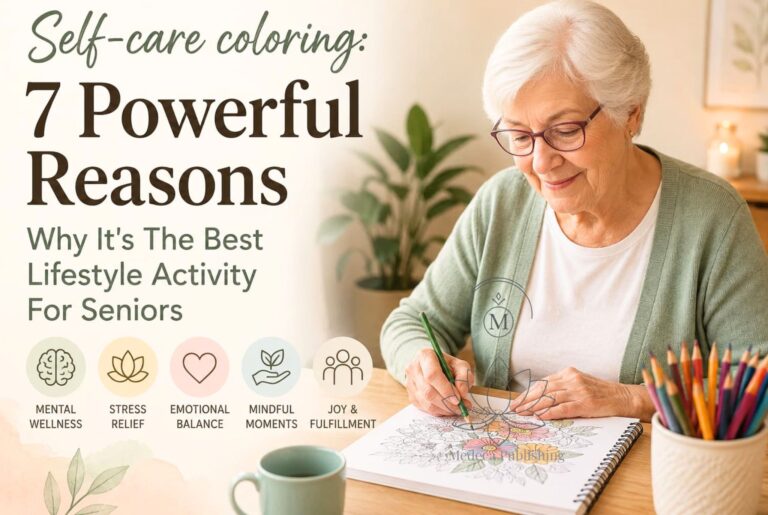
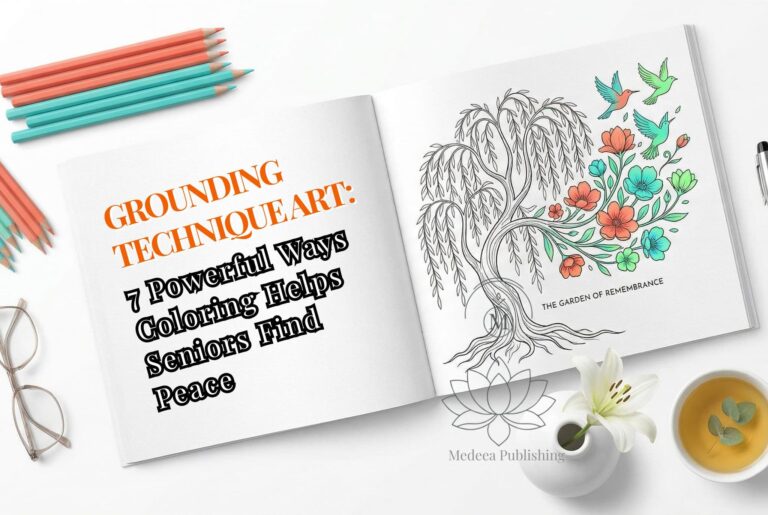
When you sit down with a coloring book from Medeea Publishing, you choose the palette. You decide whether the sky is blue or a vibrant violet. There are no deadlines, no performance reviews, and no “wrong” answers. This simple act of making choices—purely for your own pleasure—rebuilds the self-confidence that a toxic environment may have eroded. It reminds your brain that you are back in the driver’s seat of your life.
The Power of “No-Rules” Creativity
For seniors who have spent years following strict corporate protocols, the “rules” of art can actually be a deterrent. That is why we advocate for “process art”—where the goal isn’t a masterpiece, but the act of creating. This shift in focus is vital for your mental health, as it removes the pressure of external validation, something that was likely weaponized in a toxic job.
2. The Science of Art and Brain Health
Art is not just a “nice” hobby; it is a neurological intervention. Research has shown that engaging in creative activities can lower cortisol levels and stimulate the production of dopamine. According to Psychology Today, art therapy can be a powerful tool for processing trauma and improving emotional regulation.
For seniors, this is especially important for cognitive longevity. Engaging in new creative skills builds new neural pathways, a process known as neuroplasticity. When you are focused on the intricate patterns of a Medeea Publishing coloring book, your brain enters a “flow state.” This state is the antithesis of the “stress state” you endured at work. In the flow state, your heart rate slows, your blood pressure stabilizes, and your body finally begins the deep work of repair.
How Creativity Lowers Physiological Stress
When we create, the amygdala—the brain’s fear center—gets a chance to rest. For someone in the midst of toxic work recovery, the amygdala is often overactive. By shifting focus to color, texture, and shape, you signal to your nervous system that you are safe.
3. Using Art to Process Unspoken Emotions
Toxic environments often require us to “mask” our true feelings. You may have spent years smiling through disrespect or swallowing your frustration to maintain professionalism. These suppressed emotions don’t disappear; they live in the body. Art provides a non-verbal language to express what words cannot.
Sometimes, a splash of red paint can represent the anger you weren’t allowed to show. Sometimes, the meticulous shading of a leaf in a coloring book can represent the order you craved in a chaotic office. By externalizing these feelings onto a page, you move them out of your physical body. This emotional release is a cornerstone of toxic work recovery, preventing the “bottled up” stress from manifesting as physical illness.
Medeea Publishing understands this emotional weight. Their coloring books are designed with themes that promote peace and reflection, providing a gentle “container” for your emotions. For seniors, this provides a safe way to explore feelings without the intensity of traditional “talk therapy.”
4. Mindfulness and the Art of the Present Moment
A toxic workplace keeps you trapped in the past (ruminating on mistakes) or the future (dreading the next meeting). Recovery requires returning to the now. Art is a naturally mindful activity. You cannot color a complex geometric pattern while simultaneously worrying about a budget report from three years ago—at least, not for long. The senses take over.
Practicing mindfulness through art helps seniors ground themselves. When you feel the friction of the pencil against the paper or smell the scent of the wood shavings, you are anchored in the present. This anchoring is essential for long-term health, as it trains the brain to stay away from the “trauma loops” of the past.
Toxic Work Recovery: The 5-Minute Art Break
You don’t need hours to benefit from this. Even five minutes of intentional coloring or sketching can reset your nervous system. For seniors struggling with the transition to retirement, these small pockets of creativity can act as “islands of calm” throughout the day.
5. Re-establishing Identity Outside of Professional Titles
Who are you when you aren’t a Manager, an Accountant, or an Engineer? For many seniors, their identity was so entwined with their job that retirement feels like an identity crisis. If that job was toxic, the crisis is even deeper, as your self-worth may have been tied to surviving a difficult environment.
Art allows you to build a new identity: The Creator. As you develop your artistic voice, you begin to see yourself as someone who produces beauty, rather than someone who just survives stress. This shift is a massive win for your toxic work recovery. It proves that your value is intrinsic, not dependent on a corporate hierarchy.
Finding Your Medium
Seniors are often surprised by what they enjoy. You might try:
- Adult Coloring: Perfect for anxiety relief and immediate satisfaction. Medeea Publishing offers specialized books that are perfect for this.
- Watercolor: Teaches the beauty of “letting go” and embracing imperfection.
- Clay Modeling: Highly tactile and grounding for those who feel “stuck in their heads.”
6. The Social Health Benefits of Senior Art Communities
Toxicity often breeds isolation. You may have stopped trusting colleagues or felt like you had to withdraw to protect yourself. Part of toxic work recovery is learning to trust and connect again. Art is a universal language that brings people together.
Joining a local art class or an online coloring community for seniors can help rebuild your social health. Sharing your work, even if it’s just a finished page from a coloring book, fosters a sense of belonging. Medeea Publishing’s community often shares how their coloring journeys have led to new friendships, proving that creativity is a powerful antidote to the loneliness that sometimes follows retirement.
7. Art as a Tool for Better Sleep and Physical Health
The physical benefits of art are perhaps the most surprising aspect of toxic work recovery. When the mind is at peace, the body follows. Seniors who engage in creative activities in the evening often report better sleep quality. Because art lowers the heart rate and induces a state of relaxation, it is the perfect “wind-down” activity.
Good sleep is the foundation of health. It is during sleep that the body repairs the damage caused by years of chronic stress. By replacing “doom-scrolling” or ruminating on work memories with a quiet hour of coloring, you are literally giving your body the permission it needs to heal.
Coloring Books: Your Partner in Anxiety Relief

At Medeea Publishing, we specialize in creating coloring books that are more than just pictures on a page. They are tools for transformation. Specifically curated for those seeking anxiety relief, our books feature high-quality paper and designs that range from soothing nature scenes to intricate mandalas. For a senior in the middle of toxic work recovery, a Medeea Publishing book is a portable sanctuary. It is a reminder that you deserve peace, you deserve beauty, and you deserve to heal at your own pace.
Medeea Publishing creates coloring books for seniors that are specifically designed to support toxic work recovery through calm and structured creativity. These coloring books for seniors focus on clarity, balance, and emotional comfort, making them ideal for individuals transitioning out of stressful environments. By using coloring books for seniors consistently, many people discover that their ability to relax improves naturally, without forcing the process.
Why Coloring for Stress Relief Accelerates Toxic Work Recovery
Coloring for stress relief is one of the most effective ways to support toxic work recovery because it directly calms the nervous system without requiring effort or pressure. For many seniors, traditional relaxation methods feel difficult or unnatural after years of constant stress. Coloring for stress relief provides a simple, structured activity that gently shifts the mind away from intrusive thoughts and into a state of calm focus. Over time, consistent use of coloring for stress relief helps reduce anxiety, stabilize mood, and create a predictable emotional rhythm that supports long-term healing.
Choosing the Right Coloring Books for Seniors During Recovery
Choosing the right coloring books for seniors is an important step in making toxic work recovery effective and sustainable. Not all designs support relaxation equally, which is why coloring books for seniors should include clear lines, balanced patterns, and calming themes. When seniors use coloring books for seniors that are specifically designed for relaxation, they experience less frustration and more focus. High-quality coloring books for seniors also improve the sensory experience, making the activity more enjoyable and easier to integrate into a daily routine.
How to Start Your Recovery Journey Through Art
If you are a senior ready to begin your toxic work recovery, don’t feel pressured to create a masterpiece on day one. Follow these simple steps to integrate art into your health routine:
Step 1: Create a Dedicated Space
Even if it’s just a corner of your kitchen table, have a space where your supplies are always ready. This lowers the “barrier to entry” when you feel a wave of anxiety or a bad memory surface.
Step 2: Choose Your “Low-Stakes” Tool
We highly recommend starting with coloring. It removes the “blank page syndrome” that can be intimidating. A Medeea Publishing coloring book provides the structure you need while still allowing for total creative freedom.
Step 3: Set an Intention
Before you begin, take a deep breath and say to yourself: “I am doing this for my healing. I am leaving the past behind.” This simple ritual reinforces the purpose of your toxic work recovery.
Step 4: Practice Non-Judgment
If your inner critic starts to sound like your old boss (“This isn’t good enough,” “You’re wasting time”), acknowledge the thought and let it go. You aren’t working anymore. You are creating.
Conclusion: Your New Chapter Starts Here
Recovering from a toxic work environment is a journey of a thousand small, creative steps. For seniors, this period of life is a sacred opportunity to reclaim the joy and curiosity that may have been dimmed by years of corporate struggle. By prioritizing your health and embracing the therapeutic power of art, you aren’t just passing the time—you are rebuilding your soul.
Remember, is not about forgetting the past, but about ensuring it no longer controls your future. Grab your colored pencils, open a Medeea Publishing book, and start painting the life you deserve. The masterpiece isn’t what’s on the page; the masterpiece is the peace of mind you are building, one color at a time.
Coloring for stress relief becomes even more powerful when it is practiced consistently and combined with the right tools. For seniors navigating toxic work recovery, combining coloring for stress relief with high-quality coloring books for seniors creates a simple but effective path toward emotional balance. This approach allows recovery to feel natural, not forced, supporting both mental clarity and long-term wellbeing.
Frequently Asked Questions
1. How long does toxic work recovery typically take for seniors?
There is no universal timeline for toxic work recovery, because each individual carries a different level of emotional and physical strain accumulated over the years. For many seniors, especially those transitioning into retirement after long periods in high-pressure environments, the first stage is often what can be described as “decompression.”
This phase can last several weeks or even months. During this time, the body begins to release built-up stress hormones, while the mind slowly adjusts to a slower pace of life. It is common to feel restless, fatigued, or even emotionally sensitive during this period.
Incorporating a daily routine that includes a coloring book can significantly support this transition. The repetitive and calming nature of coloring helps lower cortisol levels, regulate breathing, and create a predictable moment of calm each day. However, it is important to understand that toxic work recovery is not linear. Some days will feel easier than others.
Patience is essential. Healing from long-term stress is not something that can be rushed. Small, consistent habits—like spending 15–20 minutes with a coloring book—can gradually rebuild emotional balance and restore a sense of control over time.
Using coloring for stress relief alongside coloring books for seniors helps create a structured and accessible recovery method. Many seniors find that combining coloring for stress relief with thoughtfully designed coloring books for seniors improves both focus and emotional stability over time.
2. I’ve never been “artistic.” Can I still benefit from this?
Yes, absolutely. One of the biggest misconceptions about creative activities is that they require talent or prior experience. In reality, the benefits of art—especially in the context of toxic work recovery—come entirely from the process, not the outcome.
Using a coloring book removes the pressure of starting from scratch. The structure is already there. All you need to do is engage with it. This makes coloring especially accessible for individuals who feel intimidated by traditional forms of art.
The brain responds not to how “good” the result looks, but to the act of focusing, choosing, and completing. These small actions activate areas responsible for attention and emotional regulation. Over time, this builds confidence and reduces anxiety.
For seniors in particular, a coloring book offers a safe and gentle entry point into creativity. It allows you to reconnect with a sense of play and curiosity—two elements that are often lost during years of structured, high-pressure work environments.
3. Is art really enough to fix the physical health problems caused by work stress?
Art alone is not a replacement for medical treatment, but it plays a crucial role in addressing the root causes of stress-related health issues. Many physical conditions—such as high blood pressure, fatigue, and sleep disturbances—are directly linked to prolonged stress.
In this context, toxic work recovery requires a holistic approach. This includes proper nutrition, physical movement, medical guidance when needed, and consistent mental relaxation practices.
Using a coloring book contributes to this process by calming the nervous system. When the body shifts out of a constant stress response, it becomes more capable of healing. Heart rate stabilizes, muscle tension decreases, and sleep quality improves.
So while art may not directly “fix” physical conditions, it creates the internal environment necessary for recovery to happen more effectively.
4. How often should I use a coloring book during recovery?
Consistency is more important than duration. For effective toxic work recovery, it is recommended to engage in calming activities daily, even if only for a short period of time.
Using a coloring book for 15–20 minutes per day is enough to create noticeable changes in mood and stress levels. The goal is not to complete pages quickly, but to create a predictable moment of calm in your routine.
Over time, this habit trains the brain to recognize and enter a relaxed state more easily.
5. Can coloring help with sleep problems after leaving a stressful job?
Yes, it can. Sleep disturbances are very common during toxic work recovery, especially when the mind is still processing years of pressure and routine.
Using a coloring book in the evening can act as a transition ritual. It signals to the brain that the day is ending and that it is safe to slow down. Unlike screens, coloring does not stimulate the brain with bright light or constant information.
This makes it easier to fall asleep and improves overall sleep quality over time.
6. What type of coloring book is best for seniors?
The best coloring book for seniors is one that balances simplicity and engagement. Designs should be clear, well-defined, and not overly complex, allowing for focus without frustration.
For toxic work recovery, themes also matter. Nature scenes, mandalas, and calming patterns tend to be the most effective because they naturally promote relaxation.
High-quality paper and comfortable layouts are also important, as they improve the overall experience and make the activity more enjoyable.