
In the high-stakes world of corporate leadership, the mental landscape of an executive is often a battlefield of high-pressure decisions, constant deadlines, and the relentless pursuit of growth. Maintaining a steady emotional state is not just a luxury; it is a fundamental requirement for effective leadership. This is where the intersection of color psychology mood stabilization and neurobiology becomes a vital asset. In our Discover more about Science & Health section, we explore how environmental and sensory inputs can fundamentally alter the chemistry of your brain, providing a grounded approach to mental well-being.
The concept of color psychology mood management is rooted in the way our brains process visual stimuli. For a corporate executive, understanding how certain wavelengths of light trigger specific hormonal responses can be the difference between a day of chaotic stress and a day of focused productivity. We are not just talking about aesthetics; we are talking about the science of survival and flourishing in a modern, fast-paced environment.
Understanding the Science: How Color Psychology Mood Regulation Works
At its core, color is simply light of different wavelengths. When these wavelengths hit the retina, they are converted into electrical impulses that travel to the hypothalamus—the part of the brain responsible for governing our endocrine system and, consequently, our emotions. Therefore, color psychology mood stabilization is a physiological process as much as a psychological one. When an executive is surrounded by the “right” colors, they are effectively hacking their own biology to remain calm under fire.
Research published by Psychology Today highlights how mindfulness—the practice of being present—can be significantly enhanced by one’s environment. By choosing specific hues in your office or during your downtime, you can prime your nervous system for a state of “rest and digest” rather than “fight or flight.” This is the cornerstone of color psychology mood management for those who carry the weight of an organization on their shoulders.
The Executive Stress Epidemic
Executive burnout is a silent predator in the C-suite. High cortisol levels, disrupted sleep patterns, and decision fatigue are common symptoms of a life spent in high-intensity environments. Integrating color psychology mood strategies into your daily routine offers a non-invasive, drug-free method to mitigate these effects. By understanding how colors like deep blue or soft green interact with our stress response, leaders can create personal sanctuaries that promote recovery.
The Power of Blue: Enhancing Focus and Communication
In the context of color psychology mood stabilization, blue is often regarded as the “corporate color,” but not just because it looks professional. Blue has been scientifically proven to lower heart rates and slow breathing. For an executive preparing for a high-stakes board meeting, a blue-dominant environment can provide the mental clarity needed to articulate complex strategies without the interference of anxiety.
However, the shade matters. A soft, sky blue promotes tranquility, while a deep navy can foster a sense of authority and reliability. When we discuss color psychology mood benefits, we emphasize that blue helps in “cooling down” an overheated mind. It creates a psychological distance from the immediate stressor, allowing for more objective decision-making.
The Neurochemistry of Cool Tones
Cooler colors sit on the shorter end of the visible light spectrum. They are less stimulating to the eyes and the brain than warm colors. This lack of overstimulation is key to color psychology mood regulation. When the brain isn’t busy processing intense visual data, it can redirect that energy toward high-level cognitive functions, such as strategic planning and emotional intelligence.
Green for Growth: Balancing Ambition with Well-being
Green is the color of balance. It sits in the middle of the spectrum and represents nature, renewal, and equilibrium. For an executive, color psychology mood applications involving green are essential for preventing burnout. Green light has been shown to reduce physical symptoms of stress, making it an ideal choice for areas intended for reflection or creative brainstorming.
Integrating green into your workspace—whether through office plants or wall art—taps into “biophilia,” our innate human connection to nature. This connection is a powerful component of color psychology mood stabilization. It reminds the subconscious mind that there is life and growth outside of the digital screens and spreadsheets, providing a much-needed grounding effect.
The Role of Red: Using Stimulation Sparingly
While we often focus on calming the mind, there are times when an executive needs a boost of physical energy. Red is the color of passion, urgency, and action. In the realm of color psychology mood, red is a double-edged sword. It increases the heart rate and stimulates the adrenal glands. While this can be useful for a quick burst of motivation, prolonged exposure can lead to irritability and increased stress levels.
The savvy executive uses color psychology mood red cues strategically. Perhaps a red notebook for “urgent” tasks or a piece of art with red accents to keep energy high during a long afternoon. However, for true mood stabilization, red should be balanced with neutralizing tones to prevent the “aggression” response often associated with this high-energy hue.
Tactile Mindfulness: MedeeaPublishing Coloring Books for Executives
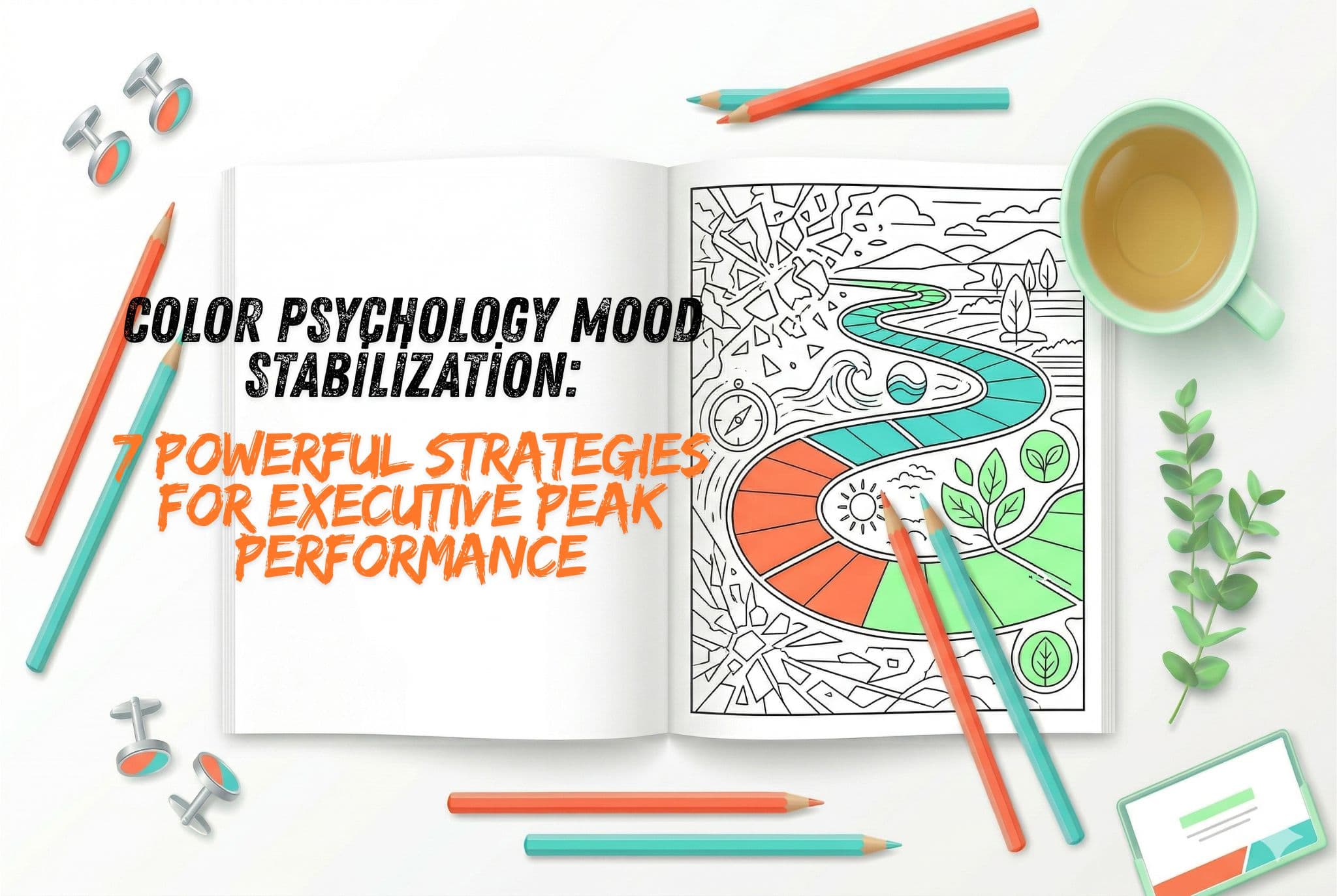
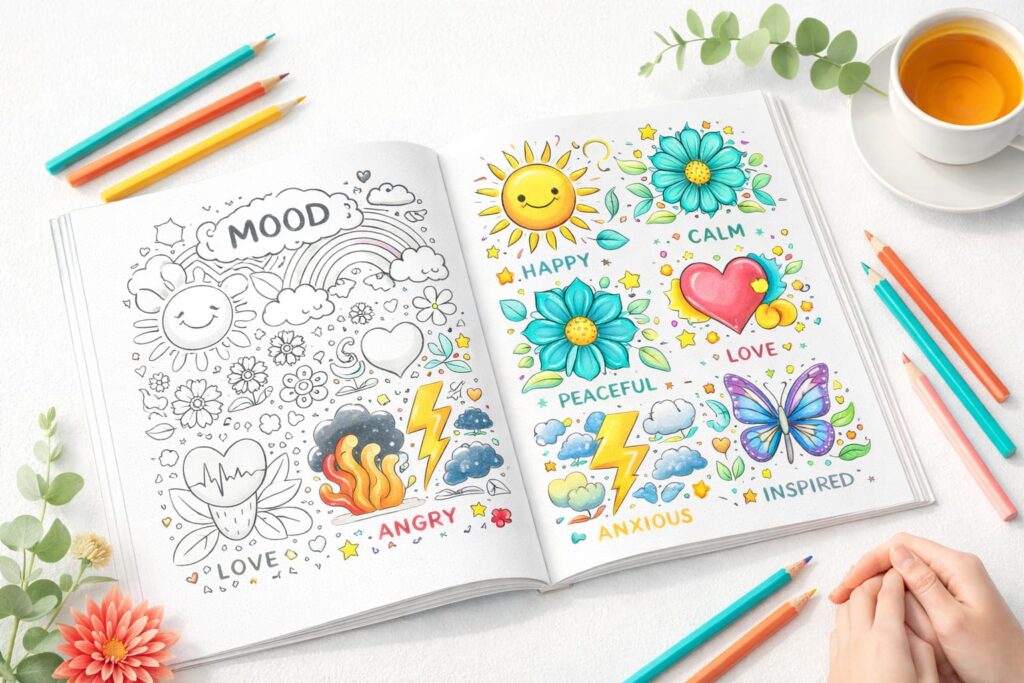
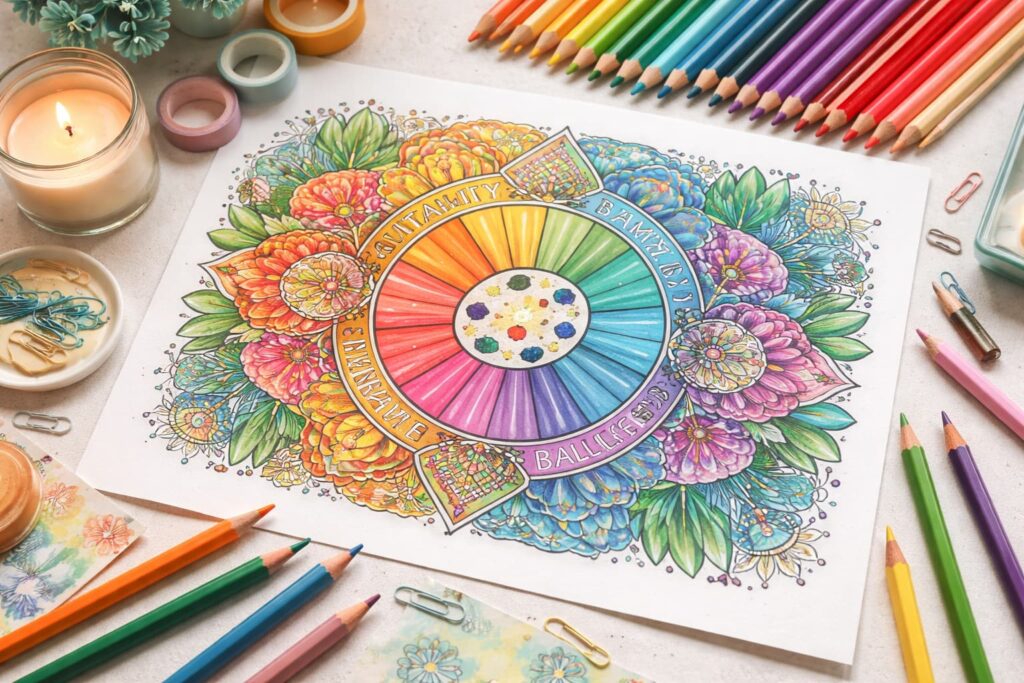
One of the most effective ways to apply color psychology mood stabilization is through the act of creation. At Medeea Publishing, we believe that art is a bridge to mental clarity. Our high-quality coloring books are designed specifically as tools for anxiety relief and focus restoration. For a corporate executive, the act of choosing a specific color—say, a calming turquoise or a grounding terracotta—and applying it to a complex geometric pattern is a form of active meditation.
Using color psychology mood principles while coloring allows the executive to “unplug” from the digital world and engage with the physical. This tactile experience reduces the “noise” of the workday. As you fill in the intricate designs of a MedeeaPublishing book, your brain enters a “flow state,” where time seems to disappear and the stress of the quarterly report fades into the background. It is a practical, portable, and highly effective tool for mood stabilization.
According to the Mayo Clinic, stress management techniques like art therapy can significantly improve one’s quality of life. By incorporating color psychology mood techniques through coloring, executives can practice mindfulness in a way that feels productive and soothing simultaneously.
Why Coloring Works for High-Achievers
High-achievers often struggle with “traditional” meditation because their minds are trained to be constantly active. Coloring provides a “task” for the brain to focus on, which satisfies the need for productivity while allowing the nervous system to relax. This is the color psychology mood advantage: it turns a leisure activity into a strategic tool for mental health maintenance.
Harnessing Yellow: Optimism and Creative Problem Solving
Yellow is often associated with sunshine and happiness, but in the context of color psychology mood for executives, it is the color of the intellect. It stimulates the left side of the brain, which is responsible for logic and analytical thinking. If you are facing a complex problem that requires a fresh perspective, surrounding yourself with hints of yellow can trigger an optimistic and creative mental state.
However, much like red, yellow must be used with care. Too much bright yellow can cause eye strain and feelings of agitation. The key to color psychology mood success is moderation. A pale yellow can brighten a room and improve the general atmosphere, making it easier for a team to collaborate and innovate without feeling the weight of a “drab” environment.
Creating the Perfect Executive Suite with Color Psychology Mood Principles
How do you transform your office into a bastion of stability? It starts with a conscious design. You don’t need a total renovation to reap the benefits of color psychology mood stabilization. Small, intentional changes can have a massive impact on your daily emotional baseline.
- The Anchor Wall: Paint one wall a soft slate blue or a sage green to provide a focal point for your eyes during stressful calls.
- Lighting: Use adjustable LED lighting that can change temperature. Cooler (bluer) light for focused work and warmer (amber) light for late-afternoon winding down.
- Personal Artifacts: Choose office accessories in colors that reflect your current mental needs. If you feel overwhelmed, look for neutrals and cool tones.
By applying color psychology mood strategies to your physical surroundings, you are setting the stage for consistent, high-level performance. You are telling your brain that the environment is safe, controlled, and conducive to success.
The Impact of Neutral Tones on Decision Fatigue
While vibrant colors have their place, the importance of neutrals—white, gray, beige—cannot be overstated in color psychology mood theory. Neutrals provide the “white space” for the mind. For an executive who is constantly bombarded with data, a neutral environment acts as a palate cleanser for the brain.
White represents clarity and cleanliness, but in excess, it can feel clinical and cold. Gray can be sophisticated and calming, but too much can lead to feelings of gloom. The most effective color psychology mood environments use neutrals as a base, allowing the more “active” colors to do their work without overwhelming the senses. This balance is crucial for avoiding decision fatigue, as the brain doesn’t have to fight against visual clutter.
Case Study: The “Quiet Room” Strategy
Many top-tier firms are now implementing “Quiet Rooms” designed specifically with color psychology mood principles in mind. These rooms often feature soft lighting, comfortable textures, and a palette of muted blues and greens. Executives are encouraged to spend 15 minutes in these spaces before major negotiations. The result? A measurable increase in patience, clearer communication, and more favorable outcomes. This is the tangible power of color psychology mood stabilization in action.
Color Psychology Mood and the Remote Executive
With the rise of hybrid and remote work, many executives are now responsible for their own home office environments. This offers a unique opportunity to tailor your space specifically to your personal color psychology mood triggers. Unlike a corporate headquarters, your home office can be a bespoke laboratory for your mental well-being.
When working from home, the boundaries between professional and personal life often blur. Using color psychology mood cues can help establish these boundaries. For example, using a specific “work color” (like a blue desk mat) can signal to your brain that it is time to focus. When you move away from that color, your brain can more easily transition into a “rest” mode. This psychological “triggering” is an essential part of maintaining long-term executive health.
The Importance of Natural Light
No discussion of color psychology mood would be complete without mentioning the ultimate source of color: the sun. Natural light contains the full spectrum of colors. Executives should prioritize workspaces with ample natural light, as it regulates the circadian rhythm and boosts serotonin levels. If natural light is unavailable, full-spectrum lamps can mimic the color psychology mood benefits of the sun, helping to keep seasonal affective disorder and general lethargy at bay.
Practical Exercises for Instant Mood Stabilization
When you are in the middle of a crisis, you don’t have time to repaint your office. You need immediate color psychology mood interventions. Here are three quick exercises:
- The Blue Visualization: Close your eyes for 60 seconds and imagine yourself surrounded by a deep, calm blue ocean. This mental shift can trigger the same physiological response as physically being in a blue room.
- The Green Gaze: Look out a window at a tree or a patch of grass. If you are in a concrete jungle, look at a high-resolution photo of a forest. This brief engagement with green can reset your color psychology mood baseline.
- The Coloring Break: Keep a MedeeaPublishing coloring book in your desk drawer. Five minutes of focused coloring can act as a “circuit breaker” for a spiraling stress response, allowing you to return to your tasks with renewed focus.
Integrating Color Psychology Mood into Your Leadership Style
An executive who understands color psychology mood doesn’t just use it for themselves; they use it to lead more effectively. When you recognize that your team is stressed, you can adjust the environment of your meetings. You might choose a room with more natural light or suggest a “walking meeting” in a green park. By managing the collective color psychology mood of your organization, you foster a culture of well-being and high performance.
Empathy is a key trait of the modern leader. By acknowledging the impact of the environment on your employees’ mental health, you demonstrate a grounded, supportive leadership style. This is the essence of color psychology mood application in the corporate world: it is a tool for human-centric management.
The Science & Health Connection
The study of how we interact with our environment is a growing field within Science & Health. As we move further into the 21st century, the integration of psychological insights into daily life will become standard practice. For the forward-thinking executive, mastering color psychology mood stabilization today is a way to stay ahead of the curve and ensure that both they and their organizations remain resilient in the face of change.
Final Thoughts: A Grounded Approach to Executive Wellness
The journey toward peak performance is not about pushing harder; it’s about working smarter with the tools biology has given us. Color psychology mood stabilization is one such tool—an elegant, science-backed method to manage the internal weather of the mind. Whether through the strategic design of your office or the meditative practice of coloring with MedeeaPublishing books, you have the power to influence your emotional state and, by extension, your professional success.
Remember that your mind is your most valuable asset. Protecting its stability is the most important executive decision you will make all day. By embracing the principles of color psychology mood, you are choosing a path of balance, clarity, and sustained excellence.
Explore our extensive collection of resources and tools designed to support your journey. From deep dives into Science & Health to our signature coloring books, Medeea Publishing is your partner in achieving a calmer, more focused corporate life.
Frequently Asked Questions
How quickly can color psychology mood changes occur?
Physiological responses to color, such as changes in heart rate or cortisol levels, can begin within seconds of exposure to a dominant hue. However, the most profound mood stabilization occurs with consistent exposure to a balanced environment over time.
Can I use color psychology mood techniques on my digital devices?
Yes. Adjusting your screen’s “warmth” (reducing blue light in the evening) and choosing a calming wallpaper for your desktop are effective ways to manage your digital color psychology mood environment.
What is the best color for a high-pressure boardroom?
A combination of soft blue (to promote calm) and light gray (to ensure neutrality) is ideal. These colors help participants remain objective and reduce the likelihood of heated emotional outbursts during difficult negotiations.