

Perfectionism and coloring may seem like two concepts that should naturally align, especially for those in the healthcare industry. After all, medical professionals are trained for precision, accuracy, and flawlessness. However, when it comes to therapeutic art, the rigid need for perfection can actually hinder the healing process. For doctors, nurses, and allied health professionals, the pressure to be “perfect” is a constant weight. In the clinical world, a mistake can have dire consequences. But when you transition from the hospital ward to the coloring page, that same drive for excellence can become a source of anxiety rather than a release.
In this article, we explore why letting go of strict standards is the key to unlocking the true benefits of creative expression. By shifting the focus from the final result to the process itself, healthcare workers can find a sanctuary of peace that requires no qualifications, no sterile environments, and—most importantly—no fear of failure. If you are looking for ways to decompress after a long shift, Discover more about Creative Stress Relief through our dedicated resources for professionals.
The Clinical Mindset: Why Perfectionism and coloring Often Conflict
Healthcare workers are conditioned to value perfection. Whether it is calculating a precise dosage, suturing a wound, or interpreting a complex lab result, the margin for error is non-existent. This high-stakes environment fosters a personality trait known as “adaptive perfectionism,” which is essential for job performance. However, this trait often spills over into personal life, turning hobbies into another set of tasks to be mastered.
When a nurse picks up a coloring book, the instinct is often to stay perfectly within the lines, choose the “correct” color palette, and produce a masterpiece worthy of a gallery. This is where perfectionism and coloring clash. Instead of lowering cortisol levels, the individual becomes stressed about their artistic ability. They worry about “ruining” the page. To truly experience mindfulness, one must intentionally decouple the clinical need for accuracy from the creative need for expression.
The Psychological Toll of “High-Stakes” Living: Breaking the Burnout Cycle
Living in a constant state of hyper-vigilance—the feeling of always being “on call” and ready for a crisis—leads directly to a state of chronic, soul-deep burnout. This is particularly prevalent among healthcare workers and first responders who suffer from a specific, exhausting type of fatigue where the brain never truly “shuts off.” Even when they leave the hospital or the clinic, the analytical mind continues to loop through patient charts, potential errors, and future checklists. In an attempt to find relief, many turn to creative outlets, yet they often inadvertently drag their work-induced rigidity into their hobbies. By bringing a rigid mindset to their creative time, specifically through the intersection of perfectionism and coloring, they are essentially keeping the analytical, judgmental, and high-pressure part of the brain—the left hemisphere—completely active and overstimulated.
To find actual relief, we must understand that true therapeutic coloring only happens when we successfully disengage that internal critic and activate the right hemisphere—the side of the brain responsible for intuition, spontaneous creativity, and the restorative state known as “flow.” For a professional whose day-to-day life depends on zero-margin-for-error precision, the struggle between perfectionism and coloring can feel like a secondary battleground. They might find themselves obsessing over color coordination or feeling stressed if a shade doesn’t look “realistic.” However, this mindset prevents the nervous system from actually downregulating. To heal, the goal of the activity must shift from “producing a masterpiece” to “experiencing the movement.”
The key to reclaiming your mental health is to treat the page as a safe space where the rules of the professional world do not apply. If you find yourself paralyzed by the choice of the “right” pencil, you are seeing the clash of perfectionism and coloring in real-time. To break this, you must give yourself radical permission to be messy. In fact, letting the colors bleed over the lines or choosing “clashing” neon colors isn’t a failure of skill; it is a profound and necessary rebellion against the crushing rigidity of the workday. It is a declaration that, for these thirty minutes, you are not a technician, a doctor, or a high-stakes decision-maker—you are simply a human being in a state of play.
Ultimately, the most profound benefits occur when you stop trying to “win” at your hobby. When we let go of the toxic relationship between perfectionism and coloring, we allow our heart rate to slow and our cortisol levels to drop. By intentionally making “mistakes” on the page, we train our brains to realize that imperfection is not a threat to our safety or our competence. This small act of defiance on paper builds the emotional resilience needed to return to the high-stakes world with a mind that has finally, truly, learned how to rest.
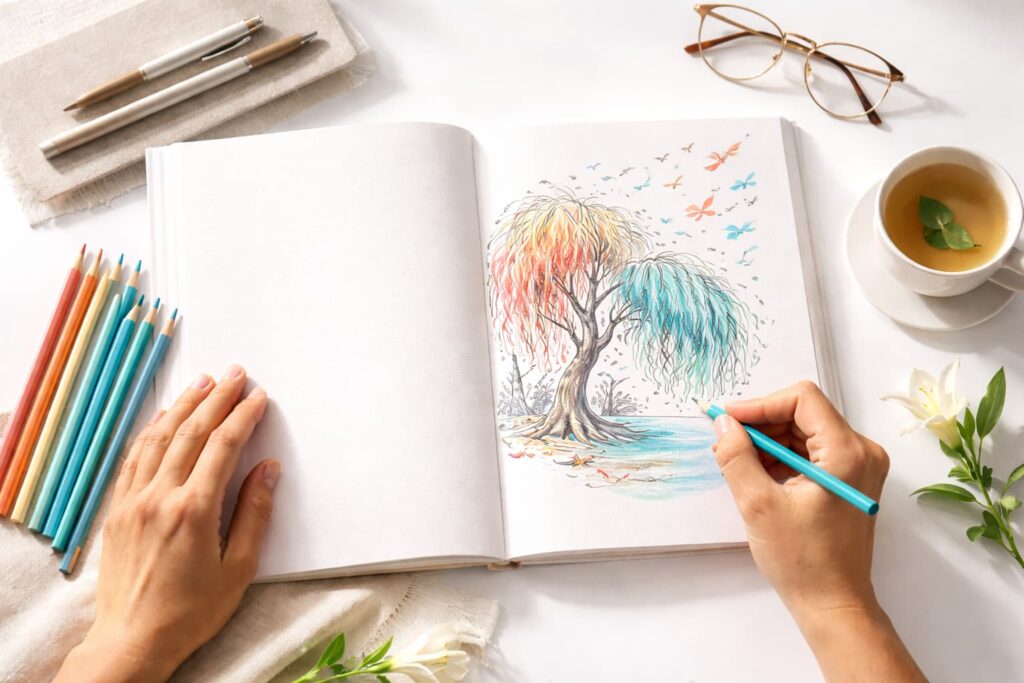
7 Reasons Why “Imperfect” Coloring is the Ultimate Therapy
To truly understand why a messy, uninhibited approach to art is superior for mental health, we must examine the specific, transformative benefits that occur when we consciously abandon the “perfect” mindset. For healthcare workers—who spend their lives in high-stakes environments where precision is a matter of life and death—the struggle between perfectionism and coloring can be particularly intense. However, learning to let go is exactly where the healing begins. Here are seven deep-seated reasons why professionals should embrace imperfection as the cornerstone of their creative journey.
1. It Disrupts the “Correct/Incorrect” Binary
In medicine, things are often binary: a patient is stable or they are not; a test is positive or negative. This binary thinking is exhausting. Embracing the intersection of perfectionism and coloring allows you to exist in a “gray area.” There is no wrong way to color a tree. It can be purple, blue, or neon pink. By choosing “wrong” colors on purpose, you train your brain to accept that not everything requires a standardized protocol.
2. It Encourages Radical Mindfulness
Mindfulness is the practice of being present without judgment. According to Psychology Today, mindfulness can significantly reduce symptoms of anxiety and depression. When you worry about coloring perfectly, you are living in the future (worrying about the result). When you color imperfectly, you are focused on the sensation of the pencil moving against the paper in the present moment. This shift is where the real healing happens.
3. It Provides a Safe Space for Mistakes
In a hospital, a mistake is a tragedy. In a Medeea Publishing coloring book, a mistake is just a new pattern. Allowing yourself to make “errors” on paper provides a psychological safety valve. It teaches the nervous system that you can be “imperfect” and still be safe, worthy, and relaxed. This is a vital lesson for those suffering from high-functioning anxiety.
4. It Lowers Cortisol Levels More Effectively
Research published by the Mayo Clinic suggests that creative activities can lower stress hormones. However, if the activity becomes performance-based, the body continues to produce cortisol. By giving yourself permission to be “bad” at coloring, you signal to your endocrine system that the “threat” (the need to perform) is over.
5. It Reclaims Personal Autonomy
Healthcare is governed by strict regulations and hierarchies. You follow orders, you follow guidelines, and you follow ethics. Your coloring book is the one place where you are the sole authority. If you want to scribble because you had a frustrating shift, that is your right. Reclaiming this autonomy helps combat the feelings of powerlessness that often accompany bureaucratic medical systems.
6. It Bridges the Gap Between Logic and Emotion
Healthcare workers are masters of logic. But emotions—the grief of losing a patient, the frustration of a long shift—often get suppressed. Focusing too much on perfectionism and coloring keeps you in the logical mind. Allowing for “messy” art allows those suppressed emotions to find a physical outlet. The strokes of the pen become a non-verbal language for what you’ve witnessed during your shift.
7. It Promotes the “Flow State”
Flow occurs when you are so involved in an activity that time seems to disappear. You cannot achieve flow if you are constantly self-correcting. By letting go of perfection, you enter a trance-like state that is deeply restorative for the overstimulated healthcare brain.
How to Overcome the Need for Perfectionism and coloring
Transitioning from a perfectionist to an “imperfect artist” takes practice. If you find yourself staring at a blank page from Medeea Publishing, paralyzed by the fear of making a “wrong” move, try these strategies:
- The “Wrong Hand” Technique: Try coloring with your non-dominant hand. This immediately lowers your expectations because you know you won’t be able to stay perfectly within the lines.
- Timed Scribbling: Set a timer for five minutes and try to fill the page as quickly as possible. This forces you to bypass the analytical brain.
- Limited Palette: Pick three colors at random without looking. Use only those colors. This removes the “decision fatigue” associated with trying to find the perfect shade.
The Importance of Mindfulness in Modern Medicine
Mindfulness isn’t just a buzzword; it’s a clinical tool. For healthcare workers, it acts as a buffer against secondary traumatic stress. When we discuss perfectionism and coloring, we are really discussing a form of active meditation. Unlike sitting in silence—which can be difficult for a brain used to constant stimulation—coloring provides just enough “occupational input” to keep the hands busy while the mind settles.
Why Medeea Publishing Books are the Ideal Tool
At Medeea Publishing, we understand the unique pressures faced by those in the medical field. Our coloring books are designed with a balance of intricate patterns and open spaces. This design philosophy caters to both the need for structure and the need for freedom. Our books serve as a bridge, helping you move from the rigid world of healthcare into a world of fluid creativity.
Whether you are dealing with the aftermath of a global pandemic or the daily grind of a busy clinic, our illustrations are crafted to encourage mindfulness. We don’t want you to create “perfect” art; we want you to create a “peaceful” you. Our high-quality paper ensures that whether you use markers, pencils, or crayons, the experience is tactile and satisfying, providing the sensory feedback necessary for stress reduction.
Harnessing the Power of Color Psychology: A Soul-Led Journey
The therapeutic potential of art extends far beyond the physical act of putting pencil to paper; the specific hues you select play a profound and scientifically backed role in the internal healing process. Color psychology suggests that our brains react to different wavelengths of light in ways that can fundamentally shift our mood and nervous system. For instance, blue is widely recognized for its ability to promote a deep sense of calm and tranquility, effectively lowering the heart rate during moments of high distress. Green, the color of the natural world, fosters an environment of growth, renewal, and overall health, while vibrant yellows can act as a gentle sun for the mind, boosting spirits and providing a much-needed spark of hope.
However, to truly tap into these benefits, you must first dismantle the mental barriers that often stand in the way of creative expression. When you finally stop worrying about perfectionism and coloring within the rigid lines of “correctness,” you unlock a new level of emotional honesty. Many people approach a page with a fear of making a mistake, but in a healing context, there is no such thing as a wrong color. By choosing to let go of the tension between perfectionism and coloring, you grant yourself the permission to be messy, intuitive, and authentic. The goal isn’t to create a gallery-worthy masterpiece; it’s to create a visual map of your current internal state.
When you release the grip of perfectionism and coloring becomes an act of pure intuition, you can begin to choose colors based on exactly what your soul needs in that specific moment, rather than what is “anatomically correct” or socially expected. If you feel like coloring a weeping willow in shades of fiery orange because you are processing anger, or a sky in deep violet to reflect a sense of mystery, do it. This shift from an external “standard of beauty” to an internal “standard of feeling” is where true transformation occurs. By honoring your instincts over your inner critic, you turn every coloring session into a personalized session of color therapy that nourishes your spirit and rebuilds your resilience.
Addressing the “I’m Not Creative” Myth
Many healthcare workers avoid coloring because they believe they lack a “creative bone” in their body. This is a byproduct of a society that values art only for its aesthetic output. Art is a biological imperative. Humans have been making marks on walls and paper for millennia as a way to process the world. You don’t need to be an artist to benefit from the relationship between perfectionism and coloring. You just need to be a human who is willing to be imperfect.
A Call to Action for Self-Care: Prioritizing the Caregiver
In the fast-paced, high-stakes world of medicine, self-care is frequently presented to healthcare workers as “just another thing to do” on an already overflowing task list. It often feels like a clinical requirement or a box to be checked, which inadvertently adds to the very stress it is meant to alleviate. We strongly suggest that coloring should never be viewed as a chore or a professional obligation. Instead, it should be embraced as a profound state of “non-doing.” This is the one precious window in your grueling day where no one is asking you for a diagnosis, no one is in immediate danger, and—perhaps most importantly—no one is grading your performance or auditing your results.
For many high-achieving medical professionals, the biggest barrier to relaxation is the internal critic that demands excellence in every endeavor. This is where the struggle between perfectionism and coloring often begins. You might find yourself worrying about choosing the “right” color or staying perfectly within the lines, but the true therapeutic value lies in the messiness of the process. By intentionally engaging in this activity, you are giving yourself permission to fail, to smudge, and to experiment without consequence. Overcoming the friction between perfectionism and coloring allows you to reclaim a sense of play that is often lost in a career defined by rigid protocols and life-or-death accuracy.
By choosing to engage in mindfulness through art, you are making a radical, necessary investment in your own longevity within the healthcare profession. This isn’t just about pretty pictures; it’s about neurological preservation. When you finally silence the voice of perfectionism and coloring becomes a purely sensory experience of pigment meeting paper, you are allowing your sympathetic nervous system to finally step down from “high alert.” This practice builds a mental sanctuary that protects you from burnout, ensuring that you have the emotional capacity to continue caring for others. Choosing yourself for just fifteen minutes a day isn’t selfish—it is a professional necessity for a sustainable career in healing.
Conclusion: The Beauty of the Bleed
In the end, the most beautiful pages are often the ones that show the most life. The pages with the coffee stains, the slightly smudged edges, and the colors that went outside the lines. These are the pages that represent a healthcare worker who finally gave themselves permission to breathe. The struggle between perfectionism and coloring is a reflection of the struggle to be human in a system that demands you be a machine.
Break the machine. Pick up a pencil. Smudge the ink. Embrace the imperfection. Your mental health is worth more than a “perfect” picture. Explore the collections at Medeea Publishing and find your path back to yourself through the simple, profound act of imperfect creation.
Frequently Asked Questions
Does coloring actually help with healthcare burnout?
Yes. Studies have shown that rhythmic, repetitive motions like coloring can induce a relaxed brain state similar to meditation, which helps lower the heart rate and reduce the symptoms of burnout and compassion fatigue.
What if I feel more stressed trying to stay in the lines?
This is a common sign of the conflict between perfectionism and coloring. The solution is to intentionally color outside the lines or use “abstract” colors. The goal is to break the habit of seeking external validation for your work.
How much time do I need to spend coloring to see benefits?
Even 10 to 15 minutes of focused coloring can trigger a relaxation response. Many healthcare workers find it helpful to color for a few minutes immediately after their shift to “de-role” before heading home to their families.
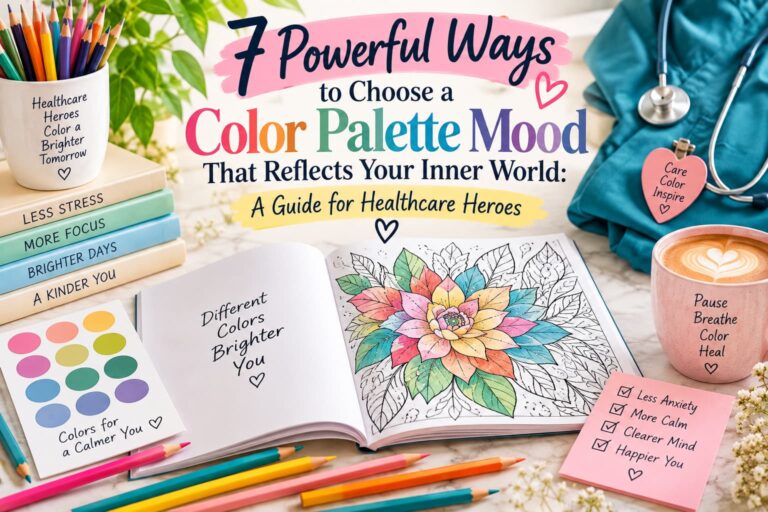
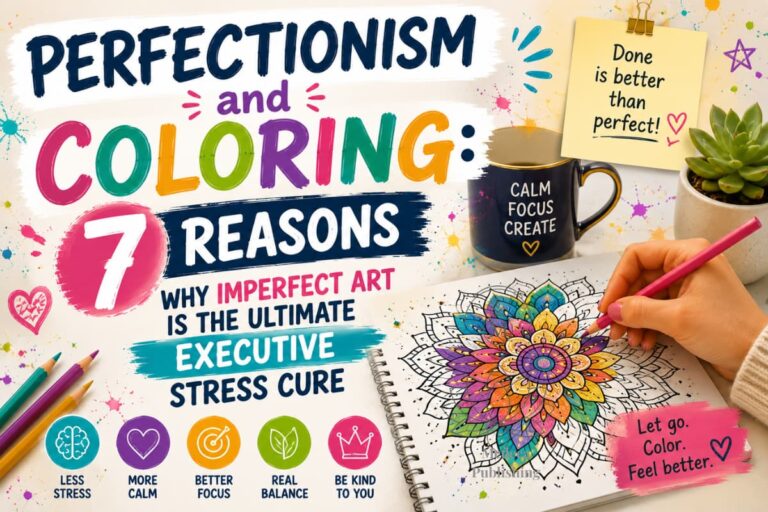
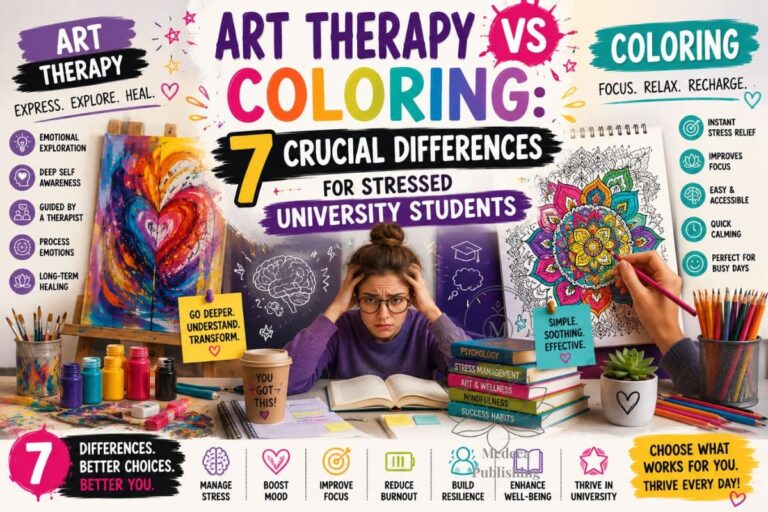



Embracing imperfection through coloring can be liberating, allowing these dedicated professionals to release the pressure of their high-stakes roles. I’ve found that coloring offers a meditative escape, where the focus shifts from precision to the joy of expression. This simple act becomes a metaphor for life’s imperfections, reminding us that beauty often lies in the unexpected. For healthcare heroes, embracing this mindset can foster resilience, reduce stress, and nurture a sense of balance amidst their demanding responsibilities.
Beautifully put — that shift from precision to expression is really the whole point. There’s something powerful about healthcare professionals especially embracing “good enough” on the page, when their day job demands the opposite. That permission to be imperfect in one small area can ripple out into more resilience everywhere else. Thank you for sharing this perspective.
The article “Perfectionism and Coloring: 7 Powerful Reasons Why Embracing Imperfection Heals Healthcare Heroes” highlights the benefits of letting go of perfection, especially in high-pressure healthcare environments. Coloring provides a therapeutic outlet for healthcare workers, allowing self-expression and reducing stress. This practice can help those struggling with anxiety and perfectionism by fostering self-compassion and acceptance. Embracing imperfection encourages a mindset shift, promoting a healthier mental state and a more enjoyable life journey.
Thank you so much for taking the time to read and summarize the article so thoughtfully! 💛 I’m so glad the message resonated with you. Sometimes the smallest act—like coloring without worrying about perfection—can become a powerful reminder to slow down, breathe, and be kinder to ourselves. 🎨🌿