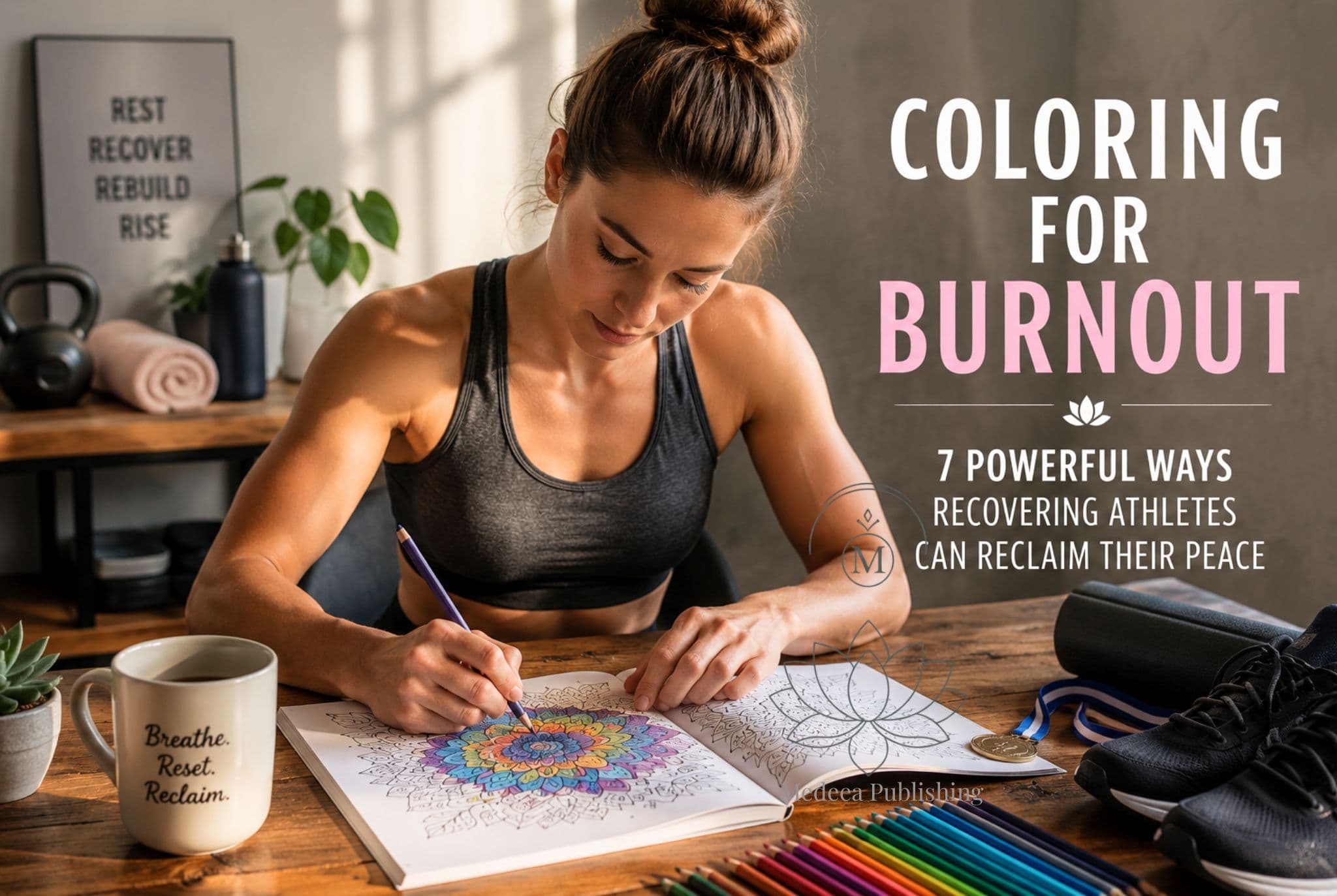

For an athlete, the world is often defined by metrics: personal bests, split times, heart rate zones, and the relentless pursuit of “more.” But what happens when the engine stops? When the physical body or the mental spirit simply refuses to go any further? This state of total exhaustion, often referred to as burnout, is a common yet devastating experience for those dedicated to high-performance lifestyles. Fortunately, the road to recovery doesn’t always require more sweat; sometimes, it requires a box of pencils. Using coloring for burnout is becoming a recognized, science-backed method for athletes to transition from a state of chronic stress to one of restorative peace.
In the world of health and wellness, we often focus on physical rehabilitation. We talk about physical therapy, nutrition, and sleep. While these are vital, the mental component of recovery—the “inner game”—is frequently overlooked. For a recovering athlete, the loss of their primary outlet (their sport) can lead to a vacuum filled with anxiety and a loss of identity. This is where creative therapy steps in. At Medeea Publishing, we believe that the simple act of putting color to paper can be a transformative step in the healing journey.
If you are looking for more resources on mental wellness and creative recovery, Discover more about Art Therapy and Mental Health.
The Psychological Weight of the “Athlete Burnout”
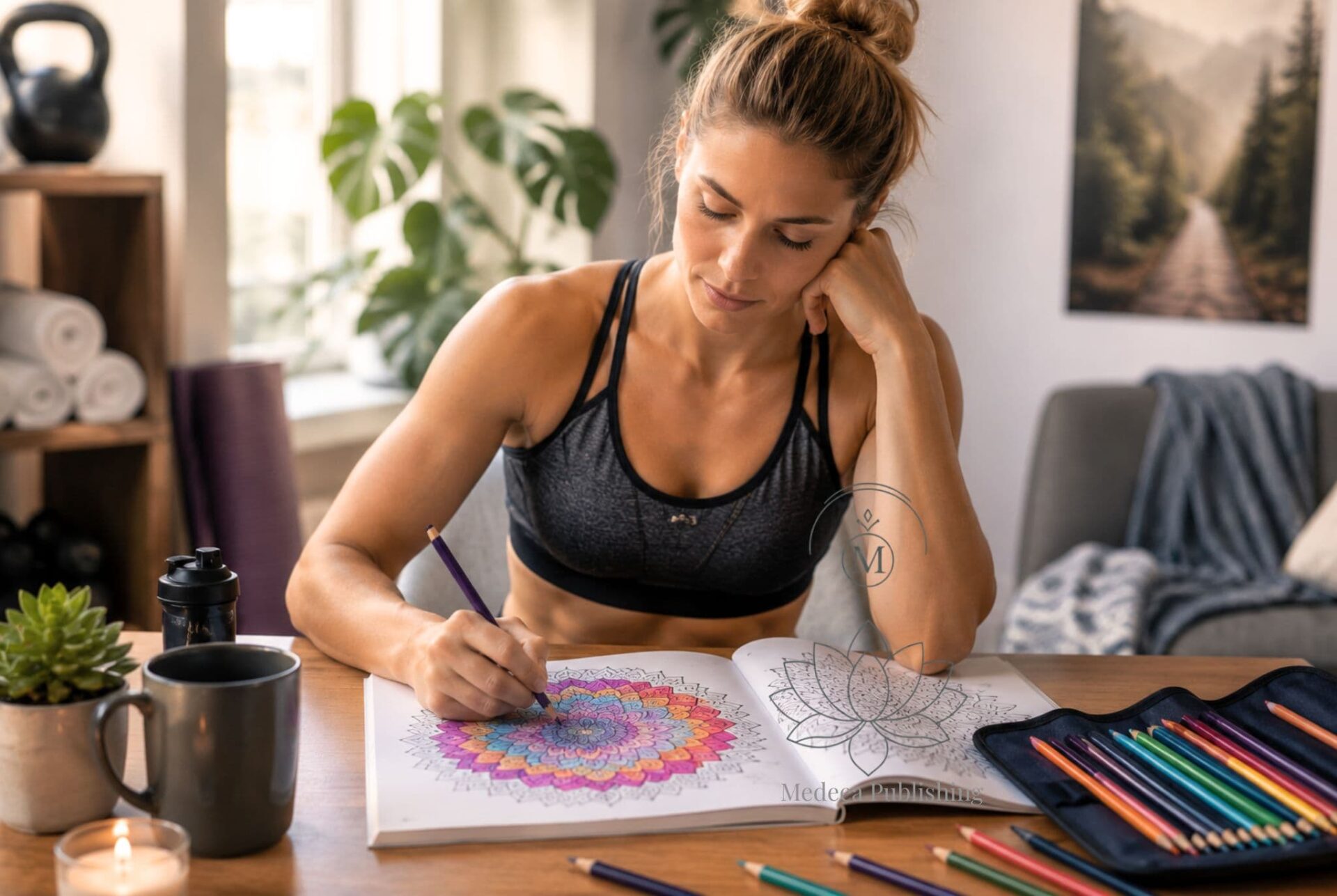
Burnout in athletes isn’t just “feeling tired.” It is a multidimensional syndrome characterized by emotional and physical exhaustion, a reduced sense of accomplishment, and sport devaluation. When you have spent years tying your self-worth to your performance, a sudden plateau or injury-induced hiatus can feel like a spiritual crisis. The nervous system becomes stuck in a “fight or flight” mode, making it nearly impossible to relax, even when the body is sedentary.
This is where coloring for burnout becomes a tactical tool. Unlike competitive sports, coloring has no scoreboard. There are no “personal bests” in shading a mandala. For an athlete, this lack of pressure is precisely what the brain needs to down-regulate the nervous system. According to Psychology Today, mindfulness is the act of being present in the moment without judgment—a state that coloring facilitates naturally.
Why Coloring for Burnout is a Game-Changer for Recovery
The transition from a high-intensity environment to a recovery phase can be jarring. Athletes are used to being “on.” When they are told to rest, they often don’t know how to do it effectively. They might scroll through social media, watching their competitors train, which only fuels their anxiety. Coloring for burnout provides an “active rest” that keeps the hands busy and the mind quiet.
1. Regulating the Autonomic Nervous System
High-performance training keeps the sympathetic nervous system (the accelerator) active. Chronic stress keeps it locked in high gear. To heal, an athlete must engage the parasympathetic nervous system (the brake). Research from the Mayo Clinic suggests that creative outlets like art can significantly lower cortisol levels and heart rate. When you focus on the intricate patterns of a Medeea Publishing coloring book, your brain waves actually shift from the high-frequency Beta waves of stress to the calmer Alpha and Theta waves associated with deep relaxation.
2. Shifting Focus from Performance to Process
In sport, the focus is almost always on the outcome: the win, the medal, the time. Coloring for burnout helps athletes fall in love with the process again. There is no “wrong” way to color a page. This removes the fear of failure that often contributes to burnout in the first place. It allows the recovering athlete to experience a sense of control and completion in a low-stakes environment.
The Science of “Flow” Outside the Stadium
Athletes often talk about “the zone”—that magical state of flow where time seems to disappear and performance is effortless. When an athlete is burnt out, they lose access to this state in their sport. However, coloring for burnout can induce a similar flow state. The repetitive motion of coloring, the focus on staying within lines, and the choice of colors require just enough cognitive load to silence the “inner critic” without causing fatigue.
By engaging in this creative flow, the brain’s amygdala—the center for processing emotions and fear—gets a much-needed break. This is why many recovering athletes find that their general levels of health improve when they incorporate art into their daily routine; they are literally retraining their brain to find safety in stillness.
3. Refining Fine Motor Skills and Focus
While many athletes focus on gross motor skills (running, jumping, throwing), coloring for burnout emphasizes fine motor control. For athletes recovering from certain types of injuries, this can be a gentle way to maintain the mind-body connection. It requires coordination between the eyes and the hand, providing a subtle cognitive workout that isn’t physically taxing.
4. Emotional Expression through Color
Often, athletes feel they must be “tough” and suppress their emotions. Burnout is frequently the result of these suppressed emotions bubbling over. Coloring provides a non-verbal way to express what you’re feeling. Are you angry? Use bold, sharp strokes and fiery reds. Do you feel a need for peace? Use soft blues and greens. Medeea Publishing coloring books offer a wide variety of themes that allow for this emotional release, acting as a bridge to better mental health.
How to Integrate Coloring into a Recovery Protocol
To get the most out of coloring for burnout, it shouldn’t be seen as a chore, but as a ritual. Here is how a recovering athlete can build this habit:
- Set the Scene: Create a space dedicated to your coloring. No phones, no sports news, no clocks. Just your Medeea Publishing book and your pencils.
- Consistency over Intensity: You don’t need to color for three hours. Just 15 to 20 minutes a day can significantly lower your baseline anxiety.
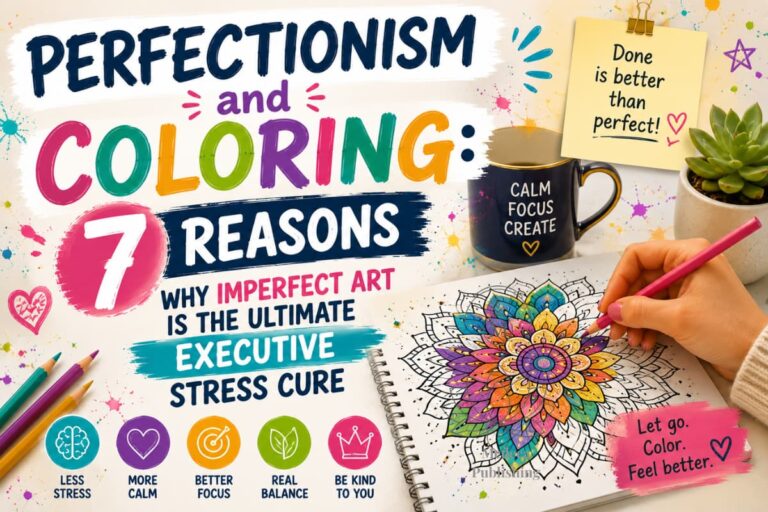
- Let Go of Perfection: If you go outside the lines, leave it. This is a lesson in self-compassion, something many athletes desperately need.
5. Establishing a Digital Detox
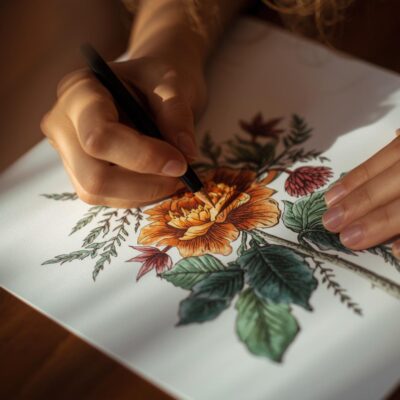
A major contributor to modern burnout is the constant connectivity. For athletes, this often means “doom-scrolling” through training logs or watching others succeed while they are sidelined. Coloring for burnout offers a physical alternative to the screen. It engages the tactile senses—the smell of the pencils, the texture of the paper—which grounds the individual in the physical world rather than the digital one.
6. Promoting Better Sleep Hygiene
Sleep is the ultimate recovery tool, but burnout often brings insomnia. The blue light from phones inhibits melatonin. Conversely, coloring under warm, soft light before bed helps the brain transition into sleep mode. By replacing late-night film study or social media with a Medeea Publishing coloring session, athletes can improve their sleep quality, which is essential for physical and hormonal health.
7. Building a New Routine and Identity
When sport is taken away, a void is left in the athlete’s daily schedule. Coloring for burnout helps fill that void with something productive yet peaceful. It helps the individual realize that they are more than just an athlete; they are a person capable of creativity and stillness. This expansion of identity is one of the most powerful defenses against future burnout.
How to Integrate Coloring into Recovery
To maximize the benefits of coloring for burnout, consistency matters more than intensity.
- Create a quiet space dedicated to relaxation
- Use simple, accessible tools
- Avoid perfectionism
- Focus on the process, not the result
These small habits can transform athlete burnout recovery into a more sustainable and enjoyable journey.
Medeea Publishing: Your Partner in Creative Wellness
At Medeea Publishing, we understand the unique pressures faced by high-achievers. Our coloring books are specifically designed with intricate details and soothing themes to facilitate the deepest possible state of relaxation. We aren’t just selling books; we are providing tools for health and recovery. Whether you are dealing with a season-ending injury or the mental exhaustion of a long career, our collections offer a sanctuary for your mind.
Incorporating coloring for burnout into your life is an act of courage. It is an admission that you need rest and a commitment to your long-term well-being. By choosing to pick up a pencil, you are taking a proactive step toward a more balanced, resilient version of yourself.
The Long-Term Benefits for Health and Performance
Ironically, by stepping away from the “grind” and embracing tools like coloring for burnout, athletes often find they return to their sport stronger than before. They return with a more regulated nervous system, better focus, and a healthier relationship with pressure. The mental health benefits of art therapy are not temporary fixes; they are skills that stay with you.
As you move through your recovery journey, remember that rest is not the absence of progress. It is the foundation of it. Whether you are a professional competitor or a dedicated amateur, your value is not dictated by your output. Give yourself permission to be still. Give yourself permission to color.
Conclusion
Burnout is not failure. It is not a sign of weakness, nor is it something to hide or push through blindly. It is a signal—a clear and often necessary message from both body and mind that something fundamental needs to change. When ignored, burnout deepens into chronic exhaustion, emotional detachment, and long-term imbalance. However, when acknowledged and addressed with intention, it becomes a powerful turning point for growth and renewal.
For athletes especially, this moment can feel disorienting. A life once structured around performance suddenly lacks direction. The instinct is often to do more, to try harder, or to regain control through effort. Yet true recovery rarely comes from intensity. It comes from shifting the approach entirely. This is where coloring for burnout becomes a meaningful and effective starting point.
Unlike performance-driven activities, coloring creates a space without pressure. It allows the mind to slow down naturally, without forcing relaxation. The repetitive motion, the focus on simple patterns, and the absence of judgment create a calming rhythm that supports both mental and physical recovery. Over time, coloring for burnout helps retrain the nervous system, guiding it away from constant stress and toward a more balanced state.
The accessibility of this practice is one of its greatest strengths. There is no need for special preparation, advanced skills, or complex routines. With the help of thoughtfully designed coloring books, athletes can begin reconnecting with calm, focus, and presence in a way that feels safe and sustainable. This gradual return to stillness is a key component of long-term healing.
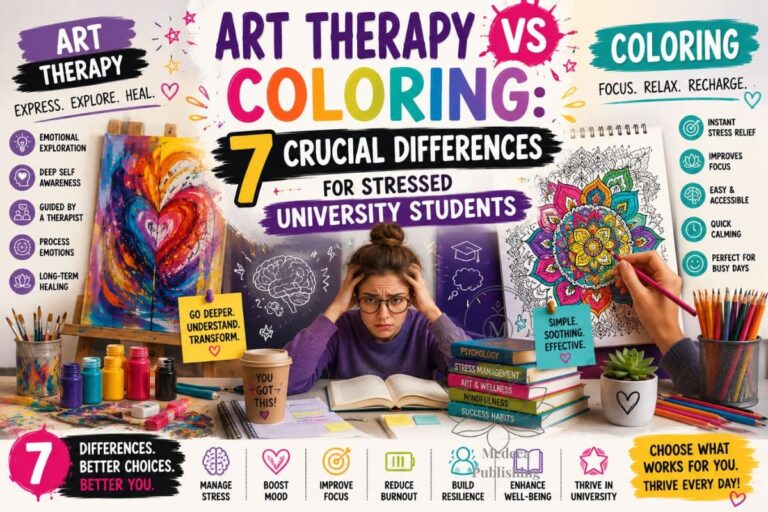
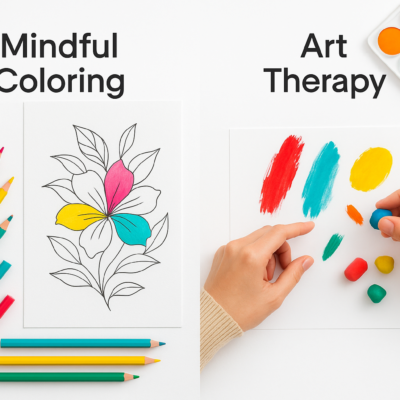
At the same time, integrating creative therapy for athletes into recovery expands the experience beyond simple relaxation. It becomes a process of rediscovery. Athletes begin to reconnect with themselves not as performers, but as individuals capable of creativity, reflection, and balance. This shift is essential in building resilience and preventing future burnout.
Recovery, in this sense, is not just about returning to a previous state. It is about evolving into a more stable, aware, and grounded version of oneself. By consistently practicing coloring for burnout, individuals create small moments of calm that accumulate into lasting change. These moments restore clarity, improve emotional regulation, and support a healthier relationship with effort and rest.
Using coloring books as part of this process transforms recovery into something active yet peaceful. It bridges the gap between stillness and engagement, offering a method that aligns with both mental health and lifestyle balance. Combined with the principles of creative therapy for athletes, this approach ensures that recovery is not only possible, but deeply meaningful and sustainable over time.
Frequently Asked Questions
Does coloring really help with burnout?
Yes. Coloring for burnout helps reduce stress, improve focus, and support emotional balance. By engaging the mind in a calm and structured activity, it becomes easier to interrupt negative thought patterns and promote relaxation. When practiced regularly, it contributes significantly to overall wellbeing.
Do I need artistic skills?
No. The effectiveness of coloring books is not dependent on artistic ability. The benefits come from the process itself—the act of focusing, repeating patterns, and allowing the mind to slow down. This makes it accessible to anyone, regardless of experience, and highly suitable within creative therapy for athletes.
How often should I practice?
Consistency is more important than duration. Daily sessions of coloring for burnout, even as short as 10–20 minutes, can create noticeable improvements in mood, focus, and stress levels. Over time, this supports long-term recovery and emotional stability.
Can coloring replace other recovery methods?
No. While coloring for burnout is highly effective, it works best as a complementary tool. It should be used alongside physical recovery, proper rest, and, when necessary, professional guidance. Together, these elements create a complete recovery strategy.
What type of coloring books should I choose?
It is recommended to use coloring books with calming, structured designs such as mandalas, nature patterns, or repetitive shapes. These designs support focus and relaxation, making them ideal for creative therapy for athletes.
How quickly can I see results?
Some individuals notice a sense of calm after just one session of coloring for burnout. However, lasting benefits develop through consistency. Regular practice helps retrain the nervous system and supports deeper emotional balance over time.