In the relentless pace of the 21st century, finding a moment of genuine peace can feel like searching for a needle in a haystack. Our minds are constantly bombarded with notifications, deadlines, and social pressures, leading many of us into a state of chronic stress. However, a beautiful synergy has emerged as a beacon of hope for those seeking mental clarity: mindfulness and coloring. This combination isn’t just a childhood pastime rediscovered; it is a scientifically backed method for grounding the nervous system and reclaiming your joy.
If you have ever felt the weight of the world on your shoulders, you are not alone. Anxiety often manifests as a “future-focused” fear—a loop of “what-ifs” that keeps you from experiencing the present moment. By engaging in mindfulness and coloring, you provide your brain with a gentle, repetitive task that anchors you in the “now.” At Medeea Publishing, we have seen firsthand how the simple act of putting pencil to paper can transform a chaotic mind into a serene sanctuary.
What Exactly is Mindfulness and Coloring?
To understand the power of this practice, we must first break down its components. Mindfulness is the psychological process of purposely bringing one’s attention to experiences occurring in the present moment without judgment. It is about being fully present, aware of where we are and what we’re doing, and not overly reactive or overwhelmed by what’s going on around us.
Coloring, specifically for adults, acts as a “low-stakes” creative outlet. When you combine these two, you create a meditative practice that doesn’t require years of training or the ability to sit perfectly still for an hour. Mindfulness and coloring allow you to enter a “flow state”—a period of intense concentration where time seems to disappear, and your worries fade into the background. This practice is often referred to as “active meditation.”
According to research highlighted by Psychology Today, creative activities like coloring can significantly decrease levels of cortisol, the body’s primary stress hormone. By focusing on the intricate patterns of a Medeea Publishing coloring book, you are effectively giving your amygdala—the brain’s fear center—a much-needed rest.

Why Mindfulness and Coloring is the Ultimate Stress Reliever
Why has this specific combination become a global phenomenon in recent years? It is because the synergy between mindfulness and coloring tackles anxiety from multiple sophisticated angles: neurological, psychological, and physical. When you pick up a colored pencil and open a Medeea Publishing book, you aren’t just making a decorative picture or passing the time; you are engaging in a highly effective and structured form of self-regulation that reorganizes how your brain processes stress.
Neurologically speaking, the act of staying within the lines and choosing color palettes requires a balance between the analytical left hemisphere and the creative right hemisphere of the brain. This “whole-brain” engagement is a primary reason why mindfulness and coloring works so well as a stress reliever. It creates a state of “flow”—the mental zone where you are so immersed in an activity that time seems to disappear, and the “self-critical” voice in your head finally falls silent. This transition from a state of hyper-vigilance to a state of flow is a key component of mindfulness and coloring, as it allows the amygdala—the brain’s fear center—to rest while the prefrontal cortex takes over with calm, focused intent.
Psychologically, this practice provides a much-needed sense of control in an unpredictable world. Anxiety often stems from a feeling of helplessness, but mindfulness and coloring restores your agency by presenting you with a series of low-stakes, beautiful choices. You decide the intensity of the stroke, the harmony of the shades, and the pace of the journey. This process functions as a ritual of grounding; by focusing on the physical sensation of the lead meeting the paper, you are practicing mindfulness and coloring in its purest form. You are training your mind to stop “time traveling” into future worries and instead stay anchored in the vivid, tactile reality of the present moment.
Breaking the Loop of Overthinking
Anxiety thrives on rumination. When we ruminate, we replay past mistakes or fret over future possibilities. Coloring requires enough focus to disrupt these negative thought patterns but not so much focus that it becomes another source of stress. It occupies the “working memory,” leaving less room for intrusive thoughts to take root.
The Power of Choice and Control
For someone struggling with anxiety, the world often feels out of control. However, when you open a coloring book, you are the master of that universe. You choose the palette, the shading, and the pace. This sense of agency is incredibly therapeutic. Whether you choose a vibrant sunset theme or cool, calming blues, the choice is yours, providing a gentle sense of empowerment that carries over into your daily life.
10 Powerful Ways to Transform Your Life Using Mindfulness and Coloring
To get the most out of your practice, it helps to have a strategy. Here are ten ways to integrate these tools into your wellness routine for maximum impact.
1. Combine Breathwork with Every Stroke
Mindfulness starts with the breath. As you color, try to synchronize your movements with your inhalation and exhalation. Inhale as you color a small section, and exhale slowly as you move to the next. This rhythmic breathing sends a signal to your brain that you are safe, allowing your muscles to relax and your heart rate to steady.
2. Use Color Theory to Regulate Mood
Colors have a profound effect on our psyche. If you are feeling particularly anxious or “high-energy,” reach for cool tones like blues, greens, and soft purples. These colors are naturally soothing. Conversely, if your anxiety manifests as a heavy, lethargic “numbness,” using bright yellows and oranges can help stimulate a sense of warmth and vitality.
3. Focus on the Tactile Sensations
True mindfulness is about sensory awareness. Notice the weight of the pencil in your hand. Feel the texture of the high-quality paper used in Medeea Publishing’s collections. Listen to the soft “scratch-scratch” sound as the pigment meets the page. By grounding yourself in these physical sensations, you pull your mind away from the abstract world of worry.
4. Set a Positive Intention
Before you begin your coloring session, take thirty seconds to set an intention. It could be as simple as “I am finding my peace” or “I am letting go of today’s stress.” Hold this thought in your mind as you color. This turns the session into a form of active prayer or manifestation, deepening the psychological benefits of mindfulness and coloring.
5. Embrace the “Imperfectionist” Mindset
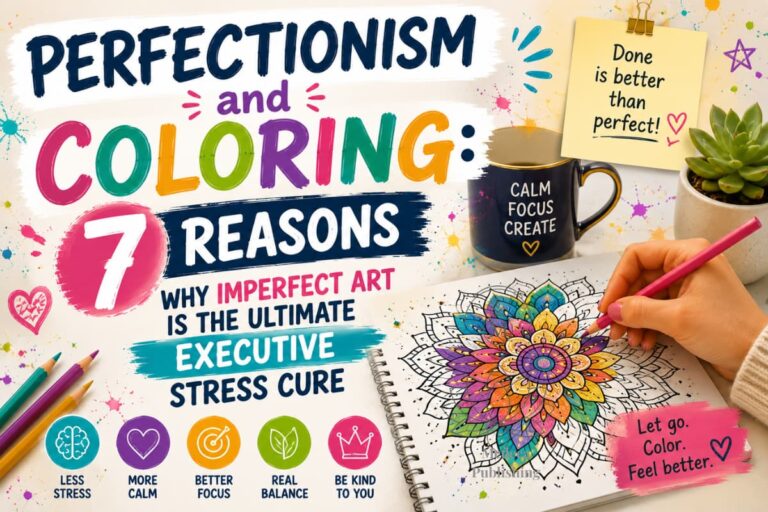
Many of us suffer from “perfectionist anxiety.” We worry about coloring outside the lines or choosing the “wrong” color. Use your coloring book as a safe space to practice being imperfect. If you make a mistake, acknowledge it, breathe through it, and keep going. This builds resilience against the fear of failure in the real world.
6. Create a Sacred Space for Your Practice
Don’t just color while hunched over a cluttered kitchen table or amidst the chaos of a busy household. To truly harness the benefits of mindfulness and coloring, you must designate a specific, intentional corner of your home as your personal “serenity spot.” Environment plays a critical role in how our nervous system transitions from a state of high alert to one of deep relaxation. By curating a space that appeals to all your senses—adding a lightly scented candle, playing soft ambient music, and perhaps keeping a warm cup of herbal tea nearby—you create a physical sanctuary that protects your mental peace.
When you consistently enter this dedicated environment to engage in mindfulness and coloring, your brain begins to form a powerful neurological association between that physical space and the act of decompressing. Over time, this Pavlovian response makes it significantly easier to drop into a calm, focused state almost the moment you sit down. The ritual of preparing your space becomes just as important as the art itself, signaling to your mind that the workday is over and it is finally time for self-care.
Integrating mindfulness and coloring into a beautifully prepared setting allows you to fully disconnect from digital distractions and the relentless “to-do” lists that fuel modern anxiety. It transforms a simple activity into a sophisticated wellness ritual that nourishes your soul. Explore our Medeea Publishing coloring book collections today to find the perfect artistic companion for your newly created sacred space and take your first step toward a more balanced, intentional life. By choosing a design that resonates with your current mood, you ensure that every session of mindfulness and coloring is a unique journey toward inner stillness and creative fulfillment.
7. Explore the Geometry of Mandalas
Mandalas are complex, symmetrical patterns that have been used for centuries in various cultures as tools for meditation. According to Wikipedia, the word “mandala” comes from Sanskrit and means “circle,” representing the universe. Coloring mandalas is particularly effective for anxiety because the symmetry provides a sense of balance and order that the outside world often lacks.
8. Practice Non-Judgmental Observation
As you practice mindfulness and coloring, thoughts will inevitably pop into your head. Instead of getting frustrated or following those thoughts down a rabbit hole, simply notice them. “Oh, there’s a thought about my meeting tomorrow.” Then, gently bring your focus back to the tip of your pencil. This is the core of mindfulness training.
9. Use Coloring as a Digital Detox
In our modern lives, our smartphones and digital devices are often the primary, unspoken sources of our daily anxiety. The persistent “blue light” emitted from screens and the relentless, never-ending stream of information keep our brains in a constant state of hyper-arousal and “fight-or-flight” readiness. This digital overload makes it nearly impossible for the nervous system to settle into a restorative state. By consciously choosing to step away from the glowing screen and engaging in the synergy of mindfulness and coloring, you provide your mind with a much-needed sanctuary. This transition from a high-speed digital world to the rhythmic, tactile world of paper and pencil allows your brain to shift gears, moving from reactive processing to a state of deep, creative presence.
Committing to just 30 minutes of mindfulness and coloring before bed—specifically without your phone or tablet nearby—can significantly and measurably improve your sleep quality and reduce nighttime anxiety. When you replace scrolling with the focused act of filling in intricate designs, you are signaling to your internal clock that the workday is officially over. This practice of mindfulness and coloring serves as a bridge to a better night’s rest; as you focus on the movement of the pencil and the choice of hues, your heart rate slows and your cortisol levels begin to drop. It is a biological reset that prepares the brain for deep, uninterrupted sleep, far away from the pings of social media and the stress of the inbox.
Furthermore, integrating mindfulness and coloring into your evening ritual helps to reclaim your attention span, which is often fragmented by the multitasking demands of technology. Unlike a digital screen that constantly demands more of your energy, a coloring page from Medeea Publishing offers a sense of “quiet completion.” You are not just detoxing from technology; you are actively nourishing your mental health. By making this analog choice every night, you transform your bedroom into a tech-free zone of tranquility, ensuring that the last thing your eyes see isn’t a stressful headline, but a beautiful, hand-crafted masterpiece of your own creation.
10. Document Your Journey
Keep your finished pages as a “peace journal.” On the back of each page, write down how you felt before you started and how you felt after. Over time, you will have a physical record of your progress, proving to yourself that you have the power to shift your own emotional state.
The Biological Impact of Creative Expression
It is important to realize that mindfulness and coloring is not just “woo-woo” philosophy; it has biological consequences. When we engage in repetitive, creative tasks, our brain waves shift from Beta waves (associated with active thinking and stress) to Alpha waves (associated with relaxation and creativity). This shift allows the nervous system to move from the sympathetic “fight or flight” mode to the parasympathetic “rest and digest” mode.
For individuals with chronic anxiety, the nervous system is often stuck in a loop of hyper-vigilance. The consistent practice of creative mindfulness helps “reset” this system. It’s like exercise for your emotional health; the more you do it, the stronger your “calm muscle” becomes.
Choosing the Right Tools for Your Journey
Not all coloring experiences are created equal. To truly reap the benefits of mindfulness and coloring, you need materials that inspire you. This is why we created Medeea Publishing. Our books are designed with the user’s mental health in mind. We use intricate, thoughtfully curated designs that provide just the right amount of challenge to keep you engaged without feeling overwhelmed.
Whether you prefer the organic shapes of nature, the structured beauty of architecture, or the spiritual depth of mandalas, our collections offer a variety of themes to suit your mood. High-quality paper ensures that your colors blend smoothly, preventing the frustration of bleed-through or tearing, which can often ruin the meditative experience.
Integrating Mindfulness and Coloring into a Busy Schedule
One of the biggest hurdles to mental wellness is the “I don’t have time” excuse. However, the beauty of this practice is its flexibility. You don’t need a three-hour block. Ten minutes of focused coloring during your lunch break can be enough to lower your heart rate and clear your head for the afternoon. It is about quality of attention, not quantity of time.
Medeea Publishing: A Commitment to Your Peace of Mind
At Medeea Publishing, our mission is to provide tools that facilitate healing and self-discovery. We believe that everyone has an inner artist and that art therapy should be accessible to everyone. Our coloring books are more than just ink on paper; they are invitations to slow down, breathe, and reconnect with yourself.
We encourage you to explore our latest releases and join a community of thousands who have found solace in the pages of our books. Remember, your mental health is a priority, and taking time for mindfulness and coloring is a profound act of self-love.
Final Thoughts on the Healing Power of Art
Anxiety can feel like a heavy fog, but mindfulness and coloring act as the sunlight that burns it away. By engaging your hands and your heart in a creative pursuit, you remind yourself that you are capable of creating beauty, even in the midst of internal chaos. It is a gentle, supportive, and grounded way to navigate the complexities of modern life.
Start your journey today. Pick up a pencil, open a page, and let the colors lead you back to your center. You deserve the peace that comes from a quiet mind.
Frequently Asked Questions
1. Do I need to be an artist to benefit from mindfulness and coloring?
Absolutely not! The goal of mindfulness and coloring is the process, not the final product. You don’t need any special skills or artistic talent. The benefits come from the act of focusing on the present moment and the sensation of creating, regardless of how “good” the final picture looks.
2. How often should I color to see a reduction in my anxiety?
While even a single session can provide immediate relief, consistency is key for long-term benefits. Aiming for 15-20 minutes a day, three to four times a week, can help train your brain to enter a relaxed state more easily. Many people find it most helpful as a “wind-down” ritual in the evening.
3. What are the best materials to use with Medeea Publishing books?
Our books are designed to be versatile. Most users prefer high-quality colored pencils for their precision and ability to layer colors. However, gel pens and fine-liner markers also work beautifully for our more intricate patterns. We always recommend placing a blank sheet of paper behind your page if you are using heavy ink to ensure a perfect experience.