If you are a nurse, doctor, or therapist, your brain is wired to look for patterns, monitor vitals, and anticipate the next emergency. On a plane, you are no longer in control, which can lead to a spike in cortisol. Understanding how to utilize travel anxiety art can help you down-regulate your nervous system amidst the roar of jet engines and the bustle of a crowded flight. Before we dive into the techniques, Discover more about Anxiety Relief & Self-Care to see how these methods fit into a broader lifestyle of wellness for professionals.
The Science of Why Healthcare Workers Struggle with Flight Anxiety
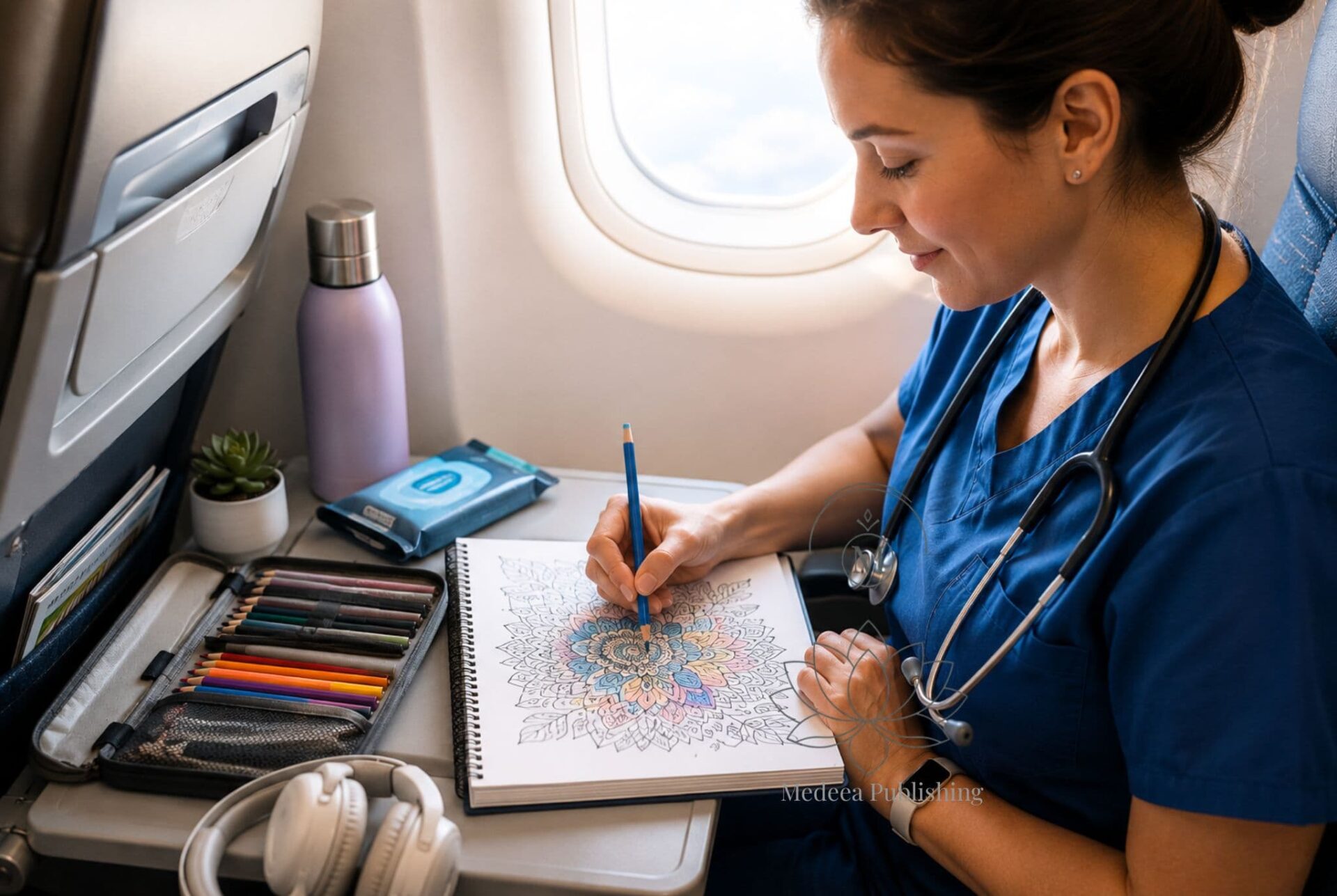
Healthcare professionals operate in a state of “high-beta” brainwave activity most of the day. This is the state of focused, analytical, and often stressful thinking. When you transition to a travel setting, your brain doesn’t simply “switch off.” Instead, that analytical energy often turns inward, manifesting as worry about turbulence, germs, or the loss of a controlled environment. Travel anxiety art acts as a bridge, moving the brain from high-beta waves into alpha waves, which are associated with relaxation and focus.
Research published by Psychology Today suggests that mindfulness activities—like the repetitive motion of coloring—can significantly lower heart rates and improve emotional regulation. For someone who understands the physiology of stress, like you do, the choice to use travel anxiety art is a logical intervention for anxiety relief.
7 Reasons Travel Anxiety Art is the Ultimate Tool for On-Flight Calm
1. It Mimics the “Flow State” of the Operating Room
Nurses and surgeons often experience a “flow state” during complex procedures. This is a state of deep immersion. Travel anxiety art provides a low-stakes way to enter that same flow state. When you are focused on the intricate lines of a Medeea Publishing coloring book, the claustrophobia of the airplane cabin fades away. This focus is a primary driver for anxiety relief because it prevents the mind from wandering into “what-if” scenarios regarding the flight.
2. Portable and TSA-Friendly Creative Outlet
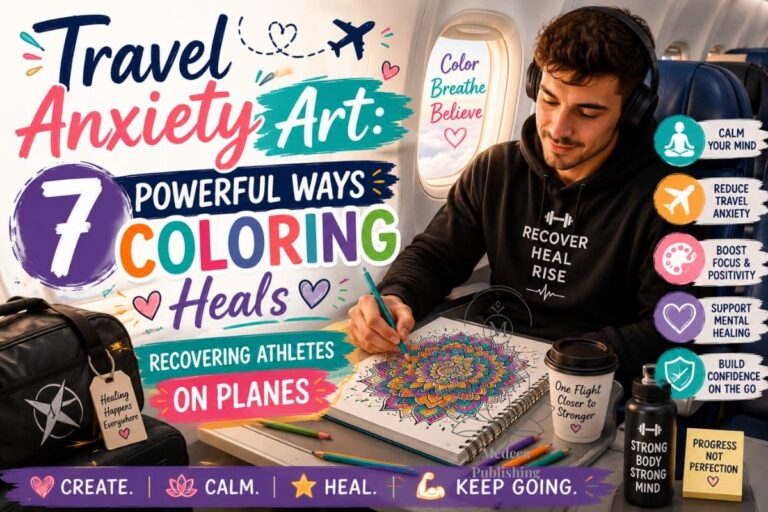
You can’t take a pottery wheel or a large canvas on a plane, but travel anxiety art is incredibly portable. A high-quality coloring book and a small set of pencils fit easily into a seatback pocket. For healthcare workers who are used to having their tools ready at a moment’s notice, having a dedicated “anxiety kit” that includes Medeea Publishing materials offers a sense of preparedness and comfort.
3. It Provides a Sense of Control in an Uncontrollable Environment
In a hospital, you are the one in charge. On a plane, you are at the mercy of the pilots and the weather. Engaging with travel anxiety art returns a sense of agency to you. You choose the colors; you choose the patterns; you decide when the work is finished. This micro-level of control is a powerful psychological counter-balance to the lack of control felt during air travel.
4. Gentle Sensory Input for Overstimulated Minds
The sounds of a plane—the constant hum, the dings, the chatter—can lead to sensory overload. Travel anxiety art provides a soothing visual and tactile focus. By looking at the page and feeling the friction of the pencil against the paper, you are practicing grounding techniques. This sensory redirection is essential for long-term anxiety relief during long-haul flights.
How to Practice Travel Anxiety Art Effectively
Using travel anxiety art is more than just “coloring in the lines.” To get the most anxiety relief, healthcare workers should approach it with the same intentionality they bring to their clinical practice. Here is how to set up your mobile “art therapy” station:
- Select the Right Materials: Choose a coloring book with thick, high-quality paper. Medeea Publishing offers designs specifically curated to soothe the mind.
- Focus on the Breath: As you color, match your strokes to your breathing. Inhale for four counts as you color a section, exhale for four counts as you move to the next.
- Release Perfectionism: As a medical professional, you are trained for perfection. In travel anxiety art, there are no mistakes. If you go outside the lines, it’s simply a new part of the design.
According to the Mayo Clinic, managing stress through creative expression can improve your overall health outcomes. By prioritizing anxiety relief on your way to your destination, you ensure that your vacation actually serves its purpose: recovery.
The Neurological Impact of Travel Anxiety Art on Burnout
Burnout among healthcare workers is at an all-time high. Often, travel is meant to be the cure for burnout, but the travel process itself becomes an additional stressor. Travel anxiety art targets the amygdala—the part of the brain responsible for the “fight or flight” response. When you engage in the repetitive, rhythmic motion of coloring, you send a signal to your amygdala that you are safe.
This is why travel anxiety art is specifically beneficial for those in the medical field. Your brain is conditioned to respond to stress with action. Coloring provides that “action” but in a way that de-escalates the nervous system rather than amping it up. The pursuit of anxiety relief through art is a form of self-directed cognitive behavioral therapy.
Why Medeea Publishing is the Top Choice for Healthcare Workers
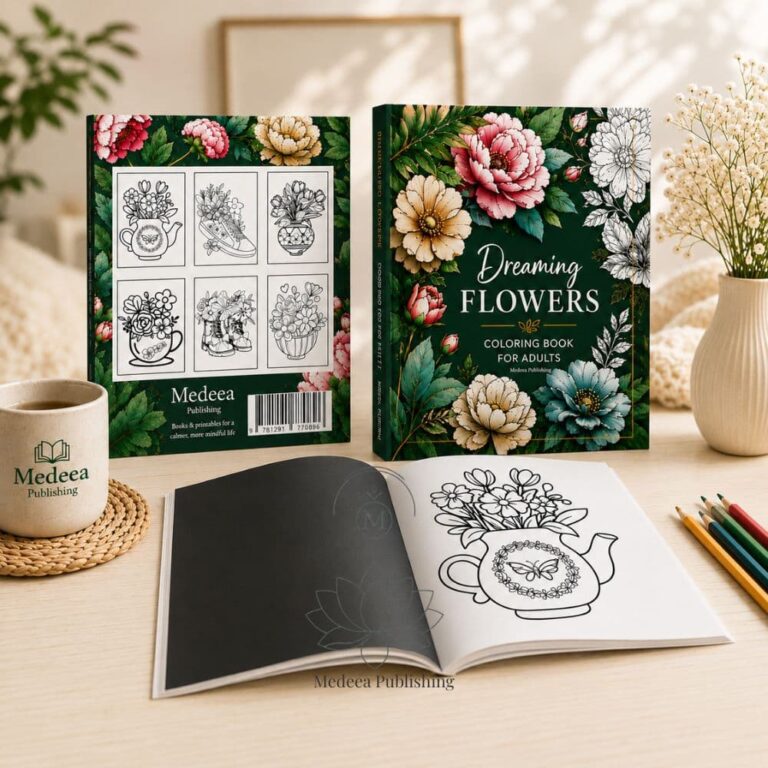
Not all coloring books are created equal. When using travel anxiety art for serious anxiety relief, the quality of the imagery matters. Medeea Publishing creates intricate, beautiful, and deeply resonant coloring books that respect the intelligence and aesthetic of the adult mind. For a doctor or nurse, a children’s coloring book might feel patronizing, but the sophisticated designs from Medeea Publishing provide the right level of complexity to keep the analytical mind engaged while allowing the emotional mind to rest.
Our books are designed with the user’s mental health in mind. Whether it’s mandalas that represent wholeness or nature scenes that invoke a sense of “biophilia” (the human tendency to seek connections with nature), Medeea Publishing is the gold standard for travel anxiety art.
Managing Mid-Flight Panic with Travel Anxiety Art
If you feel a surge of panic during turbulence, your first instinct might be to grip the armrests. Instead, reach for your travel anxiety art. The physical act of holding a pencil and focusing on a small area of a page can help “shrink” your world to a manageable size. This “micro-focusing” technique is a staple of anxiety relief strategies used by pilots and elite athletes alike.
By focusing on the tip of the pencil, you are telling your brain that the immediate environment is secure. This is the essence of why travel anxiety art works so well for those who are used to high-pressure environments. You are moving from a macro-awareness of potential danger to a micro-awareness of creative construction.
Customizing Your Anxiety Relief Routine
Every healthcare worker has a different “stress signature.” Some may find that geometric patterns provide the most anxiety relief, while others might prefer flowing, organic shapes. The beauty of travel anxiety art is its versatility. You can tailor your art kit to your specific needs. If you’ve had a particularly grueling shift before your flight, you might choose bolder colors to express frustration before moving into cooler tones for calm.
Medeea Publishing offers a wide variety of themes, ensuring that every healthcare professional can find the specific travel anxiety art that speaks to them. Investing in your mental well-being during travel is just as important as the destination itself.