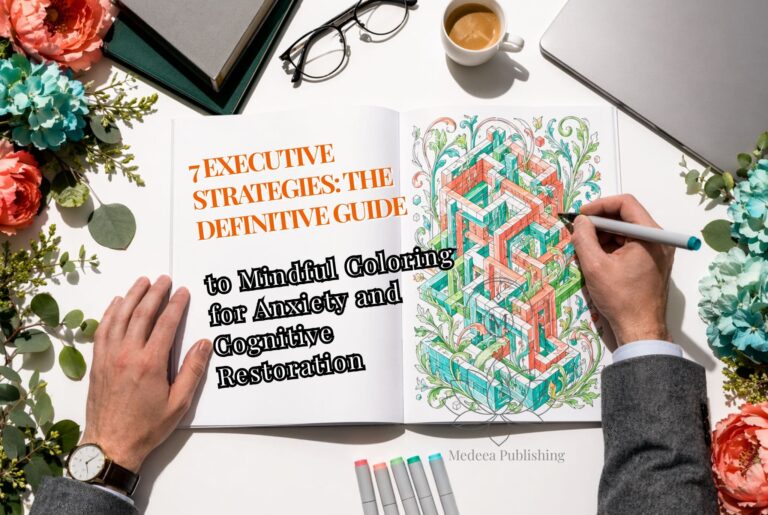

The boardroom is silent, the stakes are multimillion-dollar high, and suddenly, the air feels too thin to breathe. Your heart begins to race, your palms grow damp, and a wave of inexplicable dread washes over you. For many corporate executives, this isn’t just a bad day—it is the onset of a panic attack. In the high-pressure world of corporate leadership, the “always-on” culture often leads to a nervous system that is perpetually stuck in “fight or flight” mode. However, a surprising and highly effective tool has emerged in the world of professional wellness: stop panic attack art. By engaging in the simple, tactile act of coloring, leaders can physically and neurologically disrupt the panic cycle before it takes hold.
This article explores the profound intersection of neuroscience, mindfulness, and creativity. We will examine how a dedicated stress relief routine involving adult coloring books can serve as a strategic asset for the modern executive. At Medeea Publishing, we specialize in creating intricate, sophisticated coloring collections designed to ground the mind and provide a sanctuary for those navigating the storms of high-level management.
The Physiology of a Corporate Panic Attack
Before we dive into the mechanics of stop panic attack art, it is vital to understand what is happening inside the executive brain during a crisis. A panic attack is essentially an “amygdala hijack.” The amygdala, the brain’s smoke detector, perceives a threat—even if that threat is merely a mounting inbox or a looming quarterly report—and triggers a massive release of adrenaline and cortisol.
According to the Mayo Clinic, panic attacks are sudden episodes of intense fear that trigger severe physical reactions when there is no real danger or apparent cause. For an executive, this can be debilitating. You cannot lead a team or make critical decisions when your body is screaming that you are in mortal peril. This is where the concept of stop panic attack becomes a practical, science-backed intervention.
Why Traditional Methods Sometimes Fail Executives
Many executives are told to “just breathe” or “meditate.” While these are excellent long-term practices, they can be incredibly difficult to implement in the heat of a panic attack. When your brain is racing, sitting in silence can sometimes amplify the internal noise. Stop panic attack provides a “third point of focus.” It gives the brain a structured, low-stakes task that requires just enough coordination to divert resources away from the fear center without adding to the user’s cognitive load.
1. Utilizing Stop Panic Attack Art to Re-Engage the Prefrontal Cortex
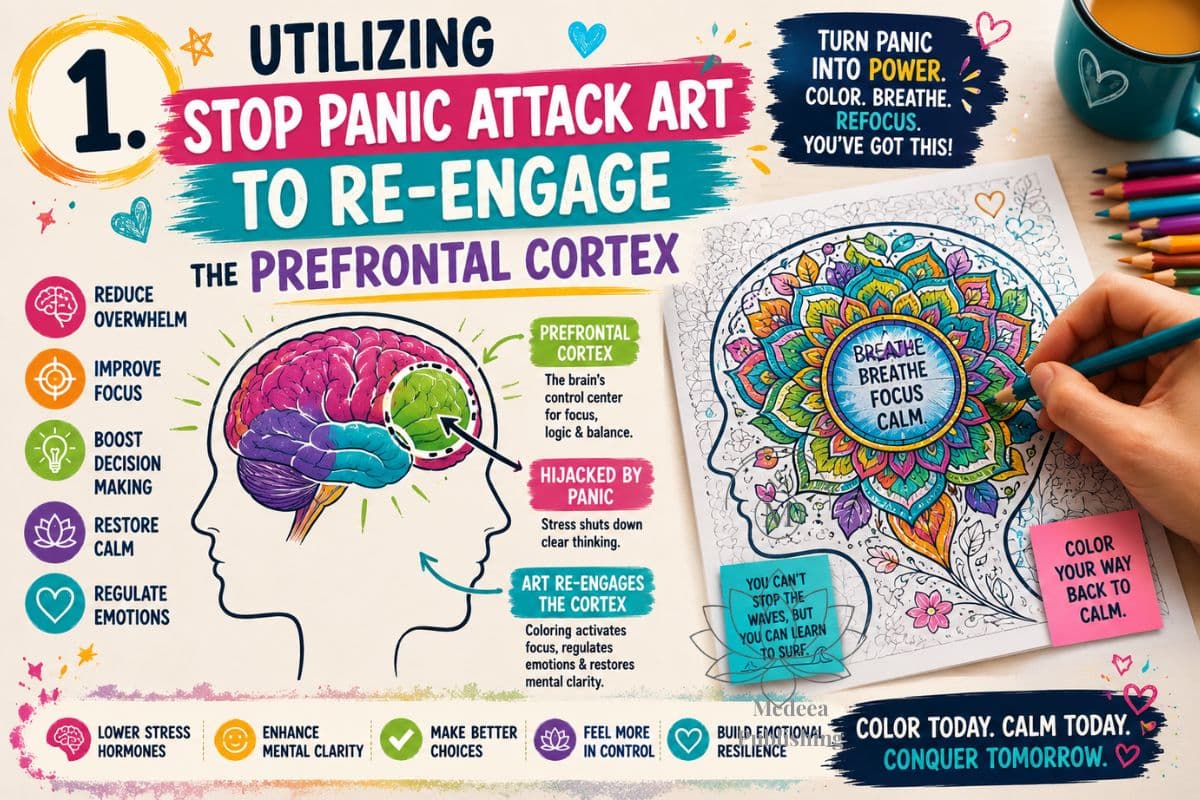
The primary reason stop panic attack art is so effective for executives is its ability to re-engage the prefrontal cortex. This part of the brain is responsible for logic, planning, and executive function. During a panic attack, the prefrontal cortex essentially goes offline as the emotional centers take over.
When you pick up a colored pencil and choose a shade for a specific pattern in a Medeea Publishing book, you are making a series of micro-decisions. These decisions—”Should this leaf be emerald or forest green?”—force the prefrontal cortex back into action. This shift in neural activity helps to dampen the overactive amygdala, effectively using stop panic attack to regain control of your physiological state.
The Power of Bilateral Stimulation
Coloring involves a form of bilateral stimulation. As your eyes track across the page and your hand moves in rhythmic patterns, you are engaging both hemispheres of the brain. This is a core component of therapies like EMDR (Eye Movement Desensitization and Reprocessing). By incorporating stop panic art into your stress relief routine, you are essentially performing a mild form of neurological “reset” that helps process the overwhelming sensory input of a panic attack.
2. Creating a Ritualistic Stress Relief Routine in the Office
For a corporate leader, consistency is key. A stress relief routine shouldn’t be something you only do when things go wrong; it should be a preventative measure. Integrating art into your daily schedule can lower your baseline cortisol levels, making you less susceptible to sudden spikes of anxiety.
Imagine your stress relief routine as a “pre-flight check” for your brain. Spending just 10 to 15 minutes with a coloring book before a major board meeting or after a difficult negotiation can clear the “mental cache” of residual stress. This practice transforms panic attack from an emergency tool into a sustainable performance-enhancing habit.
How to Discretely Implement Coloring in a Professional Setting
- The “Brain Break” Folder: Keep a Medeea Publishing book and a small set of high-quality pencils in a sleek, professional leather folder.
- Scheduled Micro-Flow: Block out 15 minutes on your calendar labeled “Cognitive Reset.”
- The Transition Tool: Use stop panic attack as a bridge between the high-intensity office environment and your home life to prevent burnout.
3. The Psychology of Color and Emotional Regulation
Colors have a profound impact on our psychological state. Part of why stop panic art works is the ability to surround oneself with calming hues. Cool colors like blues, greens, and soft purples have been shown to lower heart rates and promote a sense of tranquility. Conversely, if an executive feels “frozen” or lethargic due to anxiety, using vibrant yellows and oranges can stimulate a sense of warmth and energy.
As noted in Psychology Today, creative expression allows individuals to communicate and process emotions that may be too complex for words. For an executive who must always remain composed, stop panic provides a private, safe outlet for the “unspoken” stress of leadership.
Choosing the Right Palette for Your Stress Relief Routine
In your stress relief routine, pay attention to which colors you are drawn to during times of high tension. If you are using stop panic attack art to combat a panic attack, try starting with very light, gentle strokes in cool tones. As your breathing slows, you can move toward bolder colors, mirroring the return of your personal agency and power.
4. Breaking the Cycle of Perfectionism through Stop Panic Attack Art
Executives are often perfectionists. This drive for excellence is what got them to the C-suite, but it is also a significant driver of anxiety. The fear of making a mistake can trigger a panic response. Stop panic attack art offers a unique “low-stakes” environment where perfectionism can be challenged and neutralized.
In a coloring book, there are no “wrong” answers. If you go outside the lines, the world doesn’t end. If you choose a “weird” color, the company’s stock price doesn’t drop. This freedom is essential for a healthy stress relief routine. It teaches the brain that it is safe to explore, to make mistakes, and to simply *be*. Medeea Publishing’s designs are specifically curated to be intricate enough to hold an executive’s interest, yet forgiving enough to provide genuine relaxation.
The “Good Enough” Principle
Incorporating stop panic attack art into your life helps reinforce the “good enough” principle. By allowing yourself to color without judgment, you train your brain to move away from the binary “success/failure” thinking that often fuels corporate panic. This mindset shift eventually bleeds into your professional life, allowing for more creative problem-solving and less fear-based decision-making.
5. Tactile Grounding: The Secret Weapon Against Dissociation
One of the most frightening aspects of a panic attack is the feeling of dissociation—the sense that you are “leaving your body” or that the world isn’t real. To counter this, therapists recommend “grounding techniques.” Stop panic attack art is an elite-level grounding tool because it engages multiple senses simultaneously.
When you engage with a stress relief routine that involves coloring, you experience:
- Touch: The weight of the pencil, the texture of the high-quality Medeea Publishing paper, and the resistance of the lead against the page.
- Sight: The vibrant colors and the geometric patterns taking shape.
- Sound: The rhythmic “scritch-scratch” of the pencil, which acts as a form of “brown noise” for the brain.
These sensory inputs anchor you in the present moment, making it physically harder for your brain to remain in a state of panic. This is why stop panic is more effective than digital apps; the physical, tactile nature of the medium is what provides the neurological “anchor.”
6. Stop Panic Attack Art as a Form of “Active Meditation”
For many executives, sitting still is the hardest thing in the world. Their brains are wired for action. This is why traditional meditation can sometimes feel like a chore or even a source of further stress. Stop panic attack art offers a “backdoor” into the meditative state through what psychologists call “flow.”
Flow is the state of being so involved in an activity that nothing else seems to matter. When you are in flow, your ego falls away, and time flies. By making stop panic the centerpiece of your stress relief, you can achieve the benefits of meditation—reduced heart rate, lower blood pressure, and increased dopamine—while still “doing” something. It satisfies the executive need for activity while providing the nervous system with much-needed rest.
The ROI of Mindfulness
In the corporate world, we talk about Return on Investment (ROI). The ROI of a stress relief routine that includes stop panic attack art is immense. A calm leader is a clear-headed leader. By investing 20 minutes in coloring, you are likely saving hours of lost productivity caused by brain fog, irritability, and the physical exhaustion that follows a panic attack.
7. Building Resilience with Medeea Publishing Collections
Not all coloring books are created equal. For a sophisticated professional, a children’s coloring book won’t suffice. The designs need to be complex enough to provide a challenge but harmonic enough to soothe. This is why stop panic practitioners often turn to Medeea Publishing.
Our collections are designed with the adult aesthetic in mind. Whether it’s intricate mandalas, soothing landscapes, or abstract patterns, our books are crafted to facilitate the deep focus required to stop panic from being just a hobby and turning it into a therapeutic practice. When you include high-quality materials in your stress relief practice, you are sending a signal to your brain that your mental health is a priority, not an afterthought.
Curating Your Creative Space
To maximize the effectiveness of stop panic attack art, create a dedicated space for it. Even if it’s just a specific corner of your desk or a particular chair in your home office, having a physical location associated with your stress relief routine helps prime your brain for relaxation the moment you sit down. This “contextual priming” makes it even easier to disrupt a panic attack before it escalates.
The Step-by-Step Guide: Using Art to Stop a Panic Attack in Progress
If you feel the symptoms of an attack starting, follow this protocol using your stop panic attack materials:
- Acknowledge the Sensation: Don’t fight the panic. Say to yourself, “I am feeling a surge of adrenaline, and I am going to use my stress relief to manage it.”
- Select Your Tool: Pick up your favorite pencil. Notice its weight.
- Start Small: Don’t look at the whole page. Focus on one tiny shape. A single petal, a small square.
- Focus on the Edge: Carefully color right up to the line. This requires fine motor control, which demands more from your prefrontal cortex.
- Breathe with the Strokes: Inhale as you move the pencil up, exhale as you move it down.
- Repeat: Continue until you feel your heart rate start to settle. This is the essence of stop panic attack
The Long-term Benefits of a Creative Stress Relief Routine
Over time, using stop panic attack does more than just stop individual attacks; it builds neuro-resilience. You are essentially “rewiring” your brain’s response to stress. Instead of the pathway from “stressor” to “panic” being a massive, well-paved highway, you start to build a detour to “creativity and calm.”
Executives who maintain a consistent stress relief practice report better sleep, improved emotional intelligence (EQ), and a greater ability to stay calm under pressure. They become the “calm in the center of the storm” for their organizations. Using stop panic attack art is not a sign of weakness; it is a sign of a leader who understands the mechanics of their own mind and takes proactive steps to optimize it.
The Social Aspect: Normalizing Mental Health in the C-Suite
When leaders embrace tools like stop panic attack, they help destigmatize mental health struggles within their companies. By being open about your stress relief practice, you give your team permission to take care of their own mental well-being. This creates a more resilient, loyal, and productive workforce.
Conclusion: Your Path to a Calmer Executive Life
The pressures of the corporate world are unlikely to disappear, but your reaction to them can change. By integrating stop panic into a structured stress relief routine, you equip yourself with a powerful, science-backed tool to maintain your composure and your health.
At Medeea Publishing, we are honored to be part of your wellness journey. Our coloring books are more than just paper and ink; they are invitations to peace, gateways to flow, and essential components of a modern executive’s toolkit. Don’t wait for the next panic attack to find your calm. Start building your stress relief routine today and discover the transformative power of stop panic attack.
The journey from high-stakes panic to creative peace begins with a single stroke of color. Invest in yourself, your mental health, and your leadership by embracing the art of the calm. Explore our latest collections and find the perfect companion for your executive journey.
Further Reading and Resources
For those interested in diving deeper into the science of art and the brain, we recommend exploring the following resources:
- The impact of art therapy on cortisol levels and stress reduction.
- Mindfulness-based stress reduction (MBSR) for corporate leaders.
- The neurological benefits of fine motor activities in adults.
Remember, your brain is your most valuable asset. Protect it, nurture it, and give it the creative outlets it needs to thrive in the demanding world of corporate leadership. Stop panic attack art is more than a trend—it is a lifeline for the modern executive.
Frequently Asked Questions – Stop Panic Attack Art for High-Stakes Executives
1. How does coloring actually stop or reduce a panic attack?
Coloring works by interrupting the panic cycle at a neurological level. During a panic attack, the brain is overstimulated and locked in a loop of rapid thoughts and physical reactions. Engaging in structured coloring shifts attention from internal chaos to external control. The repetitive motion slows breathing, stabilizes the nervous system, and redirects focus, helping the brain exit the panic state gradually.
2. Why is this method especially effective for high-stakes executives?
Executives operate in constant high-pressure environments where the brain rarely fully disengages. This leads to chronic mental tension and heightened anxiety responses. Coloring provides a rare form of controlled mental pause. Unlike passive relaxation, it keeps the mind engaged without adding pressure, making it easier for executives to let go of intrusive thoughts while still feeling productive and in control.
3. Can coloring really replace traditional stress management techniques?
Coloring is not meant to replace traditional methods like therapy or exercise, but it complements them effectively. What makes it unique is its accessibility. It requires no preparation, no environment change, and no mental effort to start. In moments where other techniques feel too demanding, coloring offers an immediate, low-resistance way to regulate stress and regain composure.
4. How long does it take to feel the calming effects?
Most people begin to feel a shift within a few minutes. The brain responds quickly to repetitive, structured activity. As attention moves away from stress triggers and into the coloring process, heart rate and breathing begin to stabilize. For executives experiencing acute stress, even a 5–10 minute session can significantly reduce intensity and restore clarity.
5. What type of coloring is most effective for panic and anxiety?
Structured patterns such as mandalas, geometric designs, or guided pages are the most effective. These designs require focus and repetition, which are essential for calming the mind. Random or highly complex illustrations may increase cognitive load, while relaxing coloring with clear structure helps maintain control and predictability.
6. Can this be used discreetly in a professional environment?
Yes. Coloring can be easily integrated into a workday without disruption. A small coloring book and a few pencils can be used during breaks, between meetings, or even while listening during low-intensity tasks. Many executives use it as a quick reset tool without needing to step away from their responsibilities.
7. Does regular use improve long-term stress resilience?
Yes. Consistent use of structured coloring trains the brain to shift out of stress states more efficiently. Over time, this improves emotional regulation, reduces the frequency of panic responses, and increases overall mental resilience. What begins as a simple activity becomes a reliable system for maintaining clarity and control under pressure.