Living with ADHD as an adult often feels like trying to navigate a high-speed motorway with a steering wheel that occasionally locks up. The constant hum of internal restlessness, the “wall of awful” that precedes simple tasks, and the crushing weight of executive dysfunction can make daily stressors feel like insurmountable mountains. However, in recent years, a powerful synergy has emerged in the mental health space: the connection between resilience and art. This relationship isn’t just about creating a masterpiece; it’s about rewiring the brain to handle the chaos of life with more grace and stability.
For the ADHD brain, traditional meditation can sometimes feel like a chore or even a source of further frustration. Sitting still with one’s thoughts often leads to a “thought-loop” of everything you haven’t finished. This is why many are turning to tactile, low-stakes creative outlets. At Medeea Publishing, we understand that your brain needs a specific kind of engagement to find peace. Our coloring books are specifically designed to serve as the perfect tool for anxiety relief, providing a structured yet creative path toward emotional regulation. In this deep dive, we will explore how focusing on resilience and art can transform your mental landscape and provide you with the armor needed to face daily ADHD challenges.
Before we dive into the specific benefits, it is important to understand the context of your journey. Discover more about Mental Health and Wellness to see how different creative strategies can support your neurodivergent life.
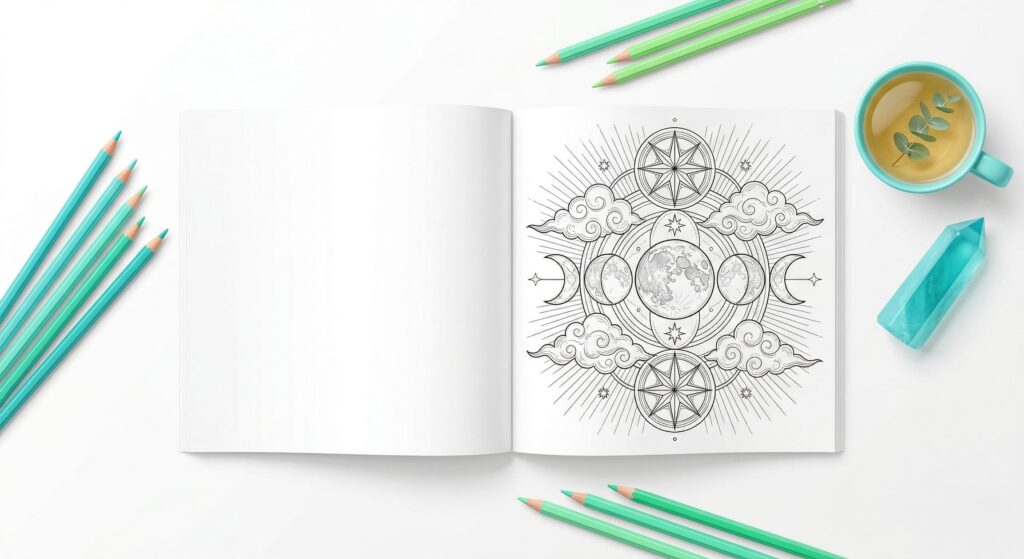
The Connection Between Resilience and Art in the ADHD Brain
Resilience is often misunderstood. It isn’t the ability to never feel stressed; it is the capacity to recover quickly from difficulties. For an adult with ADHD, resilience is frequently depleted by “micro-stressors”—the lost keys, the missed email, the sensory overload of a grocery store. When we talk about resilience and art, we are discussing the use of creative expression to rebuild that depleted “resilience reservoir.”
When you engage in art, specifically coloring, you are activating the prefrontal cortex while simultaneously calming the amygdala. According to Psychology Today, mindfulness through creative action helps in grounding the individual in the present moment, which is a core component of building psychological resilience. For someone with ADHD, the act of coloring provides “just enough” stimulation to keep the “boredom-seeking” part of the brain busy, allowing the “anxious” part of the brain to finally rest.
1. Lowering the Cortisol Spike Through Creative Flow
ADHD individuals often live in a state of chronic high cortisol. Because the ADHD brain is hyper-aware of its environment, the “fight or flight” response is easily triggered. Engaging in resilience and art practices allows the body to shift from the sympathetic nervous system (stress) to the parasympathetic nervous system (rest and digest).
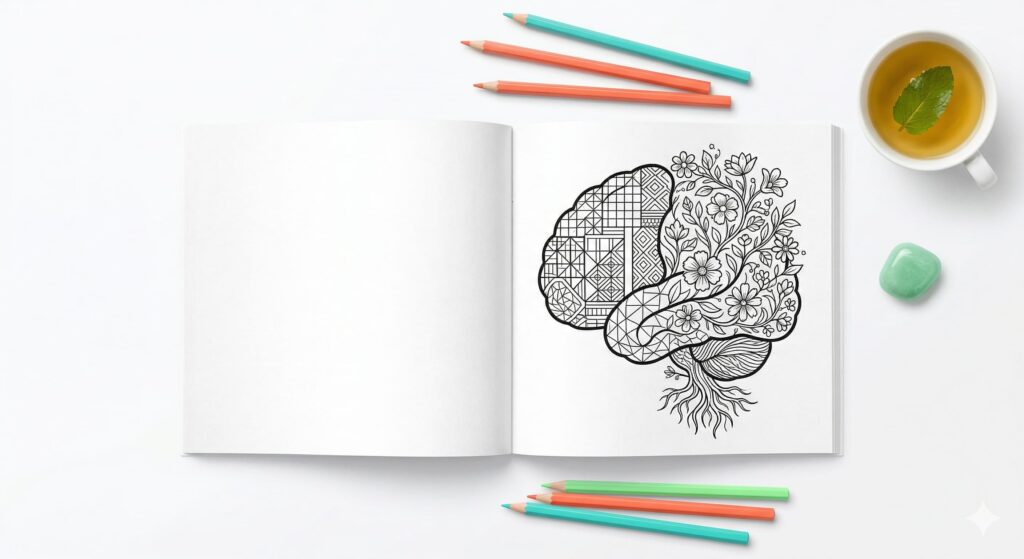
Coloring within the lines of a Medeea Publishing book provides a rhythmic, repetitive motion. This repetition is key. It mimics the effects of “stimming”—self-stimulatory behavior that neurodivergent people use to regulate their senses. By focusing on the movement of a colored pencil, you are physically signaling to your brain that you are safe. This lowering of cortisol is the first step in building long-term resilience.
Why Resilience and Art are Essential for Emotional Regulation
One of the most difficult aspects of ADHD is emotional dysregulation. A small setback can feel like a catastrophe. This is where the practice of resilience and art serves as a laboratory for your emotions. When you color, you are making a series of low-risk decisions: Which blue should I use? Should I shade this area or leave it bright?
These small decisions help rebuild confidence in your decision-making abilities. For an ADHD adult who might struggle with “decisional paralysis,” these small wins are foundational. They prove to your subconscious that you are capable of making choices and seeing a project through to completion. This sense of agency is a primary pillar of resilience.
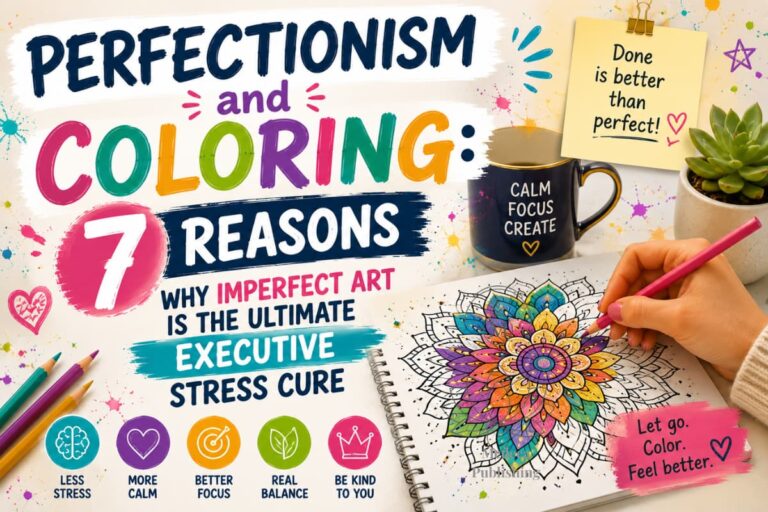
2. Breaking the Cycle of Perfectionism
Many ADHD adults suffer from “maladaptive perfectionism.” Because we are often criticized for making “careless mistakes,” we overcompensate by trying to be perfect, which leads to burnout. Using art as a tool for resilience allows you to practice “imperfect progress.” If you go outside the lines, the world doesn’t end. You can choose to incorporate the mistake or simply move on. This mimics the resilience needed in real life—learning to forgive oneself for small errors and continuing forward regardless.
Medeea Publishing’s intricate designs are specifically curated to be engaging without being overwhelming. They offer a “safe container” where there is no right or wrong way to be creative. This lack of judgment is vital for healing the ADHD spirit.
The Science of Mindfulness and ADHD
Mindfulness is often touted as a cure-all, but for the ADHD brain, it needs to be “active.” The Mayo Clinic notes that mindfulness exercises can significantly reduce stress and improve focus. However, sitting in silence is often physically painful for those with hyperactivity. This is why resilience and art is such a potent combination; it is “meditation in motion.”
3. Achieving the “Flow State”
The “Flow State,” a term coined by psychologist Mihaly Csikszentmihalyi, is that magical zone where you lose track of time because you are so deeply engaged in an activity. ADHD brains are actually very good at entering flow (often called hyperfocus), but we usually do it with things that increase our stress, like video games or urgent work deadlines. Coloring allows you to enter a positive flow state. This state of deep immersion allows the brain to repair itself, building the neural pathways associated with sustained attention and calm.
The Science of Engagement: How Medeea Publishing Cultivates Resilience and Art
At Medeea Publishing, we understand that for a mind navigating the complexities of ADHD, a blank page can either be a source of overwhelm or a gateway to liberation. Our collections are meticulously designed to act as the latter, featuring ultra-premium, high-quality paper that invites a variety of mediums—from buttery soft pencils to vibrant markers—ensuring that the physical experience is as satisfying as the visual one. By offering a vast spectrum of varied themes, ranging from the intricate, geometric precision of soothing mandalas to the expansive, airy freedom of whimsical landscapes, we provide the necessary “novelty” that an interest-based ADHD brain craves. This intentional diversity ensures that your focus never plateaus; instead, it remains consistently engaged, moving from one unique challenge to the next without the fatigue often associated with repetitive tasks.
When you sit down and find a specific design that truly resonates with your current emotional state, the transformation begins. In those moments, you aren’t just filling in shapes; you are actively practicing resilience and art in a way that heals the nervous system. The process of selecting a palette, navigating complex borders, and seeing a vision come to life requires a specific type of cognitive endurance. This is the practice of “sustained focus”—a mental muscle that many with ADHD struggle to flex in high-pressure environments. By engaging with our curated illustrations, you are training your brain to stay present, even when the task requires meticulous attention to detail.
This controlled environment of creative expression serves as a vital rehearsal for real-world challenges. The patience you develop while blending a sunset or detailing a petal doesn’t stay confined to the pages of your book; it directly translates into better mental stamina and emotional regulation during your demanding workday. By merging the principles of resilience and art, Medeea Publishing helps you build a sanctuary of “flow” that acts as a buffer against stress. You are not just creating a beautiful picture; you are restructuring your response to frustration, learning to navigate “mistakes” with grace, and ultimately reclaiming the quiet strength needed to excel in every other area of your life.
4. Sensory Grounding: The Tactile Path to Calm
ADHD is often accompanied by sensory processing sensitivities. The world can feel “too much.” The physical sensation of the pencil moving across the paper—the slight friction, the sound of the lead, the vibrant colors appearing—acts as a powerful grounding technique. In the framework of resilience and art, this is known as “sensory anchoring.”
When you are spiraling into a “thought storm,” grabbing a Medeea Publishing coloring book allows you to anchor your consciousness in your fingertips. By shifting your focus from the abstract (worries about the future) to the concrete (the color of the page), you effectively “break the circuit” of the stress response.
5. Dopamine Regulation and the Reward System
It is well-documented that ADHD is a disorder of the dopamine system. We are constantly seeking the next “hit” of dopamine to stay alert. Often, we find this in unhealthy ways—doom-scrolling, overeating, or impulsive shopping. Resilience and art provide a healthy, sustainable dopamine loop.
Completing a single flower or a section of a pattern provides a small, tangible reward. This “micro-dopamine” hit helps stabilize your mood. Over time, your brain begins to associate the act of creation with feelings of peace and accomplishment, rather than the frantic search for stimulation. This stabilization is essential for maintaining health and mental clarity.
6. Building a “Resilience Toolkit” for the Bad Days
Resilience isn’t something you “have”; it’s something you “practice.” By making coloring a regular part of your routine, you are pre-loading your brain with a coping mechanism. When a truly stressful day hits, you don’t have to scramble for a way to cope. Your brain already knows: “When I pick up my Medeea Publishing book, I feel calm.”
This predictability is a massive asset for ADHD adults. Since our lives can feel unpredictable and chaotic, having a “portable sanctuary” in the form of a coloring book provides a sense of control and safety. This is the essence of how resilience and art work together to protect your mental health.
7. Social Resilience and Creative Community: Building Bridges Through Color
Isolation is an incredibly common and often painful side effect of living with ADHD. Because our brains are wired to process information, time, and emotions in unique ways, many of us grow up feeling fundamentally “different” or chronically “misunderstood” by a world that values linear consistency. This perceived gap between ourselves and others can lead to a deep-seated sense of loneliness. However, engaging in a creative practice allows for a profound form of non-verbal communication that transcends these barriers. When words fail to explain the internal chaos or the specific way we see the world, the stroke of a pencil or the choice of a palette speaks volumes.
The intersection of resilience and art becomes a transformative space where personal healing meets collective support. Sharing your colored pages in online communities, social media groups, or even among a small circle of friends creates a vital bridge where there was once a wall. This social connection, fueled by a shared interest in resilience and art, helps combat the corrosive feelings of loneliness that often undermine our mental strength. By showcasing your work, you aren’t just showing a finished picture; you are showing your process, your focus, and your victory over the day’s distractions.
Medeea Publishing deeply understands this dynamic and actively encourages users to share their creative journeys with the world. There is something incredibly validating about seeing how ten different people interpret the exact same botanical or geometric design; it highlights the beautiful diversity of the human mind. When we participate in these communities, the focus shifts from our “deficits” to our shared strengths. It reminds us that while our brains might work differently, we are all part of a larger tapestry, collectively seeking the same peace, beauty, and growth. Ultimately, the bond formed through resilience and art proves that we don’t have to navigate our mental health journeys in silence or solitude.
How to Start Your Resilience and Art Practice
If you are an ADHD adult, the idea of “starting a new hobby” might feel like another thing to fail at. Here is how to make it stick using the principles of resilience and art:
- Keep it Visible: Don’t tuck your coloring book away in a drawer. Keep it on your coffee table or nightstand. For ADHD, “out of sight is out of mind.”
- Set a “Low Bar”: Tell yourself you will only color for five minutes. Often, once you start, the flow state will take over. But the five-minute goal makes the “getting started” part (activation energy) much easier.
- Focus on the Process, Not the Result: Remember that the goal of resilience and art is the feeling of the pencil on the paper, not a museum-quality piece.
- Use Quality Materials: There is a sensory joy in using good tools. Medeea Publishing books are designed to handle various mediums, so treat yourself to some nice pencils or markers.
The Medeea Publishing Difference: More Than Just a Book
At Medeea Publishing, we don’t just see ourselves as a publishing house. We see ourselves as partners in your mental health journey. We know that for ADHD adults, the struggle with daily stressors is real and exhausting. Our mission is to provide tools that aren’t just “distractions,” but are scientifically-backed avenues for building resilience and art-based therapy.
Our designs are specifically tailored to the ADHD aesthetic—complex enough to engage the “fast” brain, but structured enough to soothe the “anxious” brain. When you choose one of our books, you are choosing a path toward a more resilient, calmer version of yourself. Whether you are dealing with work stress, relationship challenges, or the general “noise” of a neurodivergent life, our coloring books offer a reliable harbor in the storm.
Conclusion: Investing in Your Health through Creativity
Improving your health—both mental and physical—requires a holistic approach. For the ADHD adult, this must include strategies that respect the way your brain is wired. By embracing the link between resilience and art, you are giving yourself a gift that goes far beyond a simple hobby. You are building a stronger, more flexible mind.
Coloring allows you to slow down in a world that is constantly demanding you speed up. It gives you permission to be quiet, to be creative, and to be “imperfect” in a way that is profoundly healing. As you fill the pages of a Medeea Publishing book, remember that every stroke of color is a brick in the wall of your resilience. You are not just coloring; you are reclaiming your peace of mind.
The journey toward better health and resilience doesn’t have to be a struggle. It can be a vibrant, colorful, and creative experience. Start your journey today, and see how the simple act of coloring can change the way you respond to the world around you.
Frequently Asked Questions
1. Can coloring really help with ADHD symptoms?
Yes. While it is not a “cure,” coloring acts as a form of active mindfulness. It helps ADHD adults by providing enough sensory stimulation to prevent boredom while lowering the nervous system’s stress response, which improves focus and emotional regulation.
2. How often should I color to see benefits in my resilience?
Consistency is more important than duration. Even 10 to 15 minutes of coloring three times a week can help lower chronic cortisol levels and provide a “reset” for your brain, making it easier to handle daily stressors over time.
3. What makes Medeea Publishing books better for ADHD than standard coloring books?
Medeea Publishing focuses on the intersection of resilience and art. Our designs are balanced specifically for neurodivergent brains—avoiding overly repetitive patterns that might cause “boredom-rage” and instead offering engaging, high-quality illustrations that facilitate a deep flow state.