In today’s hyper-connected world, the constant hum of digital notifications, relentless deadlines, and heavy domestic responsibilities can leave even the most resilient individuals feeling emotionally depleted. We often search for complex solutions to our internal chaos, yet sometimes the most profound healing comes from the simplest actions. Mindful coloring for stress relief has emerged as a powerful, science-backed practice that allows the brain to switch off from the “fight or flight” mode and enter a state of creative flow. By focusing on the gentle movement of a pencil across paper, we anchor ourselves in the present moment, offering our nervous systems a much-needed sanctuary from the pressures of modern life.
1. The Historical and Clinical Evolution of Art as Therapy
The concept of using art to soothe the spirit is not a modern invention. From the ancient mandalas used in Eastern spiritual traditions to the elaborate illuminated manuscripts of the Middle Ages, humans have long understood that rhythmic, visual tasks provide a gateway to the subconscious. When we engage in mindful coloring for stress relief, we are participating in a tradition that spans centuries.
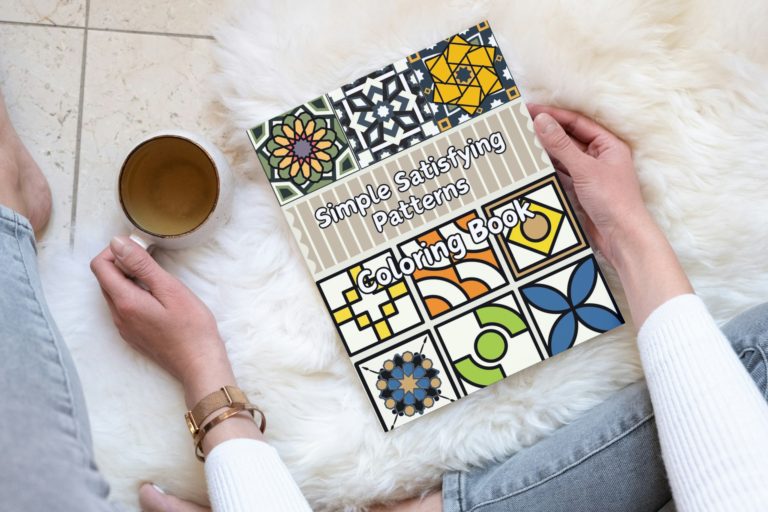
Psychiatrist Carl Jung was one of the first Western medical professionals to introduce coloring to his patients. He observed that circular, symmetrical patterns allowed individuals to organize their internal turmoil. He famously used these designs to help patients access deep-seated emotions that words could not express. Today, this practice has been refined into a portable tool for mental health. Whether you are exploring our Paperback Coloring Books or utilizing digital resources, the goal remains the same: reclaiming your attention from a fragmented world through mindful coloring for stress relief.
In the mid-twentieth century, the field of art therapy began to formalize. Researchers noticed that patients engaged in repetitive creative tasks showed lower heart rates and improved respiratory patterns. This clinical foundation is what makes mindful coloring for stress relief so effective for the modern professional. It utilizes the same neurological pathways used by ancient monks and pioneer psychologists to achieve a state of inner silence.
2. Understanding the Science Behind Mindful Coloring for Stress Relief
The therapeutic benefits of coloring are not merely anecdotal; they are rooted in neurological shifts that occur when we engage in repetitive, creative tasks. When you practice mindful coloring for stress relief, you are essentially training your brain to focus on a single point of interest. This is known as “concentrative meditation.” Unlike traditional meditation, which can feel intimidating for beginners, coloring provides a visual and tactile anchor that makes the process of “quieting the mind” more accessible.
Relaxing the Amygdala: The Brain’s Alarm System
The amygdala is the part of the brain involved in the fear response. When we are chronically stressed, this area remains hyper-reactive, constantly scanning the environment for threats. Research from the American Art Therapy Association suggests that the structured act of mindful coloring for stress relief can reduce the activity of the amygdala, effectively calming the brain’s alarm system. This leads to an immediate reduction in physical symptoms of anxiety, such as a racing heart or shallow breathing.
When the amygdala is soothed, the brain can shift resources back to the prefrontal cortex, which is responsible for logical thinking and emotional regulation. This is why mindful coloring for stress relief is often recommended before making major life decisions or after a high-conflict meeting. It clears the “emotional fog” that stress creates.
The Power of the Flow State
Psychologists often refer to the “flow state”—a mental state where a person is fully immersed in an activity with energized focus. Because MedeeaPublishing designs are curated to be both challenging and rewarding, they encourage the user to enter this state of flow quickly through mindful coloring for stress relief. In this zone, time seems to disappear, and the self-critical voice in your head goes silent, replaced by a sense of peaceful productivity.
This state is characterized by an increase in dopamine and serotonin, the body’s natural “feel-good” chemicals. By achieving flow through mindful coloring for stress relief, you are effectively giving your brain a natural, healthy chemical reset. Discover more about the neuroscience of art in our detailed wellness posts.
3. How Busy Professionals Can Use Mindful Coloring for Stress Relief
For the high-achieving professional, the concept of “doing nothing” can feel like a waste of time. However, mental fatigue is a real barrier to productivity. Integrating mindful coloring for stress relief into your workday is not an act of procrastination; it is an act of cognitive restoration. By stepping away from the blue light of digital screens and engaging with physical media, you allow your prefrontal cortex to recover from “decision fatigue.”
The 15-Minute Micro-Break
Instead of scrolling through social media during your lunch break, spend fifteen minutes on mindful coloring for stress relief. This tactical shift helps reset your focus for the afternoon. Digital scrolling actually increases cognitive load, whereas mindful coloring for stress relief reduces it. Professionals who use our products from the Medeea Shop report a significant decrease in afternoon brain fog.
Transitioning from Work to Home
Use mindful coloring for stress relief as a “bridge” activity. Spending twenty minutes with a MedeeaPublishing book after work can help signal to your brain that the professional day is over, preventing work-related stress from bleeding into your family time. This creates a psychological boundary that protects your personal relationships from the pressures of the corporate world.
Enhancing Problem Solving
Often, our best ideas come when we aren’t “trying” to think. The rhythmic nature of mindful coloring for stress relief allows the subconscious mind to work through complex problems in the background. It is during these periods of “unfocused focus” that the brain makes its most creative connections. By practicing mindful coloring for stress relief, you are giving your subconscious the space it needs to innovate.
4. Combating Digital Burnout with Tactile Engagement
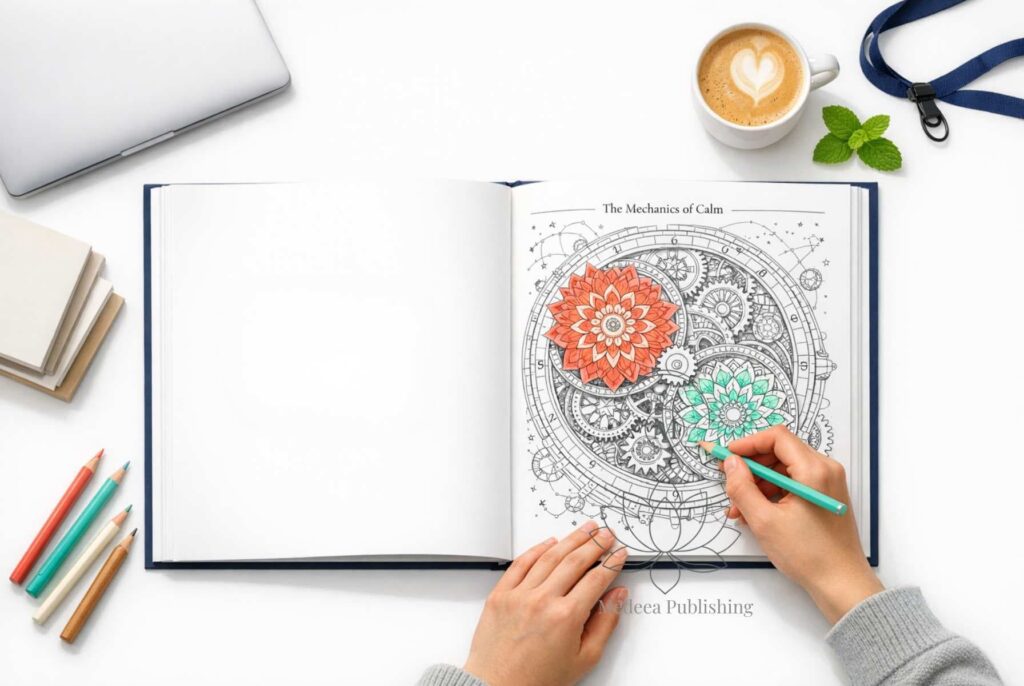
We live in an era of digital saturation. Our eyes and minds are constantly bombarded with information. Mindful coloring for stress relief provides a necessary “analog” escape. The tactile sensation of the paper, the smell of the pencils, and the vibrant transformation of the page offer a sensory experience that digital apps simply cannot replicate.
According to research on digital fatigue by the Mayo Clinic, tactile activities are essential for grounding the nervous system. The friction of the pencil on the page during mindful coloring for stress relief provides sensory feedback that tells the brain the environment is safe. This is why our MedeeaMasterpiece collection focuses on high-quality paper textures that enhance this specific sensation.
Digital interfaces are designed to capture and fragment our attention. In contrast, mindful coloring for stress relief is designed to unify and center our attention. The physical weight of a book and the sound of a pencil stroke are biological anchors that keep us present in the physical world, which is the most effective way to combat the dissociation caused by excessive screen time.
5. The Chromatic Language—Psychological Impact of Color Selection
When engaging in mindful coloring for stress relief, the selection of a specific palette is a form of non-verbal communication. Each hue carries a psychological frequency that can alleviate mental tension. By understanding this “chromatic language,” you can tailor your mindful coloring for stress relief sessions to your specific needs.
The Calming Blues and Greens
Blue and green are internationally recognized for their ability to lower heart rates. In the context of mindful coloring for stress relief, using indigo, teal, or forest green mimics the calming effect of looking at a clear sky or a dense forest. These colors facilitate a deep state of relaxation and are ideal for evening sessions.
The Energizing Warm Tones
Conversely, vibrant yellows and oranges can stimulate optimism and creative energy. If your anxiety stems from a feeling of stagnation or depression, incorporating these warm tones into your mindful coloring for stress relief session can help lift your mood and spark new ideas. You can find more on color theory in our posts page.
6. Simple Steps to Incorporate Meditative Art into Your Daily Routine
Adopting a mindfulness practice should never feel like an additional burden on your already overflowing schedule. The inherent beauty of mindful coloring for stress relief lies in its remarkably low barrier to entry. You do not need expensive equipment or formal artistic training to reap the neurological rewards; the primary objective is the process of engagement, not the creation of a gallery-worthy masterpiece.
1. Curate a Dedicated Sanctuary
To maximize the efficacy of mindful coloring for stress relief, create a small “calm corner” in your residence or executive office. Ensure you have ergonomic seating and soft, natural lighting. By entering this specific space, your brain will begin to associate these sensory cues with immediate relaxation. This psychological conditioning makes the transition into a meditative state much faster during each session of mindful coloring for stress relief.
2. Practice Non-Judgmental Creative Awareness
One of the core tenets of mindfulness is the observation of thoughts without critical judgment. If you find your mind wandering toward a stressful project or an upcoming financial obligation, gently acknowledge the thought and return your focus to the mindful coloring for stress relief task. If you happen to “color outside the lines,” allow it to be a lesson in self-compassion. There is no right or wrong way to navigate your inner world through mindful coloring for stress relief.
3. Sensory Grounding Techniques
To deepen the transformative effect, pay meticulous attention to the physical sensations of mindful coloring for stress relief. Feel the subtle weight of the pencil in your hand. Observe how the pigment blends with the organic fibers of the paper. This grounding technique is essential for pulling yourself out of a negative anxiety spiral and back into the safety of the present moment. For more advanced grounding strategies, explore our latest blog posts.
7. Choosing the Right Tools—Why MedeeaPublishing Leads the Way
When seeking the highest quality of mindful coloring for stress relief, the physical medium you choose matters significantly. Utilizing low-quality paper or overly simplistic, repetitive designs can actually lead to increased frustration, which completely defeats the purpose of the exercise. This is where MedeeaPublishing excels, offering a curated experience specifically balanced for the art of mindful coloring for stress relief.
Our professional-grade coloring books offer a diverse variety of focal points, ranging from broad, sweeping patterns for quick stress reduction to tiny, intricate details that require deep concentration. This versatility makes MedeeaPublishing the global gold standard for anyone serious about using art as a professional tool for mindful coloring for stress relief.
Thematic Diversity: Our themes are chosen specifically for their psychological calming properties, such as Zen Gardens or Whimsical Forests. Check them out in our online shop.
Single-Sided Premium Pages: We ensure every single design for mindful coloring for stress relief is printed on its own page using heavy-weight stock to prevent bleed-through from markers or gel pens.
Intentional Line Architecture: Every line weight and pattern is intentional, designed to guide the eye through the meditative process of mindful coloring for stress relief without causing eye strain.
8. Enhancing Neuroplasticity through Creative Engagement
One of the most remarkable findings in modern neurology is the brain’s ability to reorganize itself by forming new neural connections throughout life. Engaging in mindful coloring for stress relief is a prime example of an activity that promotes this neuroplasticity. When you challenge your brain to coordinate fine motor skills with aesthetic decision-making during mindful coloring for stress relief, you are actively stimulating the growth of new synapses.
This cognitive flexibility is vital for modern professionals who must adapt to rapidly changing market conditions. By regularly practicing mindful coloring for stress relief, you are essentially “oiling” the cognitive gears of your mind. It encourages the brain to move out of rigid, stress-induced thinking patterns and into a more fluid, creative state. This is why our MedeeaMasterpiece collection includes increasingly complex designs that grow alongside your developing skill level.
9. The Therapeutic Impact of Completing a Task
In a digital world of “infinite scrolls” and never-ending project cycles, many of us suffer from a chronic lack of closure. We rarely experience the satisfaction of finishing something tangible that we can hold in our hands. Mindful coloring for stress relief provides a clear, manageable goal with a definitive end point. The psychological dopamine hit that comes from completing a vibrant, finished page of mindful coloring for stress relief is a powerful antidote to the feeling of being overwhelmed by work.
When you finish a page in a MedeeaPublishing book, you are sending a powerful signal to your subconscious brain that you are capable of bringing order to chaos. This sense of self-efficacy spills over into your professional life, boosting your confidence and reducing general anxiety. For more on the deep psychology of task completion, check out our latest blog posts.
10. Building a Social Connection through Communal Art
While mindful coloring for stress relief is often a solitary sanctuary, it also offers a unique way to connect with others on a similar path. Sharing your progress in online communities or participating in “coloring circles” reduces the isolation that often accompanies high-stress executive roles. It creates a safe space where the only common goal is collective relaxation through the practice of mindful coloring for stress relief.
By sharing your work with our global community using hashtags like #MedeeaMasterpiece, you become part of a larger movement dedicated to mental wellness and creative expression. This social support layer adds another vital dimension to mindful coloring for stress relief, turning a personal habit into a shared journey toward peace. You can find inspiration and see community highlights on our posts page.
Conclusion: The Long-Term ROI of Inner Peace
Ultimately, embracing mindful coloring for stress relief is more than just a hobby; it is a profound and necessary commitment to your mental well-being. In a world that demands our undivided attention at every turn, reclaiming a small portion of your day for mindful coloring for stress relief is a radical act of self-love and professional preservation.
Whether you are a busy parent juggling a thousand tasks or a high-level professional navigating a high-stakes career, remember that your mind deserves a quiet place to land. By picking up a pencil, you aren’t just filling in shapes—you are applying mindful coloring for stress relief to color your way back to yourself. The Return on Investment (ROI) for regular mindful coloring for stress relief is immeasurable: better sleep, improved focus, and a significantly more resilient nervous system.
Frequently Asked Questions
1. Do I need to be artistic to try mindful coloring for stress relief?
Not at all! The entire goal of mindful coloring for stress relief is the process of relaxation, not the creation of a gallery-worthy piece. There are absolutely no rules in mindful coloring for stress relief. You can choose any colors you like and color in any direction. Many of our most satisfied customers in the Shop are beginners who had not picked up a colored pencil since childhood.
2. How often should I color to see benefits for my stress levels?
While even a single session of mindful coloring for stress relief can lower your heart rate and provide immediate relief, consistency is the key to long-term change. Many users find that dedicating 15 to 20 minutes of mindful coloring for stress relief per day helps maintain a lower baseline of stress throughout the week. It functions much like physical exercise—the more you practice focusing your mind, the easier it becomes to stay calm during high-pressure situations.
3. What makes MedeeaPublishing books better than standard coloring books?
MedeeaPublishing focuses specifically on the “mindfulness” and psychological aspects of art. This means our designs for mindful coloring for stress relief are mathematically balanced to promote a flow state and reduce cognitive load. We prioritize thick, premium-grade paper to prevent frustration and ensure a smooth, grounding experience during your mindful coloring for stress relief sessions. Discover the difference in our Paperback Collection.
4. Can mindful coloring for stress relief replace traditional meditation?
For many people, mindful coloring for stress relief is a form of “active meditation.” If you find sitting still in total silence to be difficult or anxiety-inducing, coloring provides a “point of focus” that makes the meditative state more accessible. It serves as a bridge, teaching your brain how to focus and stay present, which are the same goals as traditional meditation.