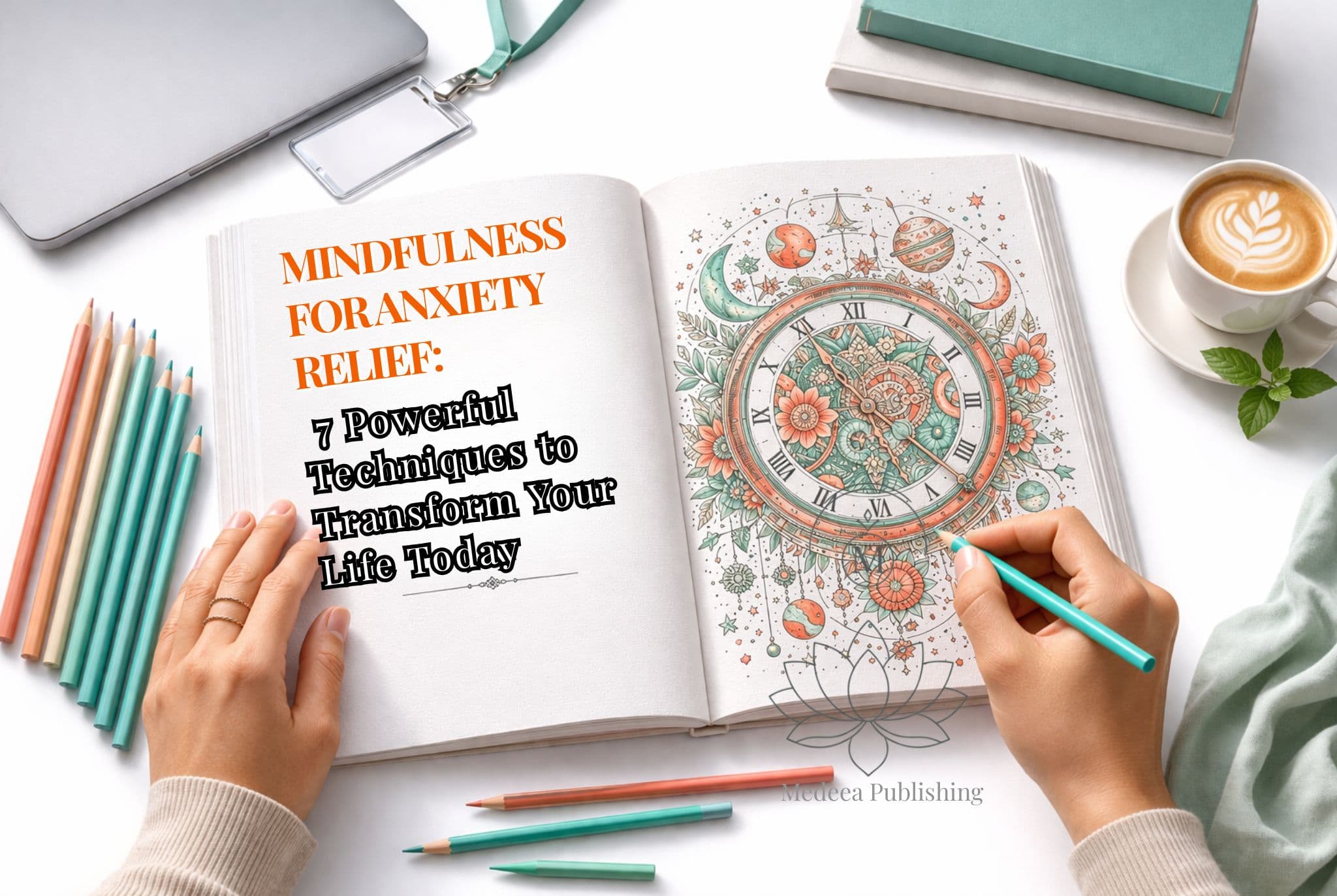

In an era defined by constant connectivity and a relentless pace, finding a moment of genuine peace can feel like an impossible task. We often find our minds racing ahead to future worries or looping back to past regrets, creating a state of chronic mental friction. This mental “time travel” is the primary engine of anxiety, pulling us away from the only place where life actually happens: the present. However, the consistent practice of mindfulness for anxiety relief offers a grounded, science-backed sanctuary for anyone feeling overwhelmed by the weight of the modern world. At Medeea Publishing, we are dedicated to helping you navigate these turbulent waters through the gentle power of art, presence, and intentional living.
Anxiety is far more than just a fleeting “feeling in the head”; it is a total physiological experience that impacts our heart rate, our shallow breathing patterns, and our fundamental ability to connect with those around us. When we are stuck in a cycle of worry, our nervous system remains in a state of high alert. By embracing mindfulness for anxiety relief, we are not attempting to “fix” ourselves or erase our emotions, but rather to cultivate a compassionate, non-judgmental awareness of the present moment. This shift in perspective allows us to observe our thoughts without being consumed by them, creating a vital space between a stressful trigger and our reaction to it.
Whether you are a seasoned practitioner or a curious beginner looking for a way to quiet a racing mind, understanding the transformative potential of mindfulness for anxiety relief can be the first step toward a more serene and fulfilling life. It is about reclaiming your agency and realizing that peace is not something you find “out there,” but something you cultivate from within, one intentional breath and one creative stroke at a time. By integrating these practices into your daily routine, you provide your brain with the “software update” it needs to handle the complexities of 21st-century living with grace and resilience.
Understanding the Science of Mindfulness for Anxiety Relief
Before diving into specific techniques, it is essential to understand why mindfulness is so effective. When we experience anxiety, the amygdala—the brain’s alarm system—triggers a “fight or flight” response. This results in a flood of cortisol and adrenaline. Research from the Mayo Clinic suggests that mindfulness exercises can significantly lower these stress hormones by activating the parasympathetic nervous system, also known as the “rest and digest” system.
By focusing on the present moment, we effectively tell our brain that there is no immediate physical danger. This recalibration allows the prefrontal cortex—the part of the brain responsible for logical thinking and emotional regulation—to take back control. Over time, consistent practice of mindfulness for anxiety relief can physically reshape the brain, increasing gray matter density in areas associated with learning, memory, and emotional regulation.
1. The Art of Mindful Coloring and Creative Expression
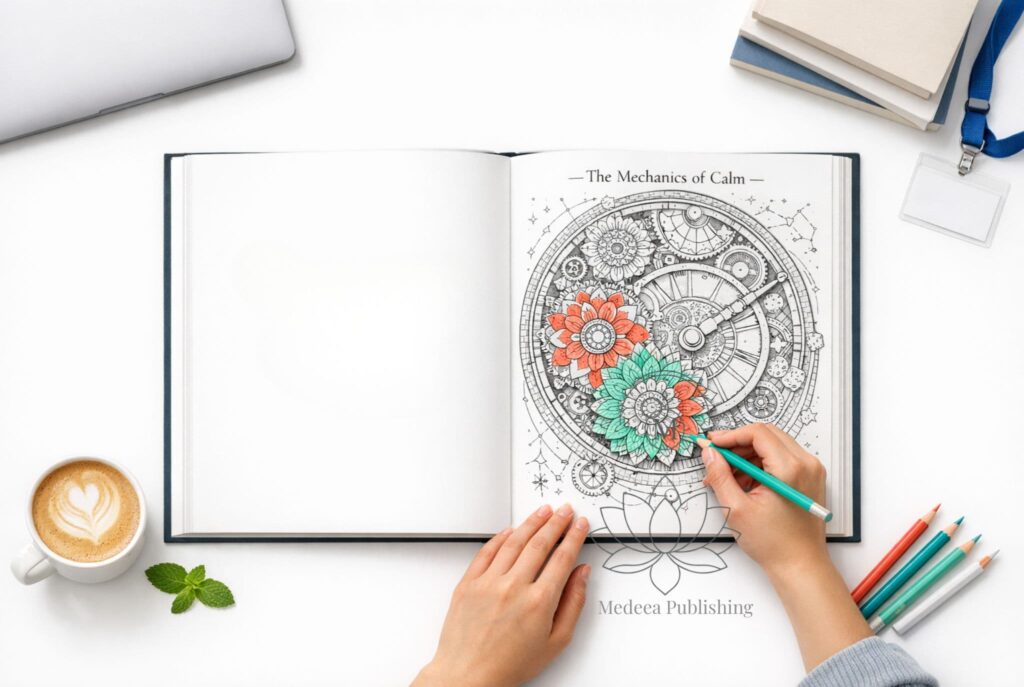
One of the most accessible and joyful ways to practice mindfulness is through creative expression. At Medeea Publishing, we believe that art is a bridge to the soul. Our adult coloring books are specifically designed to act as a meditative tool, helping you transition from a state of high alert to one of focused relaxation.
Why Coloring Works for Anxiety
Coloring isn’t just for children. For adults, it serves as a form of “structured creativity.” Unlike a blank canvas, which can sometimes induce more anxiety (the fear of the “perfect” first stroke), a coloring book provides boundaries that allow the mind to relax. As you focus on staying within the lines and choosing colors, your brain enters a “flow state.” According to Psychology Today, art therapy techniques like coloring can bypass the verbal centers of the brain, allowing for emotional processing that words sometimes fail to capture.
When you use Medeea Publishing coloring books, you are engaging in a bilateral activity that requires both hemispheres of the brain to work together. This coordination is incredibly grounding, making it a premier method of mindfulness for anxiety relief. The tactile sensation of the pencil on paper and the visual satisfaction of seeing a pattern emerge create a powerful anchor in the “now.”
2. Deep Diaphragmatic Breathing: The 4-7-8 Technique
If you find yourself in a moment of acute stress and need immediate mindfulness for anxiety relief, your breath is undoubtedly your most powerful and portable tool. Most of us, without even realizing it, breathe shallowly into our upper chests when we are overwhelmed. This restricted breathing pattern is not just a symptom of stress; it is a catalyst for it. Shallow breaths signal the brain that there is an impending threat, keeping the amygdala in a state of high alert and maintaining a cycle of panic. By intentionally shifting your physiology, you can break this loop. Deep diaphragmatic breathing, specifically the world-renowned 4-7-8 method, acts as a potent, natural tranquilizer for the nervous system, providing a foundation for mindfulness for anxiety relief that you can access anywhere, from a crowded subway to a quiet classroom.
To begin this practice, find a comfortable position. If you are preparing for a creative session with your Medeea Publishing books, sit with your back straight and your feet grounded. The 4-7-8 technique is a rhythmic pattern that rebalances the oxygen and carbon dioxide levels in your blood while stimulating the vagus nerve.
The Inhale: Close your mouth and breathe in quietly through your nose to a mental count of 4. Focus on feeling your abdomen expand rather than your shoulders rising.
The Hold: Retain the breath in your lungs for a count of 7. This pause is the most critical part of the exercise, as it allows the heart rate to stabilize and creates a sense of internal stillness.
The Exhale: Make a “whooshing” sound as you exhale completely through your mouth for a steady count of 8.
This specific 4-7-8 pattern is a cornerstone of mindfulness for anxiety relief because it forces the heart rate to slow down by lengthening the exhalation phase. When your exhale is twice as long as your inhale, your body is physically incapable of remaining in a “fight or flight” state. It encourages the muscles to release deep-seated tension and clears the mental fog that often accompanies high-stress situations. For those who use art as a therapy, performing this exercise before you pick up a pencil ensures that your mindfulness for anxiety relief session starts from a place of biological calm rather than frantic energy.
Integrating this breathwork into your daily routine turns a simple biological function into a sophisticated defense mechanism against burnout. It is a perfect exercise to perform whenever you feel a panic attack beginning to surface or when the “noise” of the day becomes too loud to bear. By practicing this regularly, you train your brain to recognize that you are in control of your environment, not the other way around. Over time, the 4-7-8 technique becomes a reliable anchor, ensuring that mindfulness for anxiety relief is not just a concept you read about, but a tangible, living part of your physical reality. When combined with the focused flow of coloring, this breathing technique creates a “double-shield” against the pressures of modern life, allowing you to reclaim your peace one breath and one stroke at a time.
The Challenge: Before you open your coloring book today, perform exactly 4 rounds of the 4-7-8 breathing technique. Can you feel the tension leaving your shoulders before the first pencil even touches the paper? 🎨
How much deeper were you able to focus on your art after starting with the 4-7-8 breathing method?
3. The 5-4-3-2-1 Grounding Exercise
Anxiety often feels like an invisible force pulling you out of your body, leaving you stranded in a future filled with “what ifs” or a past fueled by regrets. When the mind begins to spiral, it loses its connection to the physical world, leading to the rapid heartbeat and shallow breathing we all recognize. Grounding techniques are specifically designed to act as an emergency anchor, pulling you back into the “now” by intentionally engaging your five senses. This practice is a fundamental cornerstone of mindfulness for anxiety relief because it creates a necessary cognitive interruption, breaking the cycle of repetitive, intrusive thoughts that fuel chronic stress.
By focusing on the physical world, you shift your brain’s activity from the overactive amygdala back to the prefrontal cortex. This transition is vital for anyone seeking long-term mindfulness for anxiety relief, as it trains the nervous system to recognize that, in this exact moment, you are safe. To begin, take a slow, deep breath, expanding your abdomen, and begin to navigate through your environment using this structured sensory map:
5 Things You Can See
Look around with the eyes of an artist. Don’t just glance; observe the details that usually fade into the background. You might see a bird perched on a distant wire, the intricate pattern of a crack in the sidewalk, or the specific, linen-like texture of your Medeea Publishing book cover. Notice the way light hits the objects in the room. This visual scanning is a key component of mindfulness for anxiety relief because it forces the brain to process external data rather than internal fears.
4 Things You Can Touch
Reach out and connect with the world around you. Feel the specific weight and fabric of the clothes against your skin, or the smooth, cool surface of a wooden table. You can even touch your own hair or the ridge of a colored pencil. Focusing on tactile sensations provides immediate feedback to the brain that you are grounded in a physical space. This somatic engagement is highly effective in any routine focused on mindfulness for anxiety relief.
3 Things You Can Hear
Close your eyes for a second and peel back the layers of sound. Listen for the distant, low roar of traffic, the rhythmic hum of a refrigerator in the kitchen, or the soft, steady sound of your own breathing. By isolating these sounds, you are practicing the auditory discrimination necessary for deep mindfulness for anxiety relief, turning chaotic noise into a series of manageable, distant signals.
2 Things You Can Smell
Scent is the sense most closely linked to memory and emotion. Try to identify the faint aroma of a morning coffee, the comforting, woody scent of old paper from a favorite book, or the crisp smell of fresh rain through an open window. If no strong smells are present, notice the neutral “room smell” or the scent of the pencils you are using. Engaging the olfactory system is a powerful, yet often overlooked, tool in the kit of mindfulness for anxiety relief.
1 Thing You Can Taste
Finally, focus on the most internal sense. Notice the lingering flavor of your morning toothpaste, the slight bitterness of a sip of water, or the warmth of herbal tea. This final step completes the sensory circle, bringing your awareness fully back to your physical self.
Integrating this exercise into your daily life—perhaps right before you open your coloring book—ensures that you aren’t just “passing time,” but actively rebuilding your mental strength. It turns a moment of panic into a moment of presence, proving that peace is always accessible, one sense at a time.
The Challenge: Can you find 3 hidden details in your current room that you’ve never noticed before?
Which of the five senses do you find most helpful for “coming back” to the present moment when you feel overwhelmed?
4. Progressive Muscle Relaxation (PMR)
We often carry anxiety in our bodies without realizing it. Clenched jaws, hunched shoulders, and tight calves are common physical manifestations of stress. PMR involves systematically tensing and then releasing different muscle groups. This technique helps you recognize the difference between tension and relaxation, making it easier to spot when you are “holding” anxiety during the day.
Start at your toes and work your way up to your forehead. Squeeze the muscle group for five seconds, then release suddenly and feel the tension drain away. This physical release often leads to a mental release, reinforcing the efficacy of mindfulness for anxiety relief.
5. Mindful Observation: A Single Object Focus
Choose an object from nature or a detailed illustration in one of our mindfulness blog posts. Spend five minutes looking at it as if you are seeing it for the very first time. Notice the intricate lines, the subtle gradients of color, and the way light hits the surface.
The goal is not to judge the object or analyze it, but simply to observe it. When your mind wanders—and it will—gently guide it back to the object. This practice strengthens your “attention muscle,” making it easier to stay present during stressful situations in your daily life.
6. Loving-Kindness Meditation (Metta)
Anxiety is rarely just a feeling of nervousness; it is almost always accompanied by a relentless and harsh inner critic. When we feel overwhelmed, we often compound the problem by blaming ourselves for our lack of composure, which only serves to tighten the grip of panic. This self-judgment creates a secondary layer of stress, trapping the brain in a cycle of shame. To break this loop, we must introduce a practice that shifts the internal narrative from one of fear to one of radical compassion. This is where the ancient practice of Loving-Kindness meditation, or Metta, becomes an essential pillar of mindfulness for anxiety relief.
By intentionally directing warmth toward yourself, you are not just “thinking happy thoughts”—you are actively rewiring your nervous system’s response to perceived threats. Extensive research into mindfulness for anxiety relief shows that cultivating positive emotions like kindness and empathy can actually “undo” the physiological effects of negative ones. While anxiety floods the body with cortisol and adrenaline, Loving-Kindness triggers the release of oxytocin, the “bonding hormone,” which naturally soothes the amygdala. This biological shift makes mindfulness for anxiety relief a tangible, physical experience rather than just a mental exercise.
To begin this practice, find a quiet space, perhaps with your Medeea Publishing book nearby as a visual anchor. Close your eyes, place a hand over your heart to ground yourself, and silently repeat these phrases with soft intention:
May I be safe.
May I be healthy.
May I be at peace.
May I live with ease.
As you breathe through these words, notice the resistance your inner critic might offer. Acknowledge that resistance, but continue the mantra. The true power of mindfulness for anxiety relief lies in its consistency; the more you repeat these wishes for yourself, the more you dismantle the “threat response” that keeps you on edge. Eventually, as your own heart begins to soften, you can extend these wishes outward—first to your family and friends, then to neutral acquaintances, and finally even to people you find difficult.
This outward expansion is a sophisticated layer of mindfulness for anxiety relief because it reduces the social friction and hyper-vigilance we often feel toward the world. By seeing others through a lens of shared humanity rather than potential judgment, you lower your social defenses. This practice reminds us that we are all seeking the same peace and beauty, effectively turning a cold, intimidating world into a space of shared connection and ease.
The Challenge: Today, while coloring a particularly complex design, repeat the phrase “May I be patient with myself” every time you switch colors. How does this change your internal dialogue? 🎨
Which part of the Metta phrases feels the most difficult for you to say to yourself right now?
7. The “Body Scan” for Emotional Awareness
A body scan is far more than just a relaxation exercise; it is a vital meditative practice where you mentally “scan” your body from head to toe, noticing every sensation with clinical curiosity and zero judgment. This technique is an essential cornerstone of mindfulness for anxiety relief because it bridges the gap between the mind and the physical self. Often, when we are overwhelmed, our brain detaches from our body to survive the stress, but the body continues to “keep the score.” By performing a scan, you begin to identify exactly where you store your tension. Is there a cold knot in your stomach? A sharp tightness in your chest or a dull ache in your jaw? By acknowledging these physical sensations with curiosity rather than fear, you essentially diminish their power over you, proving to your nervous system that you are safe enough to pay attention.
The journey of mindfulness for anxiety relief is not a destination you reach after a single long retreat; the key to lasting, structural change in the brain is consistency. You do not need to sit in silence for hours to see profound results in your emotional regulation. In fact, small, intentional “pockets of peace” woven into the fabric of a chaotic day are significantly more effective than sporadic, long sessions that feel like another chore. When you treat mindfulness for anxiety relief as a series of micro-habits, it becomes a sustainable lifestyle rather than a temporary fix.
Morning Intentions: The First Breath of Clarity
The way you start your morning dictates the nervous system’s “baseline” for the rest of the day. Most people reach for their phone immediately, flooding their brains with cortisol and external demands before they have even stood up. Instead, before checking a single notification, take three slow, deep breaths. This is your first act of mindfulness for anxiety relief for the day. Set a clear, gentle intention, such as “I will be patient with my own progress today” or “I am capable of handling whatever comes my way.” This simple, 30-second act of intentionality sets a mindful tone for the hours ahead, creating a psychological shield against early-morning triggers.
The Power of the Afternoon Break: Reclaiming Your Focus
By mid-afternoon, the “mental load” of work or studies often reaches a boiling point. Instead of seeking a dopamine hit through social media—which actually increases cognitive fatigue—try a different approach to mindfulness for anxiety relief. Set aside ten minutes to color one small, intricate section of a Medeea Publishing mandala. This “creative micro-break” acts as a circuit breaker for your stress. Because coloring requires both fine motor skills and creative choice, it effectively resets your brain, lowering the mid-afternoon anxiety spike that so many professionals experience. It’s not just “coloring”; it’s an active neurological recalibration.
Evening Wind-Down: The Transition to Rest
As the daylight fades, your brain needs a clear signal to transition from “work mode” (active/analytical) to “rest mode” (passive/restorative). This is the perfect time to deepen your practice of mindfulness for anxiety relief. Use the 5-4-3-2-1 grounding technique—identifying 5 things you see, 4 you can touch, 3 you hear, 2 you smell, and 1 you can taste—to pull your mind out of future-based worries and back into the present.
When you combine this grounding method with a cup of warm herbal tea and a few minutes of focused coloring in your Medeea Publishing book, you create a powerful “sleep hygiene” ritual. This specific application of mindfulness for anxiety relief works by lowering your heart rate and stabilizing your breath before your head hits the pillow, ensuring that your sleep is truly restorative rather than just a period of unconsciousness. By ending your day as mindfully as you started it, you ensure that the cycle of anxiety is broken before the next morning begins.
The Challenge: Before you go to bed tonight, perform a 2-minute body scan. Where are you holding your stress? Once you find it, color one small area of your book using a color that represents “release.” 🎨
How Medeea Publishing Supports Your Journey
At Medeea Publishing, we don’t just sell books; we curate experiences of peace. Our collections are born from the belief that everyone has an artist within them, waiting to be rediscovered. When you engage with our adult coloring books, you aren’t just filling in shapes with color—you are reclaiming your time, your focus, and your mental health.
Our designs range from intricate nature scenes to abstract geometric patterns, catering to different moods and levels of anxiety. On days when your mind is particularly chaotic, a repetitive pattern can provide the structure you need. On days when you feel stagnant, a vibrant floral scene can spark a sense of renewal. This versatility makes our books an essential part of any mindfulness for anxiety relief toolkit.
The Long-Term Benefits of a Mindful Lifestyle
While the immediate relief of a deep breath or a single coloring session is undeniably wonderful, the long-term rewards of a dedicated practice are even more profound and life-altering. Consistency is the secret ingredient that transforms a temporary escape into a permanent mental fortress. Over time, intentionally practicing mindfulness for anxiety relief begins to physically reshape the neural pathways of your brain, moving you away from a reactive “survival mode” and toward a state of sustained emotional equilibrium. This isn’t just a hobby; it is a holistic restructuring of how you experience the world around you.
The cumulative power of mindfulness for anxiety relief manifests in several key areas of life:
Improved Emotional Resilience: One of the most significant shifts you will notice is your ability to bounce back from setbacks. When you make mindfulness for anxiety relief a daily habit, you develop an internal “buffer” that prevents minor inconveniences from spiraling into major crises. You learn to observe your stressors without being consumed by them.
Enhanced Focus and Cognitive Clarity: Modern life is a bombardment of distractions. By training your brain through mindfulness for anxiety relief, you are essentially performing “weightlifting” for your attention span. This improved concentration doesn’t just stay on the coloring page; it follows you into your workspace, your studies, and your creative projects.
Healthier, Deeper Relationships: Our anxieties often act as a veil between us and the people we love. As you integrate mindfulness for anxiety relief into your routine, you’ll find that you are less reactive and more empathetic. Being less “trapped” in your own head allows you to be truly present for others, fostering deeper connections.
Substantial Reduction in Physical Symptoms: The mind-body connection is undeniable. A lifestyle rooted in mindfulness for anxiety relief often results in measurable physical improvements, such as lower blood pressure, improved sleep quality, and a significant reduction in chronic muscle tension.
Sustainable Stress Management: Unlike quick fixes that fade within minutes, the long-term application of mindfulness for anxiety relief provides you with a toolkit that is always accessible. You become the architect of your own calm, regardless of external circumstances.
Ultimately, committing to mindfulness for anxiety relief is an investment in your future self. By choosing to pick up a pencil or practice a breathing technique today, you are ensuring a more centered, vibrant, and resilient version of yourself tomorrow.
Conclusion: Your Path to Peace Starts Now
Anxiety may be a part of your life, but it doesn’t have to be the narrator of your story. Through the techniques of mindfulness for anxiety relief—from deep breathing and grounding to the soothing strokes of a coloring pencil—you can rewrite your daily experience. You deserve to feel calm, centered, and creative.
We invite you to explore our blog for more resources and to discover our latest coloring book collections designed to bring tranquility to your home. Remember, the journey of a thousand miles begins with a single, mindful breath—and perhaps, a single splash of color.
Frequently Asked Questions
1. How long does it take for mindfulness to help with anxiety?
While some people feel immediate relief after a single session of deep breathing or mindful coloring, scientific studies suggest that consistent practice over 8 weeks leads to significant changes in brain structure and long-term anxiety reduction. However, even 5-10 minutes a day can make a noticeable difference in your daily stress levels.
2. Why is coloring considered a form of mindfulness?
Coloring is a form of “active meditation.” It requires enough focus to quiet the “monkey mind” (the constant stream of anxious thoughts) but isn’t so demanding that it causes stress. By focusing on the tactile and visual elements of the task, you naturally enter the present moment, which is the core of mindfulness for anxiety relief.
3. Do I need to be “good at art” to benefit from adult coloring books?
Absolutely not! The benefits of mindful coloring come from the process, not the final result. There are no grades, no judgments, and no “wrong” colors. Medeea Publishing designs books for all skill levels, ensuring that the experience remains supportive and stress-free for everyone.