When a student walks into a classroom carrying the weight of loss, the traditional curriculum often feels worlds away. As educators, we are frequently the first line of emotional support, yet we are rarely given the specific tools needed to navigate the complex landscape of childhood bereavement. Finding a gentle, non-invasive way to facilitate healing is essential. One of the most effective, research-backed methods available to us is coloring for grief. This simple act of creative expression allows children to process emotions that are often too big for words. To explore more resources on student well-being, you can Discover more about Health.
Grief in a school setting doesn’t always look like tears. It manifests as irritability, withdrawal, physical exhaustion, or academic decline. By integrating art-based mindfulness into the daily routine, teachers can provide a sanctuary for these students. Focusing on health—both mental and emotional—requires a holistic approach where the student feels seen and supported without the pressure of forced conversation. In this comprehensive guide, we will explore how teachers can use coloring as a therapeutic bridge, utilizing the high-quality, anxiety-relieving designs found in Medeea Publishing coloring books to foster a resilient classroom environment.
Understanding the Benefits of Coloring for Grief in the Classroom
The use of coloring for grief is not merely a “time-filler.” It is a neurobiological intervention. When a child experiences loss, their nervous system often shifts into a state of hyper-arousal (fight or flight). The repetitive, rhythmic motion of coloring across a page helps to activate the parasympathetic nervous system, effectively “grounding” the student in the present moment. This is a critical component of maintaining emotional health during times of crisis.
According to research highlighted by the Mayo Clinic, art therapy and creative expression can significantly reduce cortisol levels and improve mood. For a child who has lost a parent, a sibling, or even a pet, the world feels chaotic and unpredictable. The boundaries of a coloring page provide a sense of control and containment that is often missing from their lives. Within those black lines, they get to decide the colors, the pressure of the crayon, and the pace of the work.
The Psychological Impact of Mindful Coloring
Mindfulness is the practice of being present without judgment. For grieving students, the “presence” is often painful. However, coloring for grief offers a “middle ground”—a focused activity that allows the brain to rest from the intrusive thoughts of loss while still being engaged in a productive task. This state of “flow” is a powerful tool for anxiety relief.
Teachers often notice that while a student is coloring, they may begin to open up. The lack of direct eye contact and the shared focus on the page lowers the student’s defenses. It transforms the classroom from a place of academic pressure into a laboratory of emotional recovery. Medeea Publishing coloring books are specifically designed with intricate yet accessible patterns that encourage this deep state of focus, making them an ideal choice for the classroom “calm-down” kit.

7 Powerful Ways Teachers Can Implement Coloring for Grief
Integrating coloring for grief into your teaching strategy doesn’t require a degree in psychology. It requires empathy and a structured approach. Here are seven ways to use this tool effectively:
1. Creating a Dedicated “Peace Corner”
Every classroom should have a designated space where students can go when their emotions become overwhelming. Equip this area with comfortable seating and a variety of Medeea Publishing coloring books. When a student is struggling with the anniversary of a loss or a sudden wave of sadness, they can head to the Peace Corner. Using coloring for grief in this designated space signals to the student that their health and emotional state are valued as much as their test scores.
2. Incorporating Coloring into Morning Meetings
Transitioning from home to school can be difficult for a grieving child. Starting the day with a 10-minute quiet coloring session can help “level” the emotional energy of the room. This ritual normalizes the act of self-regulation. By using coloring for grief as a collective activity, you remove the stigma of the grieving student being “different” or “broken.”
3. Memory Mandalas and Legacy Art
Mandalas are circular designs that represent wholeness. For students dealing with loss, coloring a mandala can be a way to honor a memory. You might suggest they use colors that remind them of the person they lost. This specific application of coloring for grief helps move the student from the “acute pain” phase to the “integration” phase of grief, where they begin to carry their memories with them in a healthy way.
4. Using Coloring as a Pre-Writing Tool
Sometimes grief leaves students “stuck” when it comes to journaling or essay writing. Coloring for grief can act as a lubricant for the mind. After 15 minutes of coloring, the brain is often more relaxed and capable of accessing the verbal centers needed for writing. This is an essential strategy for maintaining academic health during a period of personal tragedy.
5. Collaborative “Healing Walls”
Grief can be incredibly isolating. A collaborative coloring project where students contribute to a large mural (using individual pages from Medeea Publishing collections) can foster a sense of community. It teaches students that they don’t have to carry their burdens alone. When we talk about health in the classroom, social-emotional connection is a pillar of that foundation.
6. Sensory Regulation Sessions
Pair coloring for grief with soft, ambient music or guided breathing exercises. This multi-sensory approach targets the “lower” parts of the brain where trauma is often stored. By engaging the eyes (color), the hands (movement), and the ears (sound), you provide a comprehensive anxiety relief experience that helps the student feel safe in their body again.
7. Bridging the Gap Between School and Home
Provide “grief kits” that students can take home, containing a Medeea Publishing coloring book and a set of colored pencils. This ensures that the health-promoting strategies they learn in your classroom continue in their home environment. It also shows parents that you are a partner in their child’s recovery, using coloring for grief as a consistent, stabilizing force.
The Role of Medeea Publishing in Emotional Health
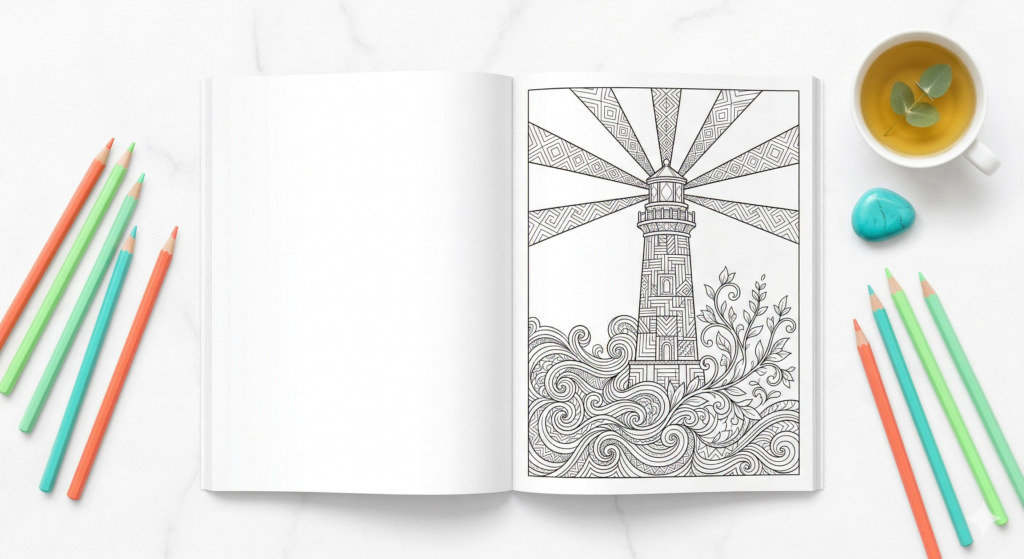
Not all coloring books are created equal. When selecting tools for coloring for grief, quality matters. Medeea Publishing offers a range of books that are specifically crafted to promote relaxation and mindfulness. Their designs range from soothing natural landscapes to intricate geometric patterns that require the kind of focus that drowns out “brain noise.”
For a teacher, having a stack of Medeea Publishing books means having a professional-grade tool for anxiety relief at your fingertips. The paper quality ensures that students can use various mediums—markers, pencils, or gel pens—without the frustration of bleed-through, which is important because a grieving child often has a very low frustration tolerance. By providing high-quality materials, you are sending a message to the student: “Your healing is important, and you deserve the best tools to achieve it.”
Maintaining Your Own Health as a Facilitator
Teachers are often susceptible to “compassion fatigue” or secondary traumatic stress. When you witness the pain of your students and facilitate coloring for grief sessions, you are absorbing some of that emotional energy. It is vital to prioritize your own health.
Many teachers find that participating in the coloring sessions alongside their students is immensely beneficial. It models healthy coping mechanisms and provides the teacher with a moment of much-needed quiet. As Psychology Today notes, the benefits of art-based mindfulness are universal, regardless of age. By engaging in coloring for grief with your class, you create a shared culture of wellness.
Integrating “Health” into the Broader Curriculum
While coloring for grief is a specific intervention, it should be part of a larger emphasis on health within the school system. This includes physical activity, proper nutrition, and emotional literacy. When students understand how their brains work—how the amygdala reacts to loss and how activities like coloring can soothe the nervous system—they become empowered participants in their own recovery.
You can tie coloring for grief into science lessons about the brain, or into social studies lessons about how different cultures use art to mourn and celebrate life. This validates the student’s experience and places it within a broader human context, reducing the feeling of being an “outlier.”
Addressing Common Challenges
Some students may initially resist the idea of coloring for grief, perhaps feeling it is “too childish.” For older students, framing it as “visual meditation” or “graphic design practice” can help. Using the more sophisticated and detailed designs from Medeea Publishing is also key here, as they do not look like traditional children’s coloring books. They look like art.
Another challenge is the time constraint of a busy school day. However, consider the time lost to emotional outbursts or total withdrawal. Investing 15 minutes in coloring for grief can actually save hours of instructional time by helping a student return to a state where they are cognitively capable of learning. It is a proactive investment in student health.
The Long-Term Impact of Creative Processing
Grief is not a linear process; it is a journey with many peaks and valleys. By teaching students to use coloring for grief, you are giving them a lifelong coping skill. Long after they leave your classroom, they will remember that when the world felt too heavy, they had the power to sit down, pick up a color, and find a moment of peace.
This approach to health—one that honors the intersection of art and emotion—is what transforms a school from a building of instruction into a community of healing. Medeea Publishing is proud to support teachers in this mission, providing the aesthetic and emotional canvas upon which students can redraw their futures, one color at a time.
Practical Tips for Teachers: A Quick Checklist
Implementing an effective emotional support program in the classroom doesn’t have to be complicated or expensive. Often, the simplest interventions are the most powerful. Here is a comprehensive checklist to help you integrate coloring for grief as a vital resource for your students:
1. Selection: Diversity is Key
When choosing materials, quality and relevance are paramount. Not all coloring books are created equal, and students will resonate with different themes based on their personality, age, and the type of loss they are navigating.
Recommendation: Select Medeea Publishing books that offer a wide array of themes. Some students may find solace in intricate geometric patterns (mandalas), which require intense focus and provide a sense of order amidst emotional chaos. Others might prefer organic nature scenes, landscapes, or animals that evoke peace and freedom. By providing both abstract and narrative illustrations, you ensure every student finds a visual language that speaks to them. A diverse library is the foundation of a successful coloring for grief initiative.
2. Accessibility: Removing Barriers and Stigma
The way supplies are stored and offered is as important as the supplies themselves. The goal is to make this resource accessible without drawing unnecessary attention to the student in need. Grief is often accompanied by a desire to feel “normal,” and having to ask permission can be a significant barrier.
Recommendation: Keep coloring for grief supplies in a designated, visible, and easily accessible station. Create a “Quiet Corner” where books and pencils are always available. Students should know they can walk over, take a page, and begin coloring without needing to raise their hand or ask for explicit permission. This autonomy reduces the psychological barrier and eliminates the “shame” or embarrassment of needing a mental break. In a classroom where these tools are always an option, students learn to manage their emotional needs healthily and independently.
3. Validation: Focusing on the Process
When a student chooses to share their colored page, it is an act of trust and vulnerability. Your reaction can either strengthen that bond or close a door to future communication. Our natural tendency is to praise the final result, but in the context of healing, aesthetics are secondary to the emotional process.
Recommendation: If a student shows you their work, shift the focus from the product to the internal experience. Instead of saying, “That’s a pretty picture” (which can create pressure for future work), use open-ended, non-judgmental observations. Try saying: “I see you used a lot of blue today; how did that feel while you were coloring?” or “I noticed you pressed very hard on the pencil here; was that a strong feeling you were expressing?” This type of validation reinforces that coloring for grief is a safe space for exploration and expression, not an art competition.
4. Consistency: A Habit, Not an Event
Grief is not a linear event that ends after a set period. It is a continuous process with peaks and valleys, often reactivated by anniversaries or unexpected triggers. Therefore, classroom support must be consistent and ongoing.
Recommendation: Make coloring for grief a regular, permanent option in your classroom, rather than an emergency intervention that only appears immediately after a tragedy. Loss can stem from death, but also from divorce, moving, or losing a pet. By normalizing coloring as a constant activity, you provide a tool students can rely on whenever they feel emotional pressure, helping them build long-term resilience.
5. Integration: Connecting to Emotional Health
For this activity to be effective and respected, it shouldn’t be seen as “busy work.” It must be conceptually integrated into your broader educational goals regarding student well-being.
Recommendation: Explicitly connect the activity to the goals of emotional health and resilience. Explain to students that taking care of our feelings is just as important as taking care of our bodies. You can introduce coloring during homeroom, social-emotional learning (SEL) blocks, or as a pre-test relaxation technique. When coloring for grief is presented as a legitimate strategy for self-regulation, students will adopt it with more seriousness and understand its therapeutic value in the context of their overall growth.
Conclusion: A Path Forward Through Color
In the face of loss, we often feel powerless. But as teachers, we have the incredible opportunity to provide a safe harbor. Using coloring for grief is a gentle, effective, and scientifically sound way to support our students. It addresses the health of the whole child, acknowledging that before they can be mathematicians or historians, they must be emotionally whole individuals.
By incorporating the beautiful designs of Medeea Publishing into your classroom, you aren’t just teaching art—you are teaching survival. You are teaching that even in the darkest times, there is a way to find color. Let us commit to making our classrooms places where coloring for grief is a standard tool for healing, ensuring that no student has to navigate their sorrow alone.
Frequently Asked Questions
1. Is coloring for grief appropriate for high school students?
Absolutely. While younger children may enjoy it more readily, older students benefit significantly from the “mindless” yet focused nature of coloring. It acts as a form of “digital detox” and stress relief. For older students, it is often helpful to refer to the activity as “mindful sketching” or “stress-reduction art,” using the more intricate designs provided by Medeea Publishing.
2. How do I know if a student needs professional counseling instead of just coloring?
Coloring for grief is a supportive tool, not a replacement for professional therapy. If a student exhibits signs of clinical depression, mentions self-harm, or is unable to function in daily tasks for an extended period, it is essential to refer them to the school counselor or a mental health professional. Use coloring as a supplementary aid to support their overall health while they receive professional care.
3. Can coloring for grief be used for other types of loss, like divorce or moving?
Yes. Grief is the response to any significant change or loss. Whether a student is mourning a death, the separation of parents, or the loss of a friendship, coloring for grief provides the same neurological benefits. It helps the student process the “end” of one chapter and the uncertain beginning of the next, providing much-needed anxiety relief during the transition.