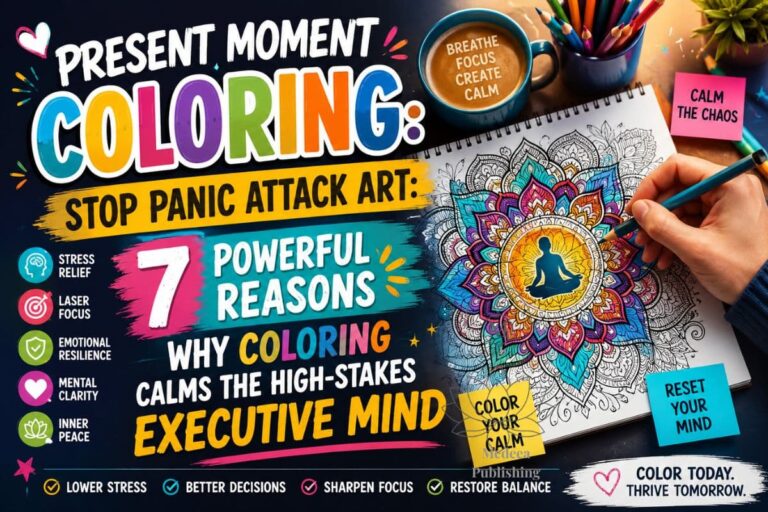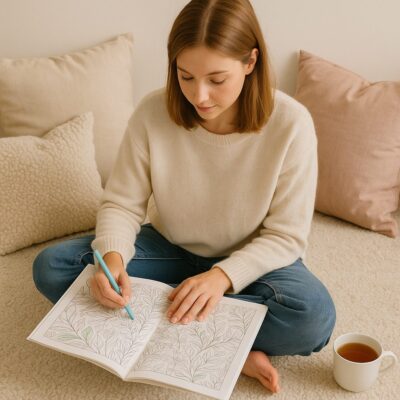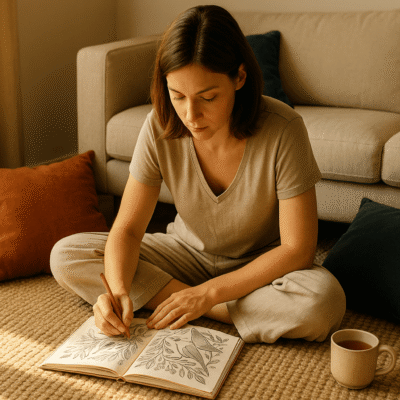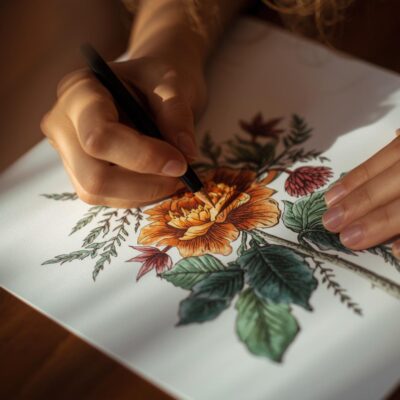

In an increasingly loud and demanding world, finding a sanctuary for your mind is no longer a luxury—it is a necessity. Many of us carry the weight of “what ifs” and the relentless pace of digital notifications. If you are searching for a way to quiet the noise, mindfulness coloring for anxiety offers a gentle, creative, and scientifically-backed path toward serenity. Unlike many therapeutic interventions that require intense emotional heavy lifting, coloring allows you to drift into a state of “flow,” where the world’s worries fade into the background, replaced by the simple motion of a pencil against paper.
At Medeea Publishing, we understand that healing is not always found in grand gestures; often, it is found in the quiet moments of self-expression. Our collections are designed to be more than just books; they are gateways to a calmer version of yourself. In this comprehensive guide, we will explore why mindfulness coloring for anxiety is such an effective tool and how you can integrate it into your daily life to reclaim your mental clarity.
The Science Behind Mindfulness Coloring for Anxiety
To understand why coloring is so effective, we must look at how the brain processes stress. When we experience anxiety, the amygdala—the brain’s “alarm system”—is overactive, keeping us in a state of fight-or-flight. Research suggests that engaging in creative activities like coloring can help settle this part of the brain. By focusing on the repetitive, rhythmic motion of coloring within lines, you shift your attention away from intrusive thoughts and toward the present moment.
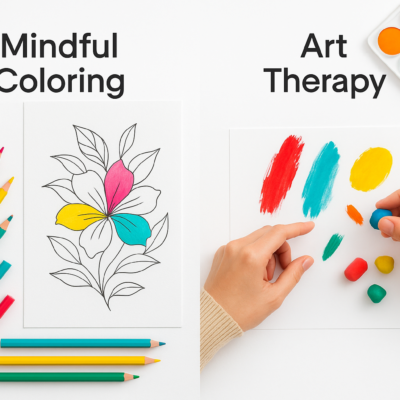
This practice is closely related to Art Therapy, a discipline that uses creative expression to improve physical, mental, and emotional well-being. When you practice mindfulness coloring for anxiety, you are essentially practicing a form of “active meditation.” Instead of sitting in silence and trying to empty your mind—which can be incredibly difficult for an anxious person—you give your mind a low-stakes task to focus on. This task is engaging enough to prevent rumination but simple enough to avoid adding to your cognitive load.
Furthermore, the act of choosing colors and seeing a design come to life triggers the release of dopamine, the brain’s “reward” chemical. This creates a positive feedback loop, where your brain associates the creative process with pleasure and relaxation rather than the tension of everyday life.
Why Meditative Art is the Ultimate Self-Care Tool
Self-care is often marketed as expensive spa days or elaborate vacations, but true self-care is about the sustainable habits we build to protect our peace. Mindfulness coloring for anxiety is one of the most accessible tools available. It requires no prior artistic training, very little equipment, and can be done anywhere—from a quiet corner of your living room to a park bench.
The beauty of using Medeea Publishing coloring books lies in the intentionality of our designs. We create intricate patterns and soothing illustrations that naturally draw the eye and encourage focus. When you sit down with one of our books, you aren’t just coloring; you are setting a boundary between yourself and the stressors of the day. It is a physical manifestation of taking time for yourself.
The Benefits of Focusing on the “Now”
Anxiety is almost always rooted in the future (worrying about what might happen) or the past (ruminating on what has already occurred). Mindfulness is the practice of returning to the “now.” When you engage in mindfulness coloring for anxiety, you become acutely aware of the texture of the paper, the vibrant hue of the ink, and the slight pressure of your hand. This grounding effect is a core pillar of cognitive-behavioral techniques used by experts at institutions like Psychology Today to manage stress and improve focus.
7 Powerful Techniques for Mindfulness Coloring for Anxiety
Simply picking up a crayon is a great start, but if you want to maximize the therapeutic benefits of your practice, try incorporating these seven techniques into your daily routine. By shifting from mindless doodling to intentional mindfulness coloring for anxiety, you transform a simple hobby into a sophisticated psychological tool.
1. Set a Sacred Space
Environment plays a massive role in how our nervous system reacts to stress. To make your mindfulness coloring for anxiety practice truly effective, you must create a physical environment that signals “safety” to your brain. This isn’t just about aesthetics; it’s about sensory cues. Dim the overhead lights, put your phone in another room to eliminate digital noise, and perhaps light a scented candle or put on soft, ambient music. When you dedicate a specific, cozy spot to your coloring sessions, your brain will eventually develop a Pavlovian response—beginning to relax and decompress the moment you sit down in that designated chair.
2. Practice Intentional Breathing
As you color, try to sync your physical breath with your hand movements. This is a core pillar of mindfulness coloring for anxiety. Try to inhale deeply as you pick up a new color, and exhale slowly and steadily as you fill in a complex section of the design. This combination of somatic movement and rhythmic breathwork is a powerhouse for nervous system regulation, helping to lower your heart rate almost instantly. If you find your mind wandering back to a stressful deadline or a difficult conversation, acknowledge that thought without judgment, and gently return your focus to the breath and the rhythmic stroke of the pencil.
3. Let Go of Perfectionism
One of the biggest hurdles to successful mindfulness coloring for anxiety is the “inner critic” that demands the colors must match perfectly or the lines must be flawlessly respected. You must remember: this is not an art competition or a portfolio piece; it is a healing exercise. There is no “wrong” way to express your internal state. If your intuition tells you to color a tree purple or a sun bright blue, follow that impulse. Embracing imperfection on the page is a vital rehearsal for embracing imperfection in your real life, breaking the cycle of high-stakes pressure.
4. Focus on Color Psychology
Colors have a profound and scientifically proven impact on our emotional state. Use your mindfulness coloring for anxiety sessions to “color your way” into the specific emotion you need at that moment. If you are feeling particularly agitated or hyper-vigilant, reach for “cool” colors like deep blues, forest greens, and soft purples, which are renowned for their calming and grounding properties. Conversely, if your anxiety has left you feeling lethargic or emotionally flat, “warm” colors like cheerful yellows and soft oranges can provide a gentle, much-needed energy boost to your psyche.
5. Engage All Your Senses
Mindfulness is, at its heart, about total sensory awareness in the “now.” During your mindfulness coloring for anxiety time, pay close attention to the small details: the earthy scent of the wooden pencils, the subtle sound of the lead scratching against the heavy, textured paper, and the visual magic of a white space becoming a vivid masterpiece. The more senses you involve in the process, the more “anchored” you become in the present moment. This sensory grounding leaves significantly less room for intrusive, anxious thoughts to take hold of your mind.
6. Use Mandalas for Deep Focus
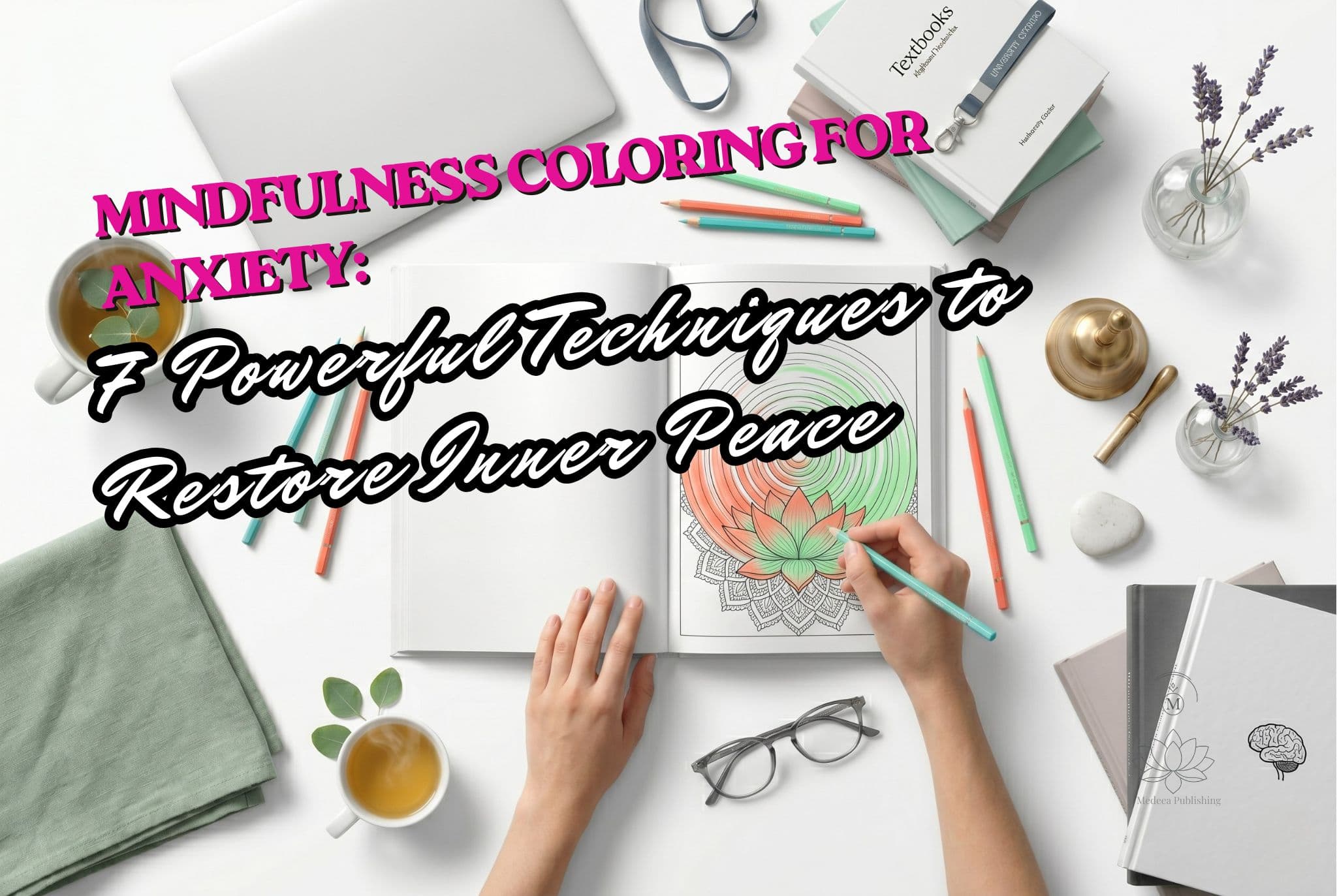
Mandalas are circular designs that represent the universe and the self, used for centuries as meditation aids. Many of the premium collections at Medeea Publishing feature mandala-inspired patterns because their symmetrical nature helps the brain organize chaotic information and find a sense of equilibrium. Engaging in mindfulness coloring for anxiety using these symmetrical mandalas can lead to a near-hypnotic state of relaxation, often referred to as “flow,” where time seems to disappear and the “self” feels quiet and at peace.
7. Reflect After the Session
Once you finish a page, don’t just abruptly close the book and rush back to your chores or your screen. Take two minutes to simply look at what you’ve created and breathe. Ask yourself: “How do I feel now compared to when I first sat down?” Acknowledge the calm you have actively cultivated with your own hands. This post-session reflection helps reinforce the neural pathways associated with the habit, making it much more likely that you will intuitively reach for your mindfulness coloring for anxiety tools the next time you feel overwhelmed by the world.
The Challenge: Which of these 7 techniques do you find the most difficult to apply? Try to focus exclusively on that specific technique for your next 10 minutes of coloring!
How has your mood shifted after trying to sync your breathing with the movement of your pencil?
How to Build a Consistent Mindfulness Coloring Habit
Like any form of therapy, consistency is key. You don’t need to spend hours coloring every day to see the benefits of mindfulness coloring for anxiety. Even fifteen minutes before bed can significantly improve your sleep quality by lowering cortisol levels. If you find it hard to start, try the “one-shape-a-day” rule. Commit to coloring just one small section of a page. Usually, once you start, the tension begins to melt away, and you’ll want to continue.
For more tips on integrating creativity into your wellness journey, be sure to explore our latest articles in our blog archives. We regularly share insights on how art therapy and structured coloring can transform your mental health landscape.
Choosing the Right Tools for Your Journey
While the act of coloring is what matters most, having high-quality materials can enhance the experience. Soft-core colored pencils are often preferred for mindfulness coloring for anxiety because they lay down color smoothly without requiring much pressure. Fine-liner pens are excellent for those who enjoy the precision of intricate designs. Most importantly, ensure your coloring book has high-quality paper that won’t bleed through, allowing you to focus entirely on the art rather than the technical limitations of the book.
Medeea Publishing takes great pride in the tactile quality of our books. We know that the feel of the paper is just as important as the beauty of the illustration. When you choose one of our books, you are investing in a premium self-care experience designed specifically to support your mental health journey.
Overcoming Common Obstacles
Many people hesitate to start mindfulness coloring for anxiety because they feel they “aren’t creative.” It is important to redefine what creativity means. Creativity is not about the final product; it is about the process of making. You were born with the innate ability to create. Somewhere along the way, many of us were told we weren’t “good” at art, and we stopped. Coloring allows you to reclaim that lost part of yourself in a safe, guided way.
Another common obstacle is time. We often feel guilty for taking “unproductive” time for ourselves. However, mental health is the foundation of all productivity. If you are burnt out and anxious, you cannot show up fully for your family, your job, or yourself. Think of your coloring time as “preventative maintenance” for your brain.
The Emotional Impact of Mindfulness Coloring for Anxiety
Beyond the neurological benefits, there is a deep emotional satisfaction that comes from finishing a coloring page. For someone struggling with anxiety, life can often feel out of control. The world is unpredictable, and our thoughts can feel chaotic. However, on the page of a coloring book, you are in complete control. You choose the palette, you decide the boundaries, and you bring order to the patterns. This sense of agency can be incredibly empowering and can translate into a greater sense of confidence in your daily life.
Many users of Medeea Publishing books have shared stories of how mindfulness coloring for anxiety helped them navigate difficult seasons of grief, high-stress jobs, or chronic health issues. It provides a “quiet middle ground” where the mind can rest and recover.
Integrating Art with Other Mindfulness Practices
While mindfulness coloring for anxiety is powerful on its own, it also pairs beautifully with other wellness practices. You might try “Journal-Coloring,” where you write down one thing you are grateful for on the back of every page you color. Or perhaps you use coloring as a transition activity—a way to “bridge” the gap between a high-stress workday and a relaxed evening at home.
By making coloring a part of a larger ecosystem of self-care, you create a robust defense against the symptoms of anxiety. Remember, your mental health is a journey, not a destination. There will be good days and bad days, but having a tool like a Medeea Publishing coloring book in your “mental health toolkit” ensures that you always have a way back to center.
Final Thoughts on Mindfulness Coloring for Anxiety
We live in an era that prizes “hustle” and constant connectivity, but our brains were not designed for this level of stimulation. Mindfulness coloring for anxiety is a radical act of rebellion against the stress of modern life. It is an invitation to slow down, to breathe, and to remember the joy of simple creation.
If you are ready to start your journey toward a calmer, more centered version of yourself, we invite you to browse our exclusive coloring book collections. Whether you are drawn to the flowing lines of nature, the geometric precision of mandalas, or whimsical illustrations that spark your imagination, there is a Medeea Publishing book waiting to help you find your peace.
Take a deep breath. Pick up a pencil. And let the healing begin.
Frequently Asked Questions (FAQ)
Is mindfulness coloring for anxiety effective for everyone?
While every individual’s mental health journey is deeply personal and unique, scientific research has consistently shown that the vast majority of participants experience a measurable physiological shift during the creative process. In fact, studies have demonstrated a significant reduction in heart rate and perceived stress levels after just 20 minutes of active engagement. Mindfulness coloring for anxiety serves as a powerful bridge for those who find traditional “still” meditation or silent sitting to be incredibly difficult or even frustrating.
For many high-achievers or those with neurodivergent brains (such as ADHD), the act of sitting in silence can actually increase internal chatter. Mindfulness coloring for anxiety provides a “gentle anchor”—a low-stakes motor task that occupies the restless part of the mind, allowing the emotional center to finally settle. It is an inclusive practice that doesn’t require “talent” or prior experience, making it a universal tool for anyone seeking to transition from a state of hyper-vigilance to one of profound inner calm.
Do I need expensive art supplies to get started?
Absolutely not! One of the most liberating aspects of this practice is its accessibility. The neurological and emotional benefits of mindfulness coloring for anxiety are derived entirely from the internal process of creation, not from the price tag or the brand name of your artist tools. Whether you are using a professional-grade set of soft-core wax pencils or a simple pack of crayons found in a grocery store aisle, the impact on your nervous system remains the same.
The primary goal is to lower your cortisol levels, not to create a gallery-worthy masterpiece. As you progress in your journey and begin to notice how much you enjoy the tactile sensation of pigment on paper, you might eventually choose to invest in higher-quality tools or specialized markers simply to enhance your personal sensory enjoyment. However, for the purpose of stress relief, the best tools are the ones you have within reach right now. Mindfulness coloring for anxiety is about radical self-care, not consumerism.
How often should I color to see real results?
When it comes to rewiring your brain’s response to stress, consistency is far more important than the duration of any single session. You do not need to carve out hours of your day to feel a difference; even 10 to 15 minutes of mindfulness coloring for anxiety practiced a few times a week can begin to regulate your nervous system and build long-term emotional resilience. It is similar to physical exercise—short, regular “reps” of calm are more effective than one long session followed by weeks of neglect.
Many people find it most life-changing to incorporate this practice into their “wind-down” routine at the end of the day. By choosing to color before bed, you are intentionally replacing “doom-scrolling” with a mindful, analog ritual that prepares your brain for deep, restorative sleep. Over time, these small pockets of peace accumulate, helping you stay grounded even during the most chaotic moments of your work week.
The Challenge: Don’t wait for the “perfect” time or the “perfect” pencils. Pick one design today and color for just 8 minutes before you check your emails. 🎨
Which part of your day feels the most chaotic, and could 10 minutes of coloring help you reclaim it?